
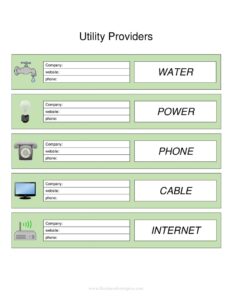
Home Utility Provider List
Organize every utility account in one place with this free Home Utility Provider List template — download in PDF or DOCX for free, no signup.
PDF
DOCX
5 downloads
0
likes
Download Files
- DOCX
A Home Utility Provider List is a simple reference document that records every utility service connected to a property, along with the provider name, account number, and contact details. People most often use it when moving in or out of a home, so all electricity, gas, water, internet, and other accounts can be set up, transferred, or canceled without scrambling for information. You can download this template free in PDF or DOCX, no signup required.
What Is a Home Utility Provider List?
A Home Utility Provider List is an at-a-glance summary of the companies that supply essential services to a residence and the account details tied to each one. Homeowners, renters, landlords, and property managers use it to keep electricity, gas, water, sewer, trash, internet, phone, and other service accounts organized in a single sheet. Rather than digging through old bills or emails, you record each provider’s name, the service they deliver, your account number, customer service phone, website login, and billing notes. It functions as both a personal record and a handoff tool — useful when transferring service, comparing rates, budgeting monthly costs, or passing details to a new tenant, buyer, or household member.
When Do You Need a Home Utility Provider List?
This document is handy in a surprising number of everyday situations. Common scenarios include:
- Moving into a new home — gather and confirm which providers serve the address and set up new accounts before move-in day.
- Moving out — cancel or transfer each service and provide final meter readings to avoid charges after you leave.
- Renting out a property — give incoming tenants a clear list of who to call to start service in their own name.
- Managing rental properties — landlords track which utilities are landlord-paid versus tenant-paid across multiple units.
- Selling or buying a home — sellers hand buyers a tidy reference, and buyers know exactly who to contact at closing.
- Household budgeting or emergencies — keep account numbers and service phone lines ready for outages, billing disputes, or autopay setup.
What a Home Utility Provider List Should Have
A complete and genuinely useful list captures enough detail that anyone can act on it without further research. Strong versions include the property address the list applies to, a row for each utility type, the provider’s company name, your account or customer number, a service or customer-service phone number, the website or online portal address, the billing cycle or due date, and whether the account is on autopay. Many people add a notes column for things like deposit amounts, contract end dates, meter numbers, or whether the bill is paid by the landlord or tenant. The goal is a self-contained sheet that answers every routine question about a property’s services.
How to Fill Out a Home Utility Provider List
Because this is a flexible reference template, fill it in row by row, one utility at a time:
- Label the property. At the top, write the full address the list covers so it stays clear if you manage more than one home.
- List each utility type. Create a row for electricity, natural gas, water, sewer, trash and recycling, internet, cable or streaming, landline or mobile phone, and any others such as propane, security, or HOA-billed services.
- Enter the provider name. Record the exact company that bills you for each service.
- Add the account number. Copy it from a recent bill so transfers and calls go smoothly.
- Include contact details. Note the customer service phone number and the website or login portal for each provider.
- Capture billing info. Record the due date or billing cycle, typical monthly amount, and whether autopay is enabled.
- Use the notes column. Flag deposits, contract terms, meter numbers, or who is responsible for payment.
Tips for Keeping the List Useful
A utility list is only valuable if it stays current. Update it whenever you switch providers, change a payment method, or renew a contract. Store one copy digitally and keep a printed copy with your important household papers. If you manage several properties, keep a separate sheet for each address rather than crowding everything onto one page. Avoid writing full passwords on a shared or printed copy; instead note the portal address and keep credentials in a secure password manager. When you hand the list to a new tenant or buyer, remove your personal autopay and login details and provide only the provider names, service types, and contact numbers they need to start their own accounts.
Utility List vs. Move-In Checklist
A Home Utility Provider List is sometimes confused with a move-in or move-out checklist, but they serve different purposes. A move checklist tracks tasks and the physical condition of a property — boxes packed, keys returned, walls inspected. A utility provider list focuses purely on the service accounts: who supplies what, account numbers, and how to reach each company. Many people use both together during a move. The utility list is the reference you keep long after the move is done, while the checklist is usually discarded once the move is complete.
Common Mistakes to Avoid
- Leaving out the account number — without it, providers may not locate your service quickly during a transfer or dispute.
- Forgetting smaller services — trash, recycling, HOA-billed water, or security monitoring are easy to overlook.
- Writing passwords on a shared copy — note the portal but keep credentials secured separately.
- Not noting who pays — landlords and tenants need clarity on landlord-paid versus tenant-paid services.
- Letting the list go stale — outdated provider or contact info defeats the purpose; review it periodically.
- Mixing multiple properties on one sheet — keep a separate list per address to prevent confusion.
Frequently Asked Questions
What is a Home Utility Provider List used for? It is used to keep all of a home’s utility accounts organized in one place, including provider names, account numbers, and contact details. People rely on it most during moves to set up, transfer, or cancel service. It also helps with budgeting, handling outages, and passing information to new tenants or buyers.
How do I fill out the template? Start by writing the property address at the top, then create a row for each utility type such as electricity, gas, water, and internet. For each one, add the provider name, account number, customer service phone, website, billing cycle, and any notes. Work from a recent bill so the account details are accurate.
Is a Home Utility Provider List a legal document? No, it is an organizational reference, not a contract or legally binding agreement. It does not create or change your obligations with any utility company. Your actual service terms come from the agreements you sign with each provider.
Should landlords give this list to tenants? Many do, since it helps new tenants quickly identify who supplies each service and how to start accounts in their own names. When sharing it, landlords should remove personal autopay and login details and provide only provider names, service types, and contact numbers. It is a helpful courtesy but not legally required.
How often should I update the list? Update it whenever you change providers, switch payment methods, renew a contract, or move. A quick review once or twice a year keeps phone numbers and account details accurate. An outdated list can cause delays during transfers or billing problems.
How much does this template cost? It is completely free to download here in both PDF and DOCX formats, with no signup required. Use the editable DOCX to type directly into the sheet or the PDF to print and fill it in by hand. You can copy and reuse it for as many properties as you need.
This template is provided as a general example for informational purposes only and is not legal, financial, or tax advice. Utility services, billing rules, and provider requirements vary by location and company. For questions about specific accounts or obligations, contact your utility providers or a qualified professional.
Official resource: for the rules that apply to your situation, see HUD.
Related Forms
- Tenant Lease Renewal Letter
- Complain To Landlord
- Inspection Checklist
- Real Estate Needs Wants Checklist
- Covid Tenant Rent Extension Request
- Landlord Move-Out Letter
Browse more in Rental and Real Estate.