
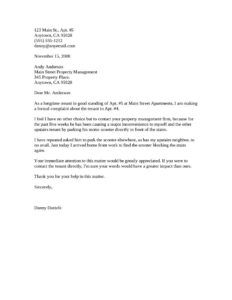
Complain To Landlord
Write a clear, professional complaint to landlord letter with our free template—document the issue and request action; download free in PDF and DOCX.
DOCX
3 downloads
0
likes
Download Files
- DOCX
A complaint to landlord letter is a written notice a tenant sends to a landlord or property manager to formally report a problem and request that it be resolved. The most common reason people use one is to create a documented, dated record of an issue—like a disruptive neighbor, an unaddressed repair, or a safety hazard—after informal requests have failed. This template is free to download in both PDF and DOCX formats, with no signup required.
What Is a Complaint to Landlord Letter?
A complaint to landlord letter is a formal written communication from a tenant to the property owner or management company describing a specific problem affecting the rental unit or common areas. It documents what is happening, how long it has been occurring, what the tenant has already tried, and what action they are requesting. Unlike a casual text or phone call, a written letter establishes a clear paper trail with names, dates, and details. Landlords and property managers use these letters to learn about issues they may not otherwise be aware of, and tenants use them to prompt action and protect their rights. The letter is polite but direct, focusing on facts rather than emotion.
When Do You Need a Complaint to Landlord Letter?
Whenever a verbal request has not worked—or when you simply want a written record—a formal letter is the right tool. Common scenarios include:
- A disruptive neighbor: a fellow tenant whose noise, behavior, or, as in this template, a motor scooter blocking the stairs, creates an ongoing inconvenience or safety concern.
- Unaddressed repairs: a leaking faucet, broken heater, faulty appliance, or other maintenance issue that has been reported verbally but not fixed.
- Safety and access hazards: blocked exits, broken locks, inadequate lighting, or anything that compromises your ability to come and go safely.
- Habitability problems: pests, mold, lack of heat or hot water, or other conditions affecting your right to live comfortably in the unit.
- Lease or rule violations by others: a tenant ignoring building policies, parking improperly, or using common areas in a way that affects everyone.
- Repeated unresolved issues: any problem you have already raised informally that continues without a fix.
What a Complaint to Landlord Letter Should Have
An effective complaint letter is specific, factual, and easy to act on. It should include your contact information (address, unit number, phone, email), the date, and the landlord or property manager’s name and address. The body must clearly identify the problem, state how long it has been happening, describe any attempts you have already made to resolve it, and politely request a specific action. Closing with a thank-you and your signature keeps the tone professional. Concrete details—dates, locations, and what you observed—make the complaint credible and give the landlord exactly what they need to respond.
How to Fill Out a Complaint to Landlord Letter
- Add your contact block: at the top, list your street address and unit number (e.g., 123 Main St., Apt. #5), city, state, ZIP, phone number, and email so the landlord can reach you.
- Insert the date: write the full date you are sending the letter (e.g., November 15, 2024). This anchors your timeline.
- Address the recipient: enter the landlord or property manager’s name, company name, and mailing address (e.g., Andy Anderson, Main Street Property Management).
- Open with a greeting: use a formal salutation such as “Dear Mr. Anderson.”
- State who you are: identify yourself as a tenant in good standing and name your unit.
- Describe the problem: explain the issue plainly—what is happening, where, and for how long (for example, “for the past five weeks”).
- Note prior efforts: mention that you have already asked directly and the problem continues.
- Request action: ask the landlord to intervene and explain why their involvement would help.
- Close and sign: thank them, sign “Sincerely,” and add your printed name.
Tips for Getting Results
The strongest complaint letters stick to facts and avoid name-calling or exaggeration. Reference specific incidents with dates and times where you can—”Just today I arrived home from work to find the scooter blocking the stairs again” is far more persuasive than “it happens all the time.” Keep a copy of every letter you send, and consider sending important complaints by a method that confirms delivery, such as certified mail or email with a read receipt. If the issue involves multiple tenants, mention that others are affected too, since a shared concern often carries more weight. Always propose a reasonable resolution rather than just venting frustration.
Complaint Letter vs. Other Notices
A complaint to landlord letter is different from a formal repair demand, a notice to vacate, or a legal filing. It is typically a first or escalating step—a way to put a problem in writing and ask for help before considering more formal action. If a landlord ignores repeated complaints about serious habitability issues, tenants in some areas have additional legal options, but those rules vary widely. Keep this letter focused on communication and documentation. If matters escalate, the dated copies you have saved become valuable evidence of the timeline and your good-faith efforts to resolve things cooperatively.
Common Mistakes to Avoid
- Being vague: failing to include specific dates, locations, or details makes it hard for the landlord to act.
- Letting emotion take over: insults or threats undermine your credibility and may sour the relationship.
- Forgetting your contact info: if the landlord can’t reach you, they can’t follow up.
- Not stating a clear request: always say exactly what action you want taken.
- Keeping no copy: never send the only version—retain a dated copy for your records.
- Skipping prior context: mention earlier verbal requests so the landlord understands this is an ongoing, unresolved issue.
Frequently Asked Questions
What is a complaint to landlord letter? It is a formal written notice from a tenant to a landlord or property manager describing a specific problem and requesting that it be resolved. It documents the issue with names, dates, and details so there is a clear record of when and how you raised it.
How do I fill out the template? Add your contact information and the date at the top, then the landlord’s name and address. Write a clear description of the problem, mention any earlier attempts to fix it, request a specific action, and sign your name at the bottom.
Does a complaint letter need to be notarized? No. A complaint to landlord letter is ordinary correspondence and does not require notarization or witnesses. Keeping a dated copy and, where possible, proof of delivery is more important than any formal certification.
Is this letter legally binding? The letter itself is not a contract, but it can serve as important documentation if a dispute escalates. It establishes a timeline showing you raised the issue and requested action in good faith, which can be valuable evidence later.
How much does this template cost? Nothing—it is completely free to download here in both PDF and DOCX formats, with no signup or payment required. You can edit the DOCX version to fit your exact situation.
How should I send the completed letter? Email and regular mail both work for routine issues. For serious or repeated problems, consider a method that confirms delivery, such as certified mail or email with a read receipt, and always keep a copy for your own records.
This template is provided as a general example for informational purposes only and does not constitute legal advice. Tenant and landlord rights and procedures vary by state and locality—consult a qualified attorney or your local housing authority for guidance specific to your situation.
Official resource: for the rules that apply to your situation, see HUD.
Related Forms
- Home Showing Tracker
- Property Appraisal Form
- Landlord Lease Renewal Letter
- Covid Tenant Rent Extension Request
- Homebuyer Features Checklist
- Tenant Lease Renewal Letter
Browse more in Rental and Real Estate.