
Antique Bill of Sale
Download a free Antique Bill of Sale template in PDF and DOCX to document the sale of antiques, record provenance, and transfer ownership securely.
PDF
DOCX
0
likes
Download Files
- DOCX
An Antique Bill of Sale is a written record that documents the sale and transfer of an antique item from a seller to a buyer, capturing details like age, origin, and condition. People most often use it to create proof of purchase and provenance when buying or selling collectible furniture, decorative objects, or other aged goods. You can download this Antique Bill of Sale free in both PDF and DOCX formats, with no signup required.
What Is an Antique Bill of Sale?
An Antique Bill of Sale is a transaction document that records the transfer of a specific antique from a named seller to a named buyer. It is typically created and signed by both parties at the time of sale, and it confirms that the seller is the legal owner of the item, that the piece is free of liens and other encumbrances, and that it is sold “as is” with no warranties. Beyond simply proving payment changed hands, an antique bill of sale also captures the details that give an old object value and credibility — its approximate age, place of origin, any restorations, and how it should be cared for. This makes it part receipt, part provenance record.
When Do You Need an Antique Bill of Sale?
This form is useful any time an aged or collectible item changes hands and both parties want a clear record. Common situations include:
- Private antique sales — selling a piece of furniture, clock, or decorative item directly to a buyer without a dealer involved.
- Estate and inheritance settlements — documenting that an heirloom or estate piece was sold or transferred to a new owner.
- Antique fairs and markets — giving customers a written record that includes the item’s age and origin.
- Online marketplace transactions — providing proof of provenance and condition for a buyer purchasing remotely.
- Insurance and appraisal documentation — establishing a paper trail of ownership, age verification, and restoration history for valuation purposes.
- Reselling collectibles — passing along documented provenance to the next buyer to support the item’s value.
What an Antique Bill of Sale Should Have
A complete antique bill of sale should clearly identify the seller, the buyer, and the item being sold. It should describe the antique in enough detail to distinguish it from similar pieces, and it should record provenance details that matter to collectors: approximate age, how that age was verified, and place of origin. Because antiques are frequently repaired over time, the form should also note any restorations and the dates they occurred, since restoration can affect both value and care. A statement that the seller owns the item free of liens, an “as is” clause indicating no warranties, and dated signatures from both parties round out a valid, complete document.
How to Fill Out an Antique Bill of Sale
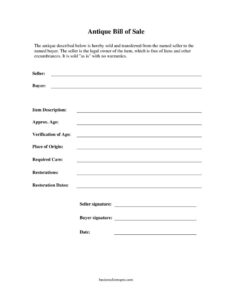
- Seller: Enter the full legal name of the person or business selling the antique, along with contact details if needed.
- Buyer: Enter the full name of the individual or entity purchasing the item.
- Item Description: Describe the antique thoroughly — type of object, materials, dimensions, maker’s marks, colors, and any distinguishing features.
- Approx. Age: Record the estimated age or period of the piece, such as “circa 1890” or “early Victorian.”
- Verification of Age: Note how the age was determined — an appraisal, maker’s stamp, documentation, or expert opinion.
- Place of Origin: State where the antique was made or originally acquired, if known.
- Required Care: List any special handling, cleaning, or storage instructions the buyer should follow.
- Restorations: Describe any repairs or refinishing the piece has undergone.
- Restoration Dates: Enter when those restorations took place, even if approximate.
- Seller signature, Buyer signature, and Date: Both parties sign and date the form to make the transfer official.
Why Provenance Details Matter for Antiques
Unlike an everyday bill of sale, an antique bill of sale places real weight on provenance — the documented history of an object. The age, verification method, and place of origin fields are not just formalities; they directly affect how a buyer values the piece and how easily it can be resold or insured in the future. When you record that the age was verified by an appraiser or a maker’s mark, you give the document credibility that a vague estimate cannot. Likewise, noting restorations and their dates is honest and protective: a buyer who knows a chair was reupholstered in 2015 understands the piece’s current state, and the seller is shielded from later disputes about originality. Keep any supporting paperwork — appraisals, photographs, or prior receipts — together with the signed bill of sale.
“As Is” Sales and What They Mean
This template sells the antique “as is,” meaning the seller makes no warranties about the item’s condition, function, or future durability. For antiques, this is common and sensible: aged objects naturally show wear, and buyers are generally expected to inspect a piece before purchase. The “as is” clause protects the seller from claims that the item later cracked, faded, or revealed a hidden flaw. Buyers should examine the antique carefully, ask questions about restorations, and rely on the documented description before signing. If a buyer wants any specific guarantee — for example, that a signature is authentic — that assurance should be written into the description rather than assumed.
Common Mistakes to Avoid
- Vague item descriptions — “old vase” is not enough; include materials, dimensions, and identifying marks.
- Overstating age without verification — claiming a precise date you cannot back up can create disputes or fraud concerns.
- Omitting restorations — failing to disclose repairs can undermine the buyer’s trust and the item’s documented value.
- Leaving signature or date fields blank — an unsigned form is far weaker as proof of the transaction.
- Not keeping a copy — both buyer and seller should retain a signed copy for their records.
- Ignoring care instructions — skipping the required care field can lead to accidental damage the seller is then blamed for.
Frequently Asked Questions
What is an Antique Bill of Sale used for? It documents the sale and transfer of an antique from a seller to a buyer, serving as both a receipt and a record of the item’s provenance. It captures details such as age, origin, and restoration history that matter for valuation, insurance, and future resale.
Is an Antique Bill of Sale legally binding? When both parties sign and date the document voluntarily, it generally serves as evidence of a completed transaction and the transfer of ownership. Its enforceability and any specific formalities depend on your jurisdiction, so check local rules if the item is high-value.
Does an Antique Bill of Sale need to be notarized? Most antique sales do not require notarization, and signatures from the buyer and seller are usually sufficient. For valuable pieces, however, some parties choose to notarize or add witnesses for extra assurance, and you should follow any requirements that apply where you live.
What does “sold as is” mean on this form? It means the seller offers no warranties about the antique’s condition or future performance, and the buyer accepts the item in its current state. Buyers should inspect the piece carefully and rely on the written description before completing the purchase.
How do I prove the age of an antique? The verification of age field lets you record how the age was established — through an appraisal, a maker’s mark, documentation, or an expert’s assessment. Keeping supporting paperwork alongside the bill of sale strengthens the provenance for future buyers or insurers.
How much does this Antique Bill of Sale template cost? It is completely free to download here in both PDF and DOCX formats, with no signup or payment required. You can fill it out by hand or edit the editable version on your computer before printing.
This Antique Bill of Sale template is provided as a general example for informational purposes only and is not legal, financial, or tax advice. Requirements for documenting and transferring ownership of antiques vary by jurisdiction, so consult a qualified professional or appraiser for guidance on your specific situation.
Official resource: for the rules that apply to your situation, see your state DMV.
Related Forms
- Canoe Or Kayak Bill Of Sale
- As-Is Bill Of Sale
- Jewelry Bill of Sale
- Firewood Bill Of Sale
- Firearm Bill Of Sale
- Vintage Car Bill Of Sale
Browse more in Bills of Sale.