
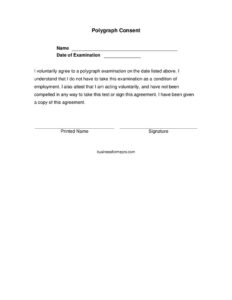
Polygraph Consent
Download a free Polygraph Consent form template in PDF and DOCX to document voluntary agreement to a lie detector examination — no signup required.
PDF
DOCX
3 downloads
0
likes
Download Files
- DOCX
A Polygraph Consent form is a written authorization in which a person voluntarily agrees to undergo a polygraph (lie detector) examination and acknowledges they understand its purpose and their rights. People most commonly use it to document informed, voluntary consent before an examiner conducts a test in employment, investigative, or screening settings. You can download this Polygraph Consent template free in both PDF and DOCX formats, with no signup required.
What Is a Polygraph Consent Form?
A Polygraph Consent form is a document that records an examinee’s voluntary agreement to take a polygraph examination. It is typically issued by the organization, agency, or examiner requesting the test, and signed by the individual being examined. The form documents that the person was informed about the nature of the examination, the general subject matter, and that participation is voluntary. It serves as evidence that consent was obtained before any questioning began. Because polygraph use is regulated in many jurisdictions and limited in certain employment contexts, a clear, signed consent form helps protect both parties by creating a written record of agreement, understanding, and the conditions under which the test is administered.
When Do You Need a Polygraph Consent Form?
A polygraph examination should never proceed without documented voluntary consent. Common situations where this form is used include:
- Pre-employment or periodic screening for certain government, law enforcement, or security-sensitive positions where polygraph testing is legally permitted.
- Internal workplace investigations into theft, misconduct, or loss, where an employee voluntarily agrees to participate.
- Law enforcement or investigative interviews in which a witness, suspect, or applicant agrees to a test.
- Background checks and clearance processes for roles requiring heightened trust or access to confidential material.
- Private examinations requested by attorneys, families, or individuals seeking to verify a statement or resolve a dispute.
- Probation, parole, or treatment programs that include polygraph monitoring as a condition agreed to in advance.
What a Polygraph Consent Form Should Have
A complete Polygraph Consent form contains several core elements that establish informed, voluntary agreement. These typically include the full name and identifying details of the examinee; the name of the requesting organization or examiner; the date, time, and location of the examination; a clear statement describing the general purpose or subject of the test; and an acknowledgment that participation is voluntary and may be discontinued. The form should also state that the examinee understands the nature of the procedure, that results may be shared with specified parties, and that no coercion was used. Finally, it requires the examinee’s signature and date, and often the signature of the examiner or a witness, to confirm consent was given knowingly and freely.
How to Fill Out a Polygraph Consent Form
Complete each section carefully and read every statement before signing. Follow these steps:
- Enter the examinee’s full legal name and any requested identifying information, such as date of birth or address.
- Identify the requesting party — the employer, agency, attorney, or individual asking for the examination — and the examiner’s name if known.
- Fill in the date, time, and location where the polygraph examination will take place.
- Read the statement of purpose describing the general subject matter the examination will address, and confirm you understand it.
- Review the voluntary participation clause, which confirms you are agreeing freely and may stop the examination at any time.
- Note any section describing who may receive the results and how the information will be used.
- Sign and date the form in the examinee signature field to confirm your consent.
- Have the examiner or a witness sign and date where indicated to verify the consent was given in their presence.
Keep a copy for your records once all parties have signed.
Understanding Your Rights Before Signing
Consent to a polygraph must be genuinely voluntary to be meaningful. Before signing, confirm that you understand why the examination is being requested and the general topics that will be covered. You generally have the right to ask questions, to know who will see the results, and to withdraw consent. In employment contexts, polygraph use is restricted in many places, and certain protections may apply depending on the employer and your jurisdiction. A well-drafted consent form makes these conditions transparent. If anything on the form is unclear or if you feel pressured, do not sign until your questions are answered. Documenting consent properly protects the examinee’s interests as much as the requesting party’s.
How This Differs From a General Authorization
A Polygraph Consent form is more specific than a broad release or authorization. While a general authorization may grant permission to collect information, a polygraph consent narrowly addresses agreement to a single examination, the conditions surrounding it, and acknowledgment of the procedure’s voluntary nature. It focuses on informed consent for a physiological test rather than open-ended data sharing. Because polygraph examinations involve sensitive questioning and regulated use, this form is purpose-built to capture the examinee’s understanding and agreement at a specific point in time.
Common Mistakes to Avoid
- Signing without reading the purpose statement or understanding what topics the test will cover.
- Leaving the date, time, or location blank, which weakens the record of when and where consent applied.
- Omitting the examiner or witness signature, leaving no verification that consent was given in person.
- Failing to specify who receives the results, creating uncertainty about how the information will be used.
- Using the form where polygraph testing is restricted without checking applicable laws first.
- Not keeping a signed copy, so the examinee has no record of the terms they agreed to.
Frequently Asked Questions
What is a Polygraph Consent form used for? It documents that a person has voluntarily agreed to undergo a polygraph examination and understands its purpose. It is used in employment screening, internal investigations, law enforcement interviews, and private examinations. The signed form creates a written record that consent was informed and freely given before testing began.
Is a Polygraph Consent form legally binding? A properly completed and signed consent form documents agreement, but it does not override laws that limit or prohibit polygraph use in certain settings. Its enforceability depends on the context and your jurisdiction’s regulations. The form’s main role is to evidence voluntary, informed consent rather than to compel anyone to participate.
Can I refuse or withdraw my consent? In most situations, participation is voluntary, and a well-drafted form states that you may decline or stop the examination. You should never feel coerced into signing. If you are uncertain about your rights, ask the requesting party for clarification before agreeing.
Does the form need to be notarized or witnessed? Notarization is generally not required for a polygraph consent form. However, many versions include a line for the examiner or a witness to sign, confirming consent was given in their presence. Witness signatures strengthen the record but requirements vary by setting.
How much does this Polygraph Consent template cost? The template on Business Forms Pro is completely free to download in both PDF and DOCX formats. There is no signup or payment required. You can edit the DOCX version to match your organization’s wording and the specifics of the examination.
Who should sign the Polygraph Consent form? The examinee must sign and date the form to confirm their consent. Depending on the version, the examiner or a witness may also sign to verify the consent was obtained properly. Keeping signed copies for all parties is good practice.
This Polygraph Consent template is provided as a general example for informational purposes only and is not legal advice. Polygraph use and consent requirements vary by jurisdiction and by context, and certain employment uses are restricted by law. Consult a qualified attorney or compliance professional before using this form.
Related Forms
- Transcript Request
- Credit Card Authorization Form
- Request For Bank Credit Reference
- Repair Request
- Specialty Item Form
- Supplies Requisition Form
Browse more in Request and Authorization.