
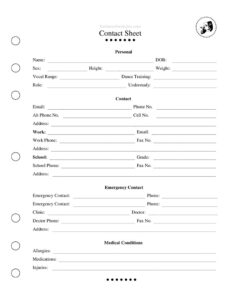
Contact Sheet Individual
Collect cast and crew details with this free Individual Contact Sheet template for theater productions — download in PDF or DOCX, no signup needed.
PDF
DOCX
2 downloads
0
likes
Download Files
- DOCX
An Individual Contact Sheet is a single-person information form used by theater productions to record one cast or crew member’s contact details, emergency contacts, and key logistics in one place. Stage managers and production teams most often use it during onboarding to build a reliable company directory, and it’s free to download here in both PDF and DOCX formats — no signup required.
What Is an Individual Contact Sheet?
An Individual Contact Sheet is a one-page intake form that captures everything a production needs to reach a particular person quickly and safely. Unlike a full company roster that lists everyone in a grid, this version focuses on a single individual, giving room for complete details such as full name, role, phone, email, address, and emergency contact information. Stage managers, production managers, and company administrators issue it at the first rehearsal or audition callback so that nobody on the team is ever more than a phone call away. It becomes the foundation of the call sheet, the phone tree, and the production’s record-keeping for the entire run.
When Do You Need an Individual Contact Sheet?
This form shows up at nearly every stage of putting on a show. Common situations include:
- Casting and onboarding — collecting details from each newly cast actor before the first read-through.
- Crew hiring — gathering information from designers, stagehands, board operators, and run crew as they join.
- Building a phone tree — assembling a master list so the stage manager can reach everyone about schedule changes or cancellations.
- Emergency preparedness — having an emergency contact and relevant medical notes on hand in case someone is injured during a rehearsal or performance.
- Volunteer and youth productions — recording guardian contact details for minors involved in community or school theater.
- Tour and travel coordination — keeping accurate addresses and numbers when a company travels between venues.
What an Individual Contact Sheet Should Have
A complete contact sheet balances thoroughness with respect for privacy. At minimum it should clearly identify the person and their role in the production, provide multiple ways to reach them, and supply at least one emergency contact. Strong versions also include the production name and the date the information was collected, so that an outdated sheet can be spotted and refreshed. For productions involving minors, a guardian’s name and signature line adds an important layer. The goal is a single document that any authorized member of the team can pick up and use to make contact within seconds, without hunting through emails or text threads.
How to Fill Out an Individual Contact Sheet
Because this is a flexible, single-person template, fill it out top to bottom and adapt the labeled lines to your production’s needs:
- Production and date: Enter the show title and the date you are completing the sheet at the top so the record stays current.
- Full name: Write the individual’s legal name, and add a preferred name or stage name if it differs.
- Role: Note the position — character name for actors, or job title for crew (e.g., “Stage Manager,” “Lighting Designer”).
- Phone numbers: List a primary cell number and an alternate or landline if available.
- Email address: Provide the address the person checks most often for production updates.
- Mailing address: Include street, city, state, and ZIP for mailings, contracts, or local travel.
- Emergency contact: Record a name, relationship, and phone number for someone to call in an urgency.
- Notes: Add allergies, medical considerations, availability constraints, or guardian details where relevant.
Keeping Contact Information Private and Current
Contact sheets hold sensitive personal data, so handle them with care. Store completed forms securely — in a locked binder or a password-protected file — and share them only with team members who genuinely need the information, such as the stage management team and production office. Avoid posting full contact details in public spaces like a callboard or an open group chat. It’s good practice to review the directory before each new phase of the production, since phone numbers and addresses change. When the run ends, decide with your organization whether to archive the sheets for future seasons or securely dispose of them.
Individual Sheet vs. Company Contact List
Many productions use both formats. The individual contact sheet shines during intake because it gives one person plenty of space and prompts you to capture emergency and medical details that a tight grid often omits. Once you’ve collected every individual sheet, the stage manager typically compiles the highlights into a company contact list or call sheet — a condensed roster organized by department. Think of the individual sheet as the detailed source record and the company list as the working day-to-day reference. Keeping the individual sheets on file means you always have the fuller information to fall back on if the summary list is missing a detail.
Common Mistakes to Avoid
- Skipping the emergency contact — this is the most important field for safety; never leave it blank.
- Illegible handwriting — a misread digit makes a phone number useless; print clearly or fill out the DOCX version.
- Forgetting the date — without it, you can’t tell whether the information is still accurate.
- Omitting guardian details for minors — youth performers need a responsible adult listed.
- Leaving sheets in public view — protect personal data from anyone outside the production team.
- Never updating — collecting once and forgetting leads to dead numbers by opening night.
Frequently Asked Questions
What is an Individual Contact Sheet used for? It records one cast or crew member’s contact and emergency information for a theater production. Stage managers use it to build a directory and phone tree so they can reach everyone quickly about rehearsals, schedule changes, and emergencies.
How do I fill out an Individual Contact Sheet? Start with the production name and date, then enter the person’s full name, role, phone, email, and address. Always complete the emergency contact section, and add any notes such as allergies, availability, or guardian information at the bottom.
Is this form legally binding? No, a contact sheet is an informational record, not a contract. It documents how to reach someone but does not create legal obligations on its own; employment or casting agreements are handled by separate documents.
Do I need to include an emergency contact? It is strongly recommended. Theater work involves physical activity, late hours, and equipment, so having a name and number to call in case of injury or illness is a basic safety measure for every company member.
How much does this template cost? Nothing — it’s a free download. You can save the Individual Contact Sheet in PDF or DOCX from Business Forms Pro with no signup, and reuse it for as many people and productions as you need.
Can I customize the fields for my production? Yes. Download the editable DOCX version to add or remove lines — for example, social media handles, union or guild numbers, costume measurements, or a separate guardian signature line for minors.
This template is a general example provided for informational purposes only and does not constitute legal, employment, or privacy-compliance advice. Requirements for handling personal and emergency information vary by jurisdiction and organization — consult a qualified professional or your producing organization’s policies before use.
Related Forms
- Bio Form
- Character Breakdown
- Scene Breakdown Action
- Production Meeting Notes
- Performance Sign-In Sheet
- Rehearsal Schedule Month
Browse more in Theater.