
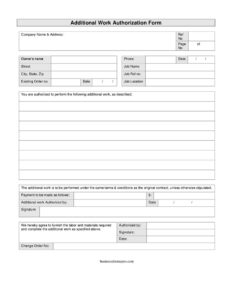
Additional Work Authorization Form
Download a free Additional Work Authorization Form template in PDF and DOCX to document and approve extra work and added costs on any project.
PDF
DOCX
7 downloads
0
likes
Download Files
- DOCX
An Additional Work Authorization Form is a short written agreement used to approve extra work that falls outside the scope of an original order or contract. Contractors, service providers, and tradespeople use it most often to get a customer’s written sign-off before performing added tasks so there are no surprises about cost. It’s free to download here in both PDF and DOCX formats with no signup required.
What Is an Additional Work Authorization Form?
An Additional Work Authorization Form is a document that records a customer’s approval for work beyond what was originally agreed, along with the price for that work. It is typically issued by the company or contractor performing the job and signed by the property owner or their representative. The form documents what extra work will be done, where, at what cost, and who authorized it. Because it references an existing order number, it ties the new work directly back to the original job rather than standing alone as a separate contract. In practice, it functions as a lightweight change order, protecting both parties by putting added scope and added cost in writing before any work begins.
When Do You Need an Additional Work Authorization Form?
Any time a job grows beyond its original scope, this form keeps everyone on the same page. Common situations include:
- Unexpected repairs discovered mid-job — a roofer finds rotten decking, or a plumber uncovers corroded pipe that wasn’t in the original estimate.
- Customer-requested upgrades — the owner decides to add a feature, fixture, or finish after work has already started.
- Scope expansion on construction or remodeling projects — additional rooms, square footage, or tasks added to an existing contract.
- Landscaping or service add-ons — extra plantings, grading, or maintenance requested beyond the booked service.
- Equipment or appliance servicing — a technician identifies a second issue while on-site and needs approval to fix it.
- Documenting cost changes for billing — so the final invoice matches what the customer actually agreed to pay.
What an Additional Work Authorization Form Should Have
A complete form leaves no ambiguity about who agreed to what. It should clearly identify the company performing the work and the owner authorizing it, the specific job and its location, a reference to the original order, a plain description of the additional work, the agreed payment for that work, and dated signatures from an authorized party. Without these elements, a disputed charge can be hard to defend. The reference to the existing order number is especially important because it links the new authorization to the project already underway, making it clear this is added scope rather than a brand-new engagement.
How to Fill Out an Additional Work Authorization Form
- Company name: Enter the legal or trade name of the business performing the additional work.
- Owner name: Write the name of the customer or property owner who is authorizing the extra work.
- Phone: Add a contact phone number, typically the owner’s, so questions can be resolved quickly.
- Job name: Identify the project — for example, “Smith Kitchen Remodel” or a job reference used internally.
- Job location: Enter the full address or site where the work is being performed.
- Payment: State the agreed price for the additional work, including any tax or terms if relevant.
- Authorization: Describe the additional work clearly and specifically — what will be done and any materials involved.
- Existing order number: Reference the original work order or contract number this addition relates to.
- Authorized by: Print the name of the person granting approval, if different from the owner.
- Signature: Have the authorizing party sign to confirm their agreement.
- Date: Record the date the authorization was signed.
How It Differs From a Standard Change Order
An Additional Work Authorization Form and a formal change order serve a similar purpose, but they aren’t identical. A full change order is usually a detailed contract amendment that adjusts the original agreement’s scope, schedule, and total contract value, and it often follows a procedure spelled out in the contract. This authorization form is a simpler, faster tool — ideal for smaller add-ons, field decisions, or service calls where you need quick written approval. On larger commercial or contracted projects, you may still need to follow the project’s change-order process. For everyday residential and service work, this form provides the essential paper trail without heavy paperwork.
Tips for Getting It Signed Before Work Begins
The value of this form comes from using it before the extra work starts. Walk the customer through exactly what you found or what they requested, and write the description in plain terms they can understand. State the payment amount clearly so there’s no question about cost. Keep a copy for your records and give one to the owner. For phone or remote approvals, follow up with a signed copy or written confirmation as soon as practical. A consistent habit of authorizing add-ons in writing reduces billing disputes and keeps your client relationships smooth.
Common Mistakes to Avoid
- Starting work before getting a signature — verbal okays are easy to dispute and hard to prove.
- Vague work descriptions — “misc. extra work” invites disagreement; be specific about tasks and materials.
- Leaving the payment blank — always state the cost, even if it’s an estimate or hourly rate.
- Forgetting the existing order number — without it, the addition isn’t clearly tied to the original job.
- Not noting the date — the date establishes when approval was given relative to the work performed.
- Failing to keep a copy — both parties should retain a signed version for billing and reference.
Frequently Asked Questions
What is an Additional Work Authorization Form used for? It is used to get a customer’s written approval for work that goes beyond the original order or contract, along with the price for that added work. Contractors and service providers rely on it to avoid disputes over scope and cost. It creates a clear record that the owner agreed to the extra work before it was done.
How do I fill out an Additional Work Authorization Form? Enter the company and owner names, contact phone, job name, and location, then describe the additional work in the authorization section and state the agreed payment. Reference the existing order number so the addition connects to the original job. Finally, have the authorizing party print their name, sign, and date the form.
Is an Additional Work Authorization Form legally binding? When signed by an authorized party who agrees to the work and price, it can serve as evidence of a binding agreement to perform and pay for the extra work. Its enforceability depends on the clarity of the terms and on local contract law. For high-value or complex projects, have an attorney review your forms and contract process.
Do I need this if I already have a contract? Yes — the original contract usually covers only the original scope, so added work needs its own approval. This form documents that the owner authorized the extra task and the associated cost. On larger projects, you may also need to follow a formal change-order procedure specified in your contract.
Does the form need to be notarized or witnessed? In most cases an authorization for additional work does not require notarization or a witness — a signature from the authorizing party is typically enough. Requirements can vary depending on the project type, contract terms, and local rules. Check your jurisdiction and any contract provisions if you’re unsure.
How much does this template cost? Nothing — this Additional Work Authorization Form template is completely free to download in both PDF and DOCX formats. There’s no signup or account required. You can edit the DOCX version to add your logo, payment terms, or company-specific fields.
This template is provided as a general example for informational purposes only and does not constitute legal, financial, or tax advice. Contract and authorization requirements vary by jurisdiction and project type. Consult a qualified professional before relying on this form for any specific situation.
Related Forms
- FOIA Request Appeal
- Revocation of Power of Attorney
- Household Items Release Form
- Drug and Alcohol Testing Company
- Request to be Removed From Mailing List
- Product Replacement Request
Browse more in Request and Authorization.