
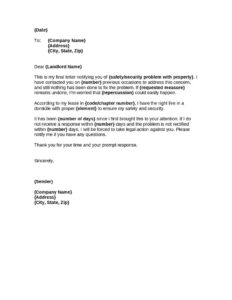
Complaint Letter Against Landlord
Download a free Complaint Letter Against Landlord template in PDF or DOCX to formally document repair, maintenance, or lease issues with your landlord.
DOCX
2 downloads
0
likes
Download Files
- DOCX
A Complaint Letter Against Landlord is a written notice a tenant sends to a property owner or manager to formally document a problem and request a specific remedy. The most common reason people use it is to create a dated paper trail for unresolved repairs, habitability concerns, or lease violations after verbal requests have been ignored. You can download this template free in both PDF and DOCX formats, with no signup required.
What Is a Complaint Letter Against Landlord?
A Complaint Letter Against Landlord is a formal document written by a tenant and addressed to the landlord, property management company, or designated agent. It describes a specific issue—such as a broken heater, a leak, a security deposit dispute, or a failure to make agreed-upon repairs—and requests that the landlord take action within a reasonable time. Beyond simply venting frustration, the letter serves as evidence that you notified the landlord in writing on a particular date. This written record can be essential if the dispute escalates to a housing authority, a mediator, or small claims court. A clear, professional letter often resolves problems faster than repeated phone calls or texts.
When Do You Need a Complaint Letter Against Landlord?
This letter is useful whenever an informal conversation has not produced results and you need a documented request. Common situations include:
- Unaddressed repairs: A broken furnace, leaking roof, faulty plumbing, or malfunctioning appliances the landlord has failed to fix.
- Habitability and safety issues: Mold, pest infestations, no hot water, electrical hazards, or broken locks that affect your health and safety.
- Security deposit disputes: Unexplained deductions or failure to return your deposit within the legally required window after move-out.
- Improper entry: A landlord who enters your unit without proper notice or repeatedly disturbs your right to quiet enjoyment.
- Lease or billing disputes: Incorrect rent charges, unexpected fees, or terms not being honored as written in the lease.
- Noise, harassment, or neighbor issues: Situations the landlord is responsible for managing under the lease but has neglected.
What a Complaint Letter Against Landlord Should Have
An effective complaint letter is specific, factual, and professional in tone. To be complete and useful as a record, it should include the date the letter is written, your full name and rental address, and the landlord’s or property manager’s name and address. The body should clearly describe the problem, including when it started and any previous attempts you made to resolve it. It should reference the relevant section of your lease if applicable, state exactly what action you are requesting, and set a reasonable deadline for a response. Keep a copy for your files and note the method of delivery.
How to Fill Out a Complaint Letter Against Landlord
- Date the letter: Enter the current date at the top so there is a clear record of when you sent your notice.
- Add your details: Write your full name, your rental unit address, and a phone number or email where the landlord can reach you.
- Address the recipient: Enter the landlord’s or property manager’s name and mailing address. Use the contact named in your lease.
- Write a clear subject line: For example, “Formal Complaint: Broken Heating in Unit 4B.”
- Describe the issue: In the body, explain the problem factually—what is wrong, when it began, and how it affects you.
- Note prior contact: List any earlier calls, texts, or emails, with dates, showing you tried to resolve it.
- State your request: Specify the remedy you want and a reasonable deadline, such as repairs within 14 days.
- Sign and keep a copy: Add your signature and retain a copy along with proof of delivery.
How to Deliver the Letter and Keep Records
How you send the letter matters as much as what it says. Whenever possible, send it by a method that provides proof of delivery, such as certified mail with a return receipt, so you can demonstrate the landlord actually received it. Email can also work if your lease permits electronic notice; in that case, request a read receipt or a reply confirming receipt. Always keep a dated copy of the letter for yourself, along with supporting evidence like photographs of the problem, repair estimates, or screenshots of earlier messages. If the issue continues after your deadline passes, this documentation becomes the foundation for a follow-up letter, a complaint to your local housing or code enforcement office, or a small claims filing.
Keeping the Tone Professional
Even when you are frustrated, a calm and factual tone is far more persuasive than an angry one. Stick to verifiable facts, avoid insults or threats, and frame the letter as a reasonable request for the landlord to meet their obligations. A professional letter signals that you are organized and serious, which makes landlords and property managers more likely to act. It also protects you, because the letter may be read later by a mediator, judge, or housing inspector who will weigh how reasonable you appear.
Common Mistakes to Avoid
- Being vague: Failing to name the specific problem, location, and dates weakens your record.
- Skipping a deadline: Without a clear timeframe for response, the landlord has no defined obligation to act.
- Using an emotional or threatening tone: This can undermine your credibility and make resolution harder.
- Not keeping a copy: If you cannot prove you sent the letter, it offers little protection in a dispute.
- Sending it the wrong way: Verbal-only complaints or texts may not satisfy lease or legal notice requirements.
- Ignoring your lease terms: Overlooking notice procedures or your own responsibilities can backfire.
Frequently Asked Questions
What is a Complaint Letter Against Landlord? It is a written notice from a tenant to a landlord or property manager that documents a specific problem and formally requests action. It creates a dated record of your complaint that can support you if the issue is not resolved and the matter escalates.
How do I fill out the letter? Add the date, your contact details, and the landlord’s name and address, then clearly describe the issue, reference any prior attempts to resolve it, and state the remedy you want with a reasonable deadline. Sign it and keep a copy along with any photos or evidence.
Does the letter need to be notarized or witnessed? No, a complaint letter generally does not need notarization or witnesses to be valid. What matters most is that it is clearly written, dated, and sent in a way that provides proof of delivery, such as certified mail.
Is a complaint letter legally binding? The letter itself is not a contract, but it can serve as important legal evidence that you notified your landlord of a problem on a specific date. In many areas, written notice is a required step before a tenant can pursue further remedies.
How much does this template cost? This Complaint Letter Against Landlord template is completely free to download from Business Forms Pro in both PDF and DOCX formats. There is no signup, subscription, or hidden fee required.
What should I do if the landlord ignores my letter? Keep your dated copy and delivery proof, then consider sending a follow-up letter or contacting your local housing authority or code enforcement office. Depending on the issue and your jurisdiction, you may also explore mediation or small claims court.
This template is a general example provided for informational purposes only and is not legal advice. Tenant and landlord rights, notice requirements, and procedures vary by state and locality, so consult a qualified attorney or your local housing authority for guidance specific to your situation.
Official resource: for the rules that apply to your situation, see HUD.
Related Forms
- Open House Sign In Sheet
- Real Estate Needs Wants Checklist
- Landlord Move-Out Letter
- Lawn Care Form
- Landlord Make Repairs
- Complaint Letter Against Tenant
Browse more in Rental and Real Estate.