
Dry Cleaning Ticket
Download a free Dry Cleaning Ticket template to track customer garments, services, and pickup details in PDF and DOCX — no signup required.
PDF
DOC
3 downloads
0
likes
Download Files
- DOC
A Dry Cleaning Ticket is the printed claim slip a cleaner gives a customer when they drop off garments, recording who the order belongs to and what items are being cleaned. The most common reason people use one is to track each order accurately so the right clothes are returned to the right person at pickup. You can download this Dry Cleaning Ticket free in both PDF and DOCX formats — no signup required.
What Is a Dry Cleaning Ticket?
A Dry Cleaning Ticket is a simple record issued by a dry cleaner, laundry, or garment-care business at the moment a customer leaves items for cleaning, pressing, or alterations. It captures the customer’s identity, contact details, and a description of the garments received. One half typically stays with the shop and is attached to the order, while the customer keeps a matching stub to redeem their clothing later. The ticket serves three roles at once: it confirms what was dropped off, it acts as a proof-of-receipt for both parties, and it functions as a lightweight bill of sale for the cleaning service. Clear, consistent tickets reduce mix-ups, speed up pickup, and create a paper trail if a dispute ever arises.
When Do You Need a Dry Cleaning Ticket?
Any time garments change hands for cleaning, a ticket protects both the business and the customer. Common situations include:
- Standard drop-off: A customer leaves suits, dresses, or coats and needs a stub to claim them later.
- Large or mixed orders: Multiple items go in together, so a written description prevents items from being lost or swapped.
- Specialty cleaning: Wedding gowns, leather, suede, or delicate fabrics that require special handling and notes.
- Alterations and repairs: Hemming, button replacement, or tailoring that needs to be tracked alongside cleaning.
- Corporate or recurring accounts: A company name on the ticket links the order to a billing account.
- Disputes or damage claims: If a garment is reported damaged or missing, the ticket’s description and contact details help resolve the issue.
What a Dry Cleaning Ticket Should Have
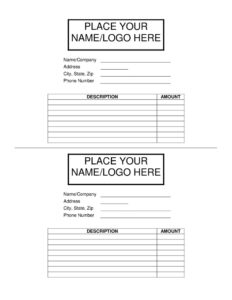
A complete ticket makes the order unmistakable at pickup. It should clearly show the cleaner’s business name or logo so the stub is identifiable, the customer’s name and any associated company, and full contact information including address, city, state, ZIP, and phone number. The heart of the ticket is the description of the items — what was received, in what quantity, and any condition notes or special instructions. Many shops also add an order number, drop-off and ready dates, and a price or total, but at minimum the parties and the garments must be clearly identified.
How to Fill Out a Dry Cleaning Ticket
- Add your business identity: In the “place your name/logo here” area at the top, insert your dry cleaning shop’s name or logo so the ticket is instantly recognizable.
- Enter the customer’s name/company: Write the individual’s name, or the company name if the order is billed to a business account.
- Record the address: Fill in the customer’s street address for delivery, billing, or contact purposes.
- Complete city, state, and ZIP: Enter each location field accurately so contact records stay clean.
- Add the phone number: Capture a reliable number so you can call when the order is ready or if a question arises.
- Write the description: List each garment received — for example, “2 men’s suits, 1 silk blouse, 1 wool coat” — and note quantities, colors, fabrics, and any stains, missing buttons, or special instructions.
- Finalize and split the ticket: Keep one copy attached to the garments and give the matching stub to the customer to present at pickup.
Tips for Accurate Garment Records
The description field is where most mistakes happen, so make it detailed. Note pre-existing stains, fraying, or loose seams before cleaning so the customer cannot later claim your shop caused the damage. Record fabric types when they affect the cleaning method — silk, leather, and wool each behave differently. If you assign order numbers, write the number on the ticket and on the garment tag itself so they always travel together. A quick photo of unusual or high-value items, stored against the order number, adds another layer of protection.
Dry Cleaning Ticket vs. a Standard Receipt
A standard receipt simply confirms that money was paid. A Dry Cleaning Ticket does more: it documents that physical property was handed over for a service and will be returned later. Because the customer’s clothing remains in your custody, the ticket also serves as a claim check — the stub is what entitles the customer to retrieve their items. Treat the ticket as both a service record and a property receipt, and keep your copy on file until the order is collected and any return window has passed.
Common Mistakes to Avoid
- Vague descriptions: Writing “clothes” instead of itemizing garments makes it hard to confirm a complete order at pickup.
- Skipping condition notes: Failing to record existing stains or damage can lead to disputes you cannot disprove.
- Wrong or missing phone number: Without a good contact, you cannot reach the customer when the order is ready.
- No matching stub: If the customer leaves without a claim portion, verifying the order later becomes guesswork.
- Illegible handwriting: Smudged or rushed entries cause the wrong garments to be returned.
- Not separating company vs. individual: Mixing personal and corporate accounts confuses billing and pickup.
Frequently Asked Questions
What is a Dry Cleaning Ticket used for? It records the garments a customer drops off, who they belong to, and how to reach that customer. The ticket acts as both a service record and a claim check so the right items are returned at pickup. It also provides a paper trail if a garment is reported damaged or missing.
Is a Dry Cleaning Ticket the same as a receipt? Not exactly. A receipt confirms payment, while a Dry Cleaning Ticket documents that physical garments were handed over for cleaning and will be returned later. Many shops combine both functions by adding a price line to the ticket.
Does a Dry Cleaning Ticket need to be signed or notarized? No notarization is required. Signatures are optional, though some businesses ask the customer to acknowledge condition notes on high-value or specialty items. The matching stub generally serves as the customer’s proof of drop-off.
What should I write in the description field? List each item, its quantity, color, and fabric, plus any pre-existing damage or special handling instructions. The more specific the description, the easier it is to confirm a complete order and resolve any later questions.
How much does this Dry Cleaning Ticket template cost? It is completely free to download from Business Forms Pro in both PDF and DOCX formats, with no signup required. You can add your shop’s name or logo and customize the fields to match your workflow.
Can I customize the ticket for my business? Yes. The DOCX version is fully editable, so you can insert your logo, add order numbers, ready dates, pricing, or terms of service, and adjust the layout to fit your printing setup.
This Dry Cleaning Ticket template is a general example provided for informational purposes only and is not legal, financial, or tax advice. Business and consumer-protection requirements vary by jurisdiction, so consult a qualified professional to confirm your records and disclosures meet local rules.
Official resource: for the rules that apply to your situation, see your state DMV.
Related Forms
- Sports Memorabilia Bill Of Sale
- Dog Bill of Sale
- Recreational Vehicle Bill Of Sale
- Farm Animal Bill Of Sale
- Domain Name Bill Of Sale
- Bill of Sale With Lien
Browse more in Bills of Sale.