
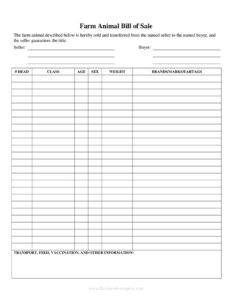
Farm Animal Bill Of Sale
Download a free Farm Animal Bill of Sale template to document livestock sales, transfer ownership, and protect buyer and seller — free PDF and DOCX download.
PDF
DOCX
3 downloads
0
likes
Download Files
- DOCX
A Farm Animal Bill of Sale is a written document that records the sale and transfer of ownership of livestock or other farm animals from a seller to a buyer. People most commonly use it to create proof of purchase when buying or selling cattle, horses, goats, sheep, pigs, or poultry. It is free to download here in both PDF and DOCX formats, with no signup required.
What Is a Farm Animal Bill of Sale?
A Farm Animal Bill of Sale is a legal record issued by the seller and accepted by the buyer that documents the transaction of one or more farm animals. It identifies the parties, describes the animal or animals being sold, states the purchase price, and confirms the date ownership changed hands. Farmers, ranchers, hobbyists, breeders, and auction participants all rely on it. The document serves as receipt and as evidence of transfer, which can matter for brand inspections, transport, registration with breed associations, tax records, and resolving any later dispute over who actually owns the animal.
When Do You Need a Farm Animal Bill of Sale?
This form is useful any time animals change hands, whether between neighbors or at a large operation. Common situations include:
- Selling cattle, horses, goats, sheep, pigs, or poultry to a private buyer.
- Purchasing breeding stock or show animals where lineage and value are significant.
- Transferring 4-H or FFA project animals after a fair or auction.
- Documenting a sale that requires a brand inspection or health certificate before transport across state lines.
- Selling a single companion animal such as a horse or donkey where a clear ownership record matters.
- Liquidating part of a herd or flock and needing receipts for tax and accounting purposes.
Types of Farm Animal Sales It Covers
The same basic form adapts to many kinds of livestock transactions. A single-animal sale, such as a horse changing owners, will list one detailed description. A bulk sale, such as a group of feeder calves or a flock of laying hens, may list a lot count and a per-head or total price. Breeding and registered animals often require additional details like registration numbers and parentage. Whatever the type, the bill of sale captures the essentials of who, what, when, and how much.
What a Farm Animal Bill of Sale Should Have
A complete and useful document generally includes the following elements:
- Date of sale and the location where the transaction occurred.
- Seller information — full legal name, address, and contact details.
- Buyer information — full legal name, address, and contact details.
- Animal description — species, breed, sex, age, color or markings, weight, ear tags, brands, microchip, or registration numbers, and quantity.
- Purchase price and the method of payment, plus whether any deposit was made.
- Warranties or “as-is” statement describing the animal’s condition and health.
- Signatures of both parties, and witnesses or a notary block where used.
How to Fill Out a Farm Animal Bill of Sale
- Enter the date of the sale and, if included, the city and state where the transaction takes place.
- Fill in the seller’s full name and address, then the buyer’s full name and address, so both parties are clearly identified.
- Describe each animal in the animal description section: list species, breed, sex, approximate age or date of birth, color and markings, weight, and any identifying numbers such as ear tags, tattoos, brands, microchips, or registration IDs.
- If you are selling more than one animal, record the quantity or attach an itemized list referenced in the form.
- Write the agreed purchase price in numbers and, where space allows, in words, and note the payment method and any deposit already received.
- Indicate whether the animal is sold “as-is” or with any health guarantees, and reference any health or vaccination records being transferred.
- Both the seller and buyer sign and date the form. Add witness signatures or a notary acknowledgment if your situation or local rules call for it.
Brand Inspections, Health Records, and Transport
Depending on where you live and the species involved, a farm animal sale may involve more than the bill of sale itself. Cattle and horses in many western states require a brand inspection certificate before they can be moved or sold. Animals crossing state lines often need a Certificate of Veterinary Inspection (commonly called a health certificate) and proof of certain vaccinations or tests. Keep the bill of sale together with these records so the buyer has a complete paper trail. The bill of sale documents the transfer of ownership, while inspection and health paperwork addresses identity, disease control, and lawful movement — they work together, not in place of one another.
As-Is Sales and Health Disclosures
Many farm animals are sold “as-is,” meaning the buyer accepts the animal in its current condition without ongoing guarantees from the seller. If that is your agreement, state it plainly. If instead the seller is making promises — for example that an animal is sound, bred, or free of a specific disease — write those promises into the form so both parties understand them. Being clear here prevents misunderstandings if the animal becomes ill or fails to perform as expected after the sale.
Common Mistakes to Avoid
- Vague animal descriptions — “one cow” is not enough; include tags, brands, breed, and markings so the specific animal is identifiable.
- Leaving the as-is or warranty section blank, which creates uncertainty about the animal’s guaranteed condition.
- Forgetting required inspection or health paperwork that must accompany the sale or transport.
- Not recording the payment method or deposit, leading to disputes over what was actually paid.
- Skipping signatures or dates from either party, which weakens the document as proof.
- Keeping only one copy — both buyer and seller should retain a signed original.
Frequently Asked Questions
What is a Farm Animal Bill of Sale used for? It is used to document the sale and transfer of ownership of livestock or other farm animals from a seller to a buyer. It serves as a receipt, proof of ownership, and a record of the price and terms agreed upon. Both parties keep a copy for their records.
How do I fill out a Farm Animal Bill of Sale? Enter the sale date, the seller’s and buyer’s names and addresses, a detailed description of each animal, the purchase price and payment method, and any as-is or warranty terms. Then both parties sign and date the form. Add witness or notary signatures if your situation requires them.
Does a Farm Animal Bill of Sale need to be notarized? Notarization is usually not required for it to be valid, but it can add an extra layer of proof for higher-value animals. Some buyers, lenders, or registries prefer a notarized or witnessed document. Check your local rules, since requirements vary by state.
Is a Farm Animal Bill of Sale legally binding? Yes, once both the buyer and seller sign it and the essential terms are agreed upon, it is generally a binding record of the transaction. To strengthen it, make the animal descriptions specific and keep supporting records like health certificates with it.
Do I need a separate bill of sale for each animal? Not necessarily — you can list multiple animals on one form or attach an itemized list referenced in the document. For high-value or registered animals, many people prefer a separate, detailed bill of sale for each one to keep records clear.
How much does this template cost? Nothing — this Farm Animal Bill of Sale template is completely free to download in PDF and DOCX formats, with no signup required. You can fill it out digitally or print it and complete it by hand.
This template is a general example provided for informational purposes only and is not legal, financial, or tax advice. Laws and requirements for selling and transporting farm animals vary by state and locality. Consult a qualified professional or your local agricultural authority to ensure your sale meets all applicable requirements.
Official resource: for the rules that apply to your situation, see your state DMV.
Related Forms
- Business Bill of Sale
- Recreational Vehicle Bill Of Sale
- Golf Cart Bill Of Sale
- ATV Bill Of Sale
- Receipt for Company Property
- Musical Instrument Bill of Sale
Browse more in Bills of Sale.