
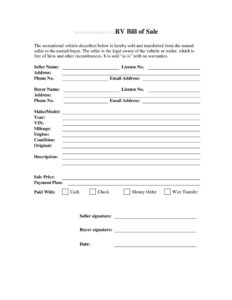
Recreational Vehicle Bill Of Sale
Download a free Recreational Vehicle Bill of Sale template in PDF or DOCX to document your RV sale, protect both parties, and transfer ownership easily.
PDF
DOCX
4 downloads
0
likes
Download Files
- DOCX
A Recreational Vehicle Bill of Sale is a written record that documents the sale and transfer of ownership of an RV from a seller to a buyer. Most people use it to create proof of the transaction for titling, registration, and tax purposes, and to protect both sides if a dispute arises later. You can download it free in PDF or DOCX with no signup required.
What Is a Recreational Vehicle Bill of Sale?
A Recreational Vehicle Bill of Sale is a legal document that records the details of an RV transaction, including the parties involved, the vehicle being sold, the price paid, and the date of sale. It is typically created by the seller and signed by both the seller and the buyer. The form serves as a receipt and as evidence that ownership has legally changed hands. RVs covered by this document can include motorhomes, travel trailers, fifth wheels, camper vans, pop-up campers, and toy haulers. Because an RV is a high-value purchase, the bill of sale provides important documentation that supports the title transfer and protects everyone involved in the sale.
When Do You Need a Recreational Vehicle Bill of Sale?
This form is useful any time an RV changes hands, whether the transaction is between strangers, friends, or family. Common scenarios include:
- Selling a private-party motorhome or travel trailer and needing proof of the sale price and date.
- Buying a used RV from an individual who is not a licensed dealer.
- Transferring ownership of an RV between family members as a gift or low-cost sale.
- Registering or titling a newly purchased RV at your local motor vehicle agency, which often requires a bill of sale.
- Documenting an “as-is” sale so the seller is protected from later claims about the vehicle’s condition.
- Reporting the sale for tax records, insurance updates, or to calculate sales tax due at registration.
Types of Recreational Vehicles Covered
The term “recreational vehicle” is broad, and this bill of sale can be adapted to many categories. Motorized RVs include Class A, B, and C motorhomes that have their own engine and require a VIN. Towable RVs include travel trailers, fifth wheels, pop-up campers, and toy haulers that attach to a tow vehicle. Each type may have different titling and registration rules depending on weight and where you live, so it helps to note the exact RV type and identifying numbers on the form. Recording the correct category ensures the document matches what appears on the title and registration paperwork.
What a Recreational Vehicle Bill of Sale Should Have
A complete RV bill of sale should clearly identify everyone and everything involved in the transaction. At minimum, it should include the full legal names and addresses of the buyer and seller, a detailed description of the RV, the agreed-upon purchase price, the method of payment, and the date of sale. It should also state the condition of the vehicle, typically noting that it is sold “as-is” unless a warranty is provided. Finally, it needs signatures from both parties, and in some places, a witness or notary acknowledgment. The more detail you include, the stronger the document is as proof of the sale.
How to Fill Out a Recreational Vehicle Bill of Sale
- Date of sale: Enter the calendar date the transaction takes place at the top of the form.
- Seller information: Write the seller’s full legal name and current mailing address.
- Buyer information: Write the buyer’s full legal name and current mailing address.
- RV description: Record the year, make, model, and type of recreational vehicle (for example, Class C motorhome or travel trailer).
- Identification numbers: Enter the Vehicle Identification Number (VIN), license plate number, and current odometer or mileage reading if the RV is motorized.
- Purchase price: State the total agreed sale amount in both numbers and words to avoid confusion.
- Payment method: Note how the buyer paid, such as cash, check, money order, or financing, and whether a deposit was made.
- Condition and terms: Indicate that the RV is sold “as-is” or describe any warranty being offered.
- Signatures: Have both the buyer and seller sign and date the form, adding witness or notary lines if required in your area.
Notarization, Witnesses, and Filing
Whether a Recreational Vehicle Bill of Sale must be notarized depends entirely on where you live. Some states require notarization or a witness signature for vehicle transfers, while others accept a simple signed document. Even when notarization is not required, having the form notarized adds an extra layer of authenticity and can help if the sale is ever questioned. After signing, the buyer typically takes the bill of sale, along with the signed title, to the local motor vehicle or DMV office to complete the registration and title transfer. Keep a copy for your own records, as you may need it for insurance, taxes, or future resale. It is always worth checking your local agency’s specific requirements before finalizing the sale.
Tips for a Smooth RV Sale
Before exchanging money, both parties should inspect the RV together and confirm that the VIN on the vehicle matches the title and the bill of sale. Sellers should gather maintenance records, the owner’s manual, and any spare keys to hand over at closing. Buyers should verify there are no outstanding liens on the RV and confirm the seller is the legal owner named on the title. Completing the bill of sale in duplicate so each party keeps a signed original prevents misunderstandings later.
Common Mistakes to Avoid
- Leaving the VIN, mileage, or RV type blank, which can delay registration at the DMV.
- Failing to specify whether the sale is “as-is” or includes a warranty.
- Writing the purchase price only in numbers rather than also spelling it out in words.
- Forgetting to have both parties sign and date the document.
- Not checking local notarization or witness requirements before completing the sale.
- Neglecting to give each party a signed copy for their records.
Frequently Asked Questions
What is a Recreational Vehicle Bill of Sale used for? It documents the sale and transfer of ownership of an RV from a seller to a buyer. The form serves as a receipt and as proof for titling, registration, and tax purposes. It also protects both parties by recording the agreed price, date, and condition of the vehicle.
How do I fill out an RV Bill of Sale? Start by entering the date, then the full names and addresses of the buyer and seller. Add a detailed description of the RV including year, make, model, VIN, and mileage, followed by the purchase price and payment method. Finish by having both parties sign and date the document.
Does a Recreational Vehicle Bill of Sale need to be notarized? It depends on your state or local jurisdiction. Some places require notarization or a witness signature for vehicle transfers, while others accept a simple signed form. Even when not required, notarizing the document adds credibility and can be helpful if the sale is later disputed.
Is an RV Bill of Sale legally binding? Yes, once both the buyer and seller sign it voluntarily, it becomes a binding record of the transaction. It demonstrates that ownership has changed hands under the stated terms. However, it usually must be combined with a properly signed title to complete the legal transfer.
How much does this template cost? This Recreational Vehicle Bill of Sale template is completely free to download from Business Forms Pro. It is available in PDF and DOCX formats with no signup or hidden fees. You can fill it out digitally or print it and complete it by hand.
What documents do I need besides the bill of sale? You will typically also need the signed vehicle title, valid identification for both parties, and any lien release if the RV was financed. The buyer should bring these documents to the local DMV to register and title the RV. Keeping insurance and maintenance records on hand is also recommended.
This template is provided as a general example for informational purposes only and is not legal, financial, or tax advice. Requirements for vehicle sales and ownership transfers vary by jurisdiction. Consult a qualified professional or your local motor vehicle agency to ensure your documents meet applicable requirements.
Official resource: for the rules that apply to your situation, see your state DMV.
Related Forms
- Mobile Home Bill Of Sale
- Antique Bill of Sale
- Collateral Receipt
- Boat Bill of Sale
- Bike Bill of Sale
- Appliance Bill Of Sale
Browse more in Bills of Sale.