
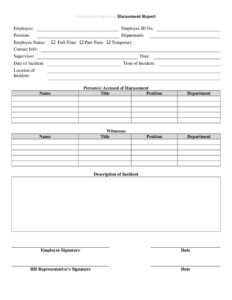
Harassment Report Form
Download a free Harassment Report Form template in PDF and DOCX to document workplace incidents clearly, consistently, and confidentially—free download.
PDF
DOCX
7 downloads
0
likes
Download Files
- DOCX
A Harassment Report Form is a structured document an employee or witness uses to formally report unwelcome conduct, intimidation, discrimination, or bullying in the workplace. People most often use it to create a clear, written record of an incident so that human resources can investigate and respond appropriately. You can download this Harassment Report Form for free in both PDF and DOCX formats, with no signup required.
What Is a Harassment Report Form?
A Harassment Report Form is a workplace document that captures the details of an alleged incident of harassment in a consistent, organized way. It is typically completed by the person who experienced the behavior—or by a witness or manager who observed it—and submitted to human resources, a compliance officer, or a designated investigator. The form documents who was involved, what happened, when and where it occurred, and whether anyone else witnessed it. Its purpose is to ensure that complaints are taken seriously, recorded accurately, and routed to the right people for review. A well-designed form also helps employers demonstrate that they have a process for receiving and addressing concerns, which supports a respectful and legally compliant workplace.
When Do You Need a Harassment Report Form?
This form is appropriate any time someone wants to formally raise a concern about inappropriate workplace conduct. Common situations include:
- An employee experiences repeated unwelcome comments, jokes, or advances from a coworker or supervisor.
- A staff member witnesses another colleague being bullied, threatened, or singled out and wants to report what they saw.
- An individual believes they are being treated unfairly because of a protected characteristic such as race, sex, religion, age, or disability.
- A manager receives a verbal complaint and needs to convert it into a written record before launching an investigation.
- An employee feels intimidated by physical gestures, offensive emails, or messages sent through company channels.
- HR is conducting an internal review and needs a standardized intake document so every complaint is handled the same way.
Types of Conduct a Report May Cover
Harassment takes many forms, and this report can document each of them. Verbal harassment includes slurs, insults, threats, or persistent unwanted remarks. Physical harassment covers unwanted touching, blocking movement, or intimidating gestures. Visual or written harassment can involve offensive images, emails, texts, or social media posts. Sexual harassment includes unwelcome advances, requests for favors, or comments of a sexual nature. The form is designed to be flexible enough to capture any of these so the reporter can describe exactly what occurred in their own words.
What a Harassment Report Form Should Have
A complete Harassment Report Form should include the reporter’s name and contact information, the date the report is filed, and the name and title of the person accused. It should describe the incident in detail, note the date, time, and location, and identify any witnesses. Strong forms also include a section for prior incidents or patterns, space to describe how the conduct affected the reporter, and an area to attach supporting evidence such as emails or screenshots. Finally, it should capture the reporter’s signature and a field for HR to record receipt, so there is a clear chain of documentation.
How to Fill Out a Harassment Report Form
- Reporter information: Enter your full name, job title, department, and contact details so HR can follow up.
- Date of report: Write the date you are completing the form, which establishes a timeline.
- Person being reported: Provide the name, title, and relationship of the individual whose conduct you are describing.
- Date, time, and location: Record exactly when and where each incident happened; if it occurred over time, list the relevant dates.
- Description of the incident: Describe what happened in clear, factual language. Quote specific words if you can recall them, and avoid speculation about motive.
- Witnesses: List the names and contact details of anyone who saw or heard the conduct.
- Prior incidents: Note any earlier related behavior, including whether it was reported before.
- Supporting evidence: Reference and attach any emails, texts, photos, or documents that support your account.
- Signature and date: Sign and date the form to confirm the information is accurate to the best of your knowledge.
Confidentiality and What Happens Next
Most employers treat harassment reports as confidential, sharing details only with those who need to know in order to investigate and resolve the matter. After you submit the form, HR or a designated investigator typically acknowledges receipt, reviews the information, and may interview you, the accused, and any witnesses. The investigation should be handled promptly and impartially. Retaliation against someone for filing a good-faith report is generally prohibited under workplace policies and many laws. Keeping a copy of your completed form for your own records is a sensible step, as is noting the date you submitted it.
Tips for Writing an Effective Report
Stick to the facts and describe events in chronological order. Use specific, observable language rather than labels or conclusions—for example, write what was said or done rather than simply stating that conduct was “hostile.” Include dates and times whenever possible, and gather supporting materials before submitting. If you are reporting on behalf of someone else or as a witness, make that role clear at the top of the form.
Common Mistakes to Avoid
- Leaving the description vague—”he was rude” is far less useful than a specific account of what was said and when.
- Forgetting to list witnesses or attach available evidence such as emails or screenshots.
- Waiting too long to report, which can make details harder to recall and verify.
- Including assumptions about intent instead of focusing on observable behavior.
- Failing to sign and date the form, which weakens its value as a formal record.
- Not keeping a personal copy of the completed report for your own files.
Frequently Asked Questions
What is a Harassment Report Form used for? It is used to formally document an incident of workplace harassment, discrimination, or bullying so it can be investigated. The form creates a clear written record of who was involved, what happened, and when. This helps HR respond consistently and fairly.
How do I fill out a Harassment Report Form? Provide your contact details, identify the person being reported, and describe the incident with specific dates, times, and locations. List any witnesses and attach supporting evidence such as emails or messages. Then sign and date the form before submitting it to HR or your designated contact.
Is a Harassment Report Form confidential? Most employers handle these reports confidentially and share details only with the people who need them to investigate. Confidentiality cannot always be guaranteed completely, since an investigation may require interviewing others. Ask your HR department about its specific confidentiality policy.
Do I need witnesses to file a report? No, witnesses are helpful but not required to submit a report. You can file based on your own firsthand experience, describing the conduct as accurately as you can. If witnesses do exist, listing them strengthens the investigation.
Can I be retaliated against for filing a report? Retaliation for reporting harassment in good faith is generally prohibited by workplace policies and by many laws. If you experience negative treatment after filing, you should report that retaliation as well. Document any related incidents in writing.
Is this Harassment Report Form free to download? Yes, you can download this template for free in both PDF and DOCX formats with no signup required. You may customize it to match your organization’s policies and reporting procedures. It is ready to print or complete electronically.
This template is a general example provided for informational purposes only and does not constitute legal advice. Workplace harassment laws and reporting requirements vary by jurisdiction and employer. Consult a qualified employment law professional or your HR department for guidance specific to your situation.
Official resource: for the rules that apply to your situation, see the U.S. Department of Labor.
Related Forms
- New Hire Checklist
- Interview Invitation
- Employee Turnover Rate
- Employee Personnel Data Change
- Disciplinary Action Form
- Employee Name Change Notification
Browse more in Employment.