
Lease Extension Rejection
Use this free Lease Extension Rejection letter template to politely deny a tenant's request to extend a lease, with a clear move-out date — free download.
PDF
DOCX
0
likes
Download Files
- DOCX
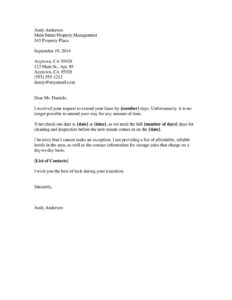
A Lease Extension Rejection letter is a formal written response a landlord or property manager sends to a tenant to deny their request to extend an existing lease or stay beyond the agreed end date. People most often use it when a unit is already promised to a new tenant and the current occupant needs a clear, firm move-out date in writing. You can download this template free in both PDF and DOCX formats, with no signup required.
What Is a Lease Extension Rejection Letter?
A Lease Extension Rejection letter is a short, professional notice issued by a landlord, property manager, or leasing office in reply to a tenant who has asked to remain in a rental unit longer than the lease allows. It documents that the request has been received, states plainly that the extension cannot be granted, and confirms the exact date and time the tenant must vacate. Because it sets expectations in writing, the letter protects both parties: the tenant knows precisely when to leave, and the landlord has a record showing the request was answered and the move-out terms were communicated. It is courteous in tone while leaving no doubt about the decision.
When Do You Need a Lease Extension Rejection Letter?
This letter is useful any time a tenant asks to stay longer and you must say no. Common situations include:
- A tenant emails or calls asking to push back their check-out date by a few days or weeks, and you need a formal reply.
- A new tenant is already scheduled to move in, leaving no buffer for an extension.
- You need the unit vacant for deep cleaning, repairs, or inspection between tenancies.
- You are selling the property or taking the unit off the rental market and cannot accommodate a longer stay.
- A short-term or seasonal rental has back-to-back bookings that make any extension impossible.
- You want a paper trail confirming the original lease end date will be enforced.
What a Lease Extension Rejection Letter Should Have
A complete rejection letter should clearly identify both parties, reference the tenant’s specific extension request, and state the decision without ambiguity. It should restate the firm check-out date and time, briefly explain why the extension cannot be granted, and ideally offer helpful resources to soften the message. Including the property address, the date the letter was written, and a signature from the person authorized to make the decision keeps the document professional and verifiable. A respectful closing maintains goodwill even though the answer is no.
How to Fill Out a Lease Extension Rejection Letter
- Add your sender details. Enter your name (for example, Andy Anderson), your company (Main Street Property Management), and the business address at the top.
- Date the letter. Insert the date you are sending it so there is a clear timeline of when the decision was communicated.
- Enter the tenant’s information. Include the recipient’s name and rental address, such as 123 Main St., Apt. #5, along with city, state, and ZIP.
- Open with a greeting. Address the tenant directly, for example “Dear Mr. Daniels.”
- Reference the request. Fill in the {number} of days the tenant asked to extend, acknowledging their request.
- State the firm move-out terms. Enter the check-out {date} and {time}, and the {number of days} needed for cleaning and inspection before the new tenant arrives on the next {date}.
- Offer resources. Complete the {List of Contacts} with nearby hotels and day-to-day storage options.
- Sign off. Close sincerely and add your name and contact details such as phone and email.
How to Deliver the Letter Professionally
Once the letter is complete, choose a delivery method that gives you proof the tenant received it. Many landlords send the letter by email for speed and also mail a printed copy, or hand-deliver it with a brief, polite conversation. Keep a copy for your own records along with the original extension request. If your lease or local rules require notices to be delivered in a particular way, follow that method exactly. Sending the letter promptly after receiving the request gives the tenant maximum time to arrange their transition, which reduces friction and helps the move-out stay on schedule.
Keeping the Tone Firm but Kind
A rejection does not have to feel harsh. The template models a tone that is direct about the decision yet considerate about the tenant’s situation. Acknowledging the request, briefly explaining the practical reason — such as cleaning, inspection, and an incoming tenant — and providing a list of affordable hotels and flexible storage units shows good faith. This approach helps preserve a positive relationship, protects your reputation, and lowers the chance of a dispute. Even when you cannot grant the extension, a respectful closing line wishing the tenant well goes a long way.
Common Mistakes to Avoid
- Being vague about the move-out date. Always include both the exact date and time so there is no confusion.
- Forgetting to reference the original request. Tie the letter to the specific number of days the tenant asked for.
- Leaving placeholders unfilled. Replace every bracketed field before sending, especially dates and the list of contacts.
- Sounding cold or accusatory. A polite tone reduces conflict and reflects well on your property.
- Skipping proof of delivery. Send it in a way you can document, and keep a copy on file.
- Ignoring lease or local notice rules. Make sure your timing and method match the lease terms and applicable regulations.
Frequently Asked Questions
What is a Lease Extension Rejection letter? It is a written notice from a landlord or property manager declining a tenant’s request to stay longer than their lease allows. The letter confirms the decision and restates the exact date and time the tenant must vacate. It serves as a clear record for both parties.
How do I fill out the Lease Extension Rejection template? Enter your sender details, the date, and the tenant’s name and address, then fill in the requested number of extension days and the firm check-out date and time. Add the days needed for cleaning and inspection, the new tenant’s move-in date, and a list of helpful contacts before signing. Replace every bracketed placeholder with your real information.
Is a Lease Extension Rejection letter legally binding? The letter itself communicates a decision rather than creating a new contract; the original lease and its end date remain the governing terms. It does, however, serve as important documentation that the request was answered and the move-out date was confirmed. For enforcement of move-out, follow your lease and local rules.
Do I have to give a reason for denying the extension? A brief, honest reason — such as needing the unit for cleaning, inspection, or an incoming tenant — is courteous and helps the tenant understand the decision. Whether a reason is legally required can vary by location, so check your local rules. Keeping the explanation factual and professional is always a safe approach.
Does this letter need to be notarized or witnessed? No, a Lease Extension Rejection letter generally does not require notarization or witnesses. A clear signature from the landlord or authorized property manager is sufficient. Keeping a copy and proof of delivery is more important than formal witnessing.
How much does this template cost? It is completely free to download from Business Forms Pro in both PDF and DOCX formats, with no signup required. You can edit the DOCX version to match your property and tenant details. Use it as many times as you need.
This template is a general example provided for informational purposes only and is not legal advice. Landlord-tenant requirements, notice periods, and delivery methods vary by jurisdiction. Consult a qualified attorney or local housing authority to ensure your letter and move-out process comply with applicable laws.
Official resource: for the rules that apply to your situation, see HUD.
Related Forms
- Homebuyer Features Checklist
- Landlord Lease Renewal Letter
- Landlord Move-Out Letter
- Tenant Lease Renewal Letter
- Complaint Letter Against Landlord
- Property Appraisal Form
Browse more in Rental and Real Estate.