
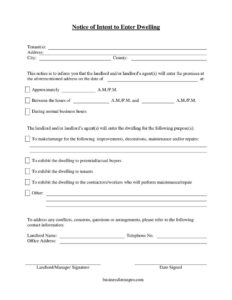
Notice Of Intent To Enter Dwelling
Download a free Notice of Intent to Enter Dwelling template in PDF and DOCX to give tenants proper written notice before entering a rental—free download.
PDF
DOCX
1 downloads
0
likes
Download Files
- DOCX
A Notice of Intent to Enter Dwelling is a written notice a landlord gives a tenant before entering a rented home, stating the date, time, and reason for the visit. Landlords most often use it to provide the legally required advance warning before repairs, inspections, or showings, and it’s free to download in PDF and DOCX with no signup required.
What Is a Notice of Intent to Enter Dwelling?
A Notice of Intent to Enter Dwelling is a formal document a landlord or property manager delivers to a tenant to announce that they—or an authorized agent—plan to enter the rental unit. Most lease agreements and rental laws require landlords to honor a tenant’s right to quiet enjoyment, which means they generally cannot enter without proper advance notice except in emergencies. This notice documents who is entering, when they will arrive, and why, creating a written record that protects both parties. It covers routine situations such as maintenance, inspections, or showing the property, and it gives the tenant contact information to raise questions or reschedule.
When Do You Need a Notice of Intent to Enter Dwelling?
Landlords typically use this notice whenever access to an occupied unit is needed. Common situations include:
- Repairs and maintenance: Fixing a leak, servicing the HVAC system, or replacing an appliance.
- Improvements or decorations: Painting, installing fixtures, or renovating part of the unit.
- Showing to prospective buyers: When the property is listed for sale and a real estate agent needs access.
- Showing to prospective tenants: When the current lease is ending and the unit is being re-rented.
- Contractor or worker visits: Allowing plumbers, electricians, pest control, or other vendors inside to assess or perform work.
- Routine inspections: Periodic checks to confirm the unit is being maintained per the lease.
In short, any non-emergency entry into an occupied rental is a good reason to issue written notice rather than relying on a verbal heads-up.
What a Notice of Intent to Enter Dwelling Should Have
A complete notice leaves no ambiguity about the visit. It should clearly identify the tenant by name and list the full rental address, including city and county. It must state the specific date of entry and the expected time—whether an approximate time, a window between two hours, or during normal business hours. Critically, it must state the purpose of entry so the tenant understands why access is needed. Finally, it should include the landlord’s name, telephone number, office address, and a signature with the date signed. Together these elements turn an informal request into a documented, professional notice that satisfies most lease and legal notice requirements.
How to Fill Out a Notice of Intent to Enter Dwelling
- Tenant(s): Enter the full name of each tenant named on the lease who occupies the unit.
- Address, City, County: Write the complete street address of the rental, along with the city and county where it is located.
- Date of entry: Fill in the calendar date the landlord or agent plans to enter the premises.
- Time of entry: Choose one option—an approximate time (with A.M. or P.M.), a window between two stated hours, or during normal business hours. Circle or check the applicable choice.
- Purpose(s): Check the reason for entry: to make or arrange improvements, decorations, maintenance, or repairs; to exhibit the dwelling to potential or actual buyers; to exhibit to prospective tenants; to admit contractors or workers performing maintenance; or “Other” with a written explanation.
- Contact information: Provide the landlord’s name, telephone number, and office address so the tenant can raise conflicts or reschedule.
- Signature and date: The landlord or manager signs and dates the notice to validate it.
How Much Notice Should You Give?
Most jurisdictions require landlords to give a reasonable amount of advance notice—commonly 24 to 48 hours—before entering an occupied unit, though the exact requirement varies by state and sometimes by city. Some areas specify the notice must be in writing, delivered during certain hours, and limited to entry during reasonable times of day. Emergencies, such as a fire, burst pipe, or gas leak, are typically exceptions where immediate entry is allowed without notice. Because the rules differ widely, always check your local landlord-tenant statutes and your lease before scheduling entry, and build in extra lead time so the tenant has a fair chance to respond.
Delivering the Notice Properly
How you deliver the notice can matter as much as its content. Acceptable delivery methods often include handing the notice to the tenant in person, posting it conspicuously on the unit’s door, or sending it by mail—though some jurisdictions require specific methods and additional days when mailing. Keep a copy of every notice you send, and note the date and method of delivery. Maintaining this paper trail demonstrates good-faith compliance and is invaluable if a dispute over access ever arises.
Common Mistakes to Avoid
- Giving too little notice: Entering before the required notice period has passed can violate the tenant’s rights.
- Being vague about the time: A wide-open window frustrates tenants; provide a specific time or a reasonable hour range.
- Omitting the purpose: Tenants are entitled to know why you are entering—leaving the purpose blank undermines the notice.
- Forgetting to sign and date: An unsigned notice looks informal and may be challenged.
- Skipping contact details: Without a phone number or address, the tenant cannot reschedule or raise concerns.
- Not keeping a copy: Failing to retain proof of delivery leaves you without a record if access is later disputed.
Frequently Asked Questions
What is a Notice of Intent to Enter Dwelling? It is a written notice a landlord or property manager gives a tenant to announce a planned, non-emergency entry into a rental unit. It states the date, time, and reason for entry and provides landlord contact information. The document creates a record that the tenant was properly notified.
How much advance notice do I have to give? Most states require reasonable notice, often 24 to 48 hours, but the exact period varies by jurisdiction and sometimes by your lease terms. Always confirm the requirement in your local landlord-tenant law before scheduling entry. Giving extra lead time is a good practice that reduces conflict.
Can a landlord enter without notice? Generally, landlords may enter without advance notice only in genuine emergencies—such as a fire, flood, or gas leak—where waiting could cause serious harm or property damage. For all routine purposes like repairs, inspections, or showings, written notice is expected. Entering without proper notice can violate the tenant’s right to quiet enjoyment.
Does this notice need to be signed or witnessed? The notice should be signed and dated by the landlord or manager to be considered complete and official. Witnesses or notarization are not typically required for a routine entry notice. However, you should always keep a dated copy and note how it was delivered.
Is this notice legally binding? The notice itself documents the landlord’s intent and compliance with notice rules; it does not create new obligations beyond what the lease and law already establish. Following the proper notice process helps protect a landlord’s right to enter while respecting the tenant’s rights. Its enforceability depends on meeting your local legal requirements.
How much does this template cost? This Notice of Intent to Enter Dwelling template is completely free to download from Business Forms Pro in both PDF and DOCX formats. There is no signup, subscription, or payment required. You can edit the DOCX version to match your property details and local notice rules.
This template is a general example provided for informational purposes only and is not legal advice. Landlord-tenant laws, notice periods, and delivery requirements vary by jurisdiction. Consult a qualified attorney or your local housing authority to ensure your notice complies with the rules that apply to your rental.
Official resource: for the rules that apply to your situation, see HUD.
Related Forms
- Landlord Change of Ownership
- Apartment Manager Ledger
- Tenant Vehicle Log
- Rental Agreement Violation
- Landlord Lead Disclosure Form
- Room Rental Agreement
Browse more in Landlord Documents.