
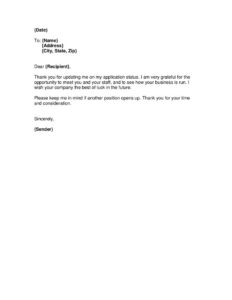
Rejection Response Letter
Use our free Rejection Response Letter template to graciously reply after a job rejection and stay in the running for future roles - free download.
PDF
DOCX
4 downloads
0
likes
Download Files
- DOCX
A Rejection Response Letter is a short, professional note you send after being turned down for a job, a proposal, or an opportunity, used most often to thank the decision-maker, leave a positive final impression, and keep the door open for future roles. It is free to download here in both PDF and DOCX formats, with no signup required.
What Is a Rejection Response Letter?
A Rejection Response Letter is a brief message written by an applicant or candidate after receiving notice that they were not selected. Rather than expressing frustration, it acknowledges the update graciously, thanks the recipient for their time and consideration, and asks to be remembered for future openings. It is typically addressed to a hiring manager, recruiter, or company contact and is sent by email or on paper. The tone is warm, concise, and forward-looking. Although it carries no legal weight, this letter is a valuable networking and reputation tool that can turn a closed door into a future opportunity by demonstrating maturity, professionalism, and genuine interest in the organization.
When Do You Need a Rejection Response Letter?
This letter fits many situations where you want to respond gracefully to a “no” and preserve a relationship. Common scenarios include:
- You interviewed for a job and received a rejection email, but you would still like to be considered for future roles.
- You made it to a final round, were not selected, and want to thank the team for the experience and feedback.
- A company informed you that the position was filled internally or put on hold, and you want to stay top of mind.
- You applied to a competitive program, internship, or fellowship and were declined, but plan to reapply next cycle.
- A client or partner declined your business proposal, and you want to leave a courteous opening for future collaboration.
- You were referred by a contact and want to respond professionally so the referral relationship stays strong.
What a Rejection Response Letter Should Have
An effective Rejection Response Letter is short but complete. It should include the date, the recipient’s name and mailing address (if sent by post), and a warm salutation. The body should thank the recipient for the update and for the opportunity to interview or meet the team, express genuine goodwill toward the company, and politely ask to be kept in mind for future openings. Close with a sincere thank-you, a professional sign-off, and your name. Keep the entire message to a few sentences — brevity signals confidence and respect for the reader’s time. Avoid criticism, defensiveness, or pleas to reconsider; the goal is a positive lasting impression, not a rebuttal.
How to Fill Out a Rejection Response Letter
Follow these steps to complete each field in the template:
- Enter the {Date} you are sending the letter at the top.
- In the To: block, type the recipient’s {Name} — the hiring manager, recruiter, or contact who notified you.
- Add the recipient’s {Address} and {City, State, Zip} if you are mailing or formatting a formal letter; you can omit these for a simple email.
- Open with the salutation by replacing {Recipient} with the person’s name, for example “Dear Ms. Patel.”
- Keep the body as written or personalize it: thank them for updating you on your application status and for the chance to meet the team and see how the business runs.
- Reinforce goodwill by wishing the company well and asking to be kept in mind if another position opens up.
- Close with the thank-you line, then sign your name in the {Sender} field below “Sincerely.”
Before sending, proofread for spelling, the correct company name, and an accurate recipient title.
How to Personalize the Letter
The template is intentionally general so you can tailor it to your situation. Reference a specific detail from your conversation — a project the team mentioned, a value the company emphasized, or a person you enjoyed meeting. A single concrete sentence makes the note feel sincere rather than generic. If you received useful feedback during the process, you can thank them for it briefly. If you genuinely want to reapply, state that you will watch for future openings. Keep additions short; one or two personalized sentences are plenty. Sending the letter within 24 to 48 hours of the rejection keeps you fresh in the recipient’s memory and signals that you handle disappointment with grace.
Email Versus Printed Letter
Most rejection responses today are sent by email because they reach the recipient quickly and match how the original rejection was likely delivered. In that case, you can drop the mailing address fields and use a clear subject line such as “Thank You — [Your Name].” A printed or attached PDF letter may suit more formal industries or when you have an existing relationship with the company. Either way, the wording and tone stay the same. Match the format the employer used to contact you so your reply feels natural and appropriate.
Common Mistakes to Avoid
- Sounding bitter, sarcastic, or argumentative — this damages your reputation and ends future possibilities.
- Begging the company to reconsider or demanding a detailed explanation for the rejection.
- Forgetting to update the recipient’s name, title, or company, leaving placeholder text in the final version.
- Writing too much; a long, emotional letter undercuts the confident, professional impression you want.
- Sending it weeks late, when the moment of decision and your candidacy are no longer top of mind.
- Skipping a proofread and letting typos or the wrong company name slip through.
Frequently Asked Questions
What is a Rejection Response Letter? It is a brief, courteous note you send after being told you were not selected for a job or opportunity. Its purpose is to thank the recipient, leave a positive impression, and keep yourself in consideration for future roles. It is a relationship-building tool rather than a request to overturn the decision.
How do I fill out the template? Add the date, the recipient’s name and address, and a personalized salutation, then keep or adapt the body that thanks them and asks to be remembered. Sign it with your name in the sender field. Replace every placeholder and proofread before sending.
Is responding to a rejection worth it? Yes. A gracious reply distinguishes you from the many candidates who say nothing, strengthens your professional network, and can lead to future interviews when other roles open up. Hiring managers often remember candidates who handle rejection with class.
When should I send the letter? Aim to send it within one to two days of receiving the rejection. A prompt reply keeps you fresh in the decision-maker’s mind and reinforces that you are organized and professional. Sending it weeks later reduces its impact.
Should I ask why I was rejected? You may politely express that you would welcome any feedback, but keep it optional and low-pressure. Avoid demanding a detailed explanation, as employers are not always able to provide one. The main goal of this letter is goodwill, not an inquiry.
How much does this template cost? Nothing. You can download the Rejection Response Letter for free here in PDF and DOCX formats with no signup required, then edit it to fit your situation.
This template is a general example provided for informational purposes only and is not legal, career, or professional advice. Workplace norms and expectations vary by industry and region, so adapt the letter to your circumstances and consult a qualified professional if you need specific guidance.
Related Forms
- Drug and Alcohol Testing Individual
- Personal Request Rejection
- Grant Request
- FOIA Request Appeal
- Product Replacement Request
- Request To Terminate Unauthorized Service
Browse more in Request and Authorization.