
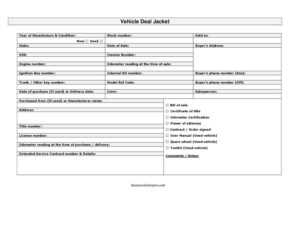
Vehicle Deal Jacket
Organize every car sale document with our free Vehicle Deal Jacket template — track VIN, stock number, title, and paperwork in one free download.
PDF
DOCX
9 downloads
0
likes
Download Files
- DOCX
A Vehicle Deal Jacket is a single folder or cover sheet that consolidates every document and detail tied to one vehicle sale, from the VIN and stock number to the bill of sale and title status. Dealerships use it to keep each transaction organized, compliant, and audit-ready — and you can grab this template free in PDF and DOCX with no signup required.
What Is a Vehicle Deal Jacket?
A Vehicle Deal Jacket is the master record for a single car deal, typically created by a dealership’s sales and finance departments. It serves as both an inventory snapshot and a paperwork checklist, capturing the vehicle’s identifying information, the buyer’s details, the salesperson involved, and the status of every required document. Whether the car is new or pre-owned, the deal jacket travels with the transaction from the showroom to the finance office to long-term storage. Because it gathers the bill of sale, certificate of title, odometer certificate, and other items in one place, it protects the dealer during audits and helps resolve disputes long after the keys change hands.
When Do You Need a Vehicle Deal Jacket?
Any time a vehicle leaves the lot, a deal jacket should be opened and completed. Common situations include:
- Selling a new vehicle and needing to track the manufacturer name, stock number, and delivery date in one record.
- Selling a used vehicle where you must document who you purchased it from and the original date of purchase.
- Preparing for a state or manufacturer compliance audit that requires proof the bill of sale, title, and odometer certificate were properly handled.
- Managing a busy lot where multiple salespeople and stock numbers make it easy to mix up paperwork.
- Adding financing, an extended service contract, or a power of attorney that must be linked to the correct deal.
- Handing off a completed transaction to the finance and insurance (F&I) team for processing.
What a Vehicle Deal Jacket Should Have
A complete deal jacket combines three layers of information. First, vehicle identification: year of manufacture, make, model reference code, color, VIN, engine number, stock number, and odometer reading. Second, the transaction details: buyer name, address, and phone; salesperson; date of sale; invoice number; internal RO number; and selling price references. Third, a document checklist confirming which items are present — bill of sale, certificate of title, odometer certificate, power of attorney, signed contract or order, title number, license number, and extended service contract details. Physical handover items like the spare wheel, toolkit, user manual, and ignition and trunk key numbers round out the record so nothing is missed at delivery.
How to Fill Out a Vehicle Deal Jacket
- Enter the stock number and internal RO number at the top so the jacket can be matched to your inventory system.
- Record the vehicle’s year of manufacture and condition, make, model ref code, and color.
- Add the identifiers: VIN, engine number, odometer reading at time of sale, ignition key number, and trunk/other key number.
- Fill in the sold to buyer name, buyer’s address, and buyer’s phone number.
- Note the salesperson, date of sale, and invoice number.
- For used vehicles, record the date of purchase and who it was purchased from; for new units, enter the manufacturer name and delivery date with the dealership address.
- Document the title number, license number, and any extended service contract number and details.
- Use the checklist to confirm the bill of sale, certificate of title, odometer certificate, power of attorney, and signed contract/order are present, plus delivery items like the user manual, spare wheel, and toolkit.
- Add any comments/notes about the deal before filing.
New vs. Used Vehicle Jackets
The template adapts to both new and pre-owned sales, but a few fields behave differently. On a new vehicle, you complete the manufacturer name and the delivery date, since there is no prior owner. On a used vehicle, you instead fill in purchased from and the original date of purchase, and you should check off the user manual if it came with the trade-in. Pre-owned deals also lean more heavily on the odometer certificate and a clean title number, because the vehicle’s history matters to the buyer. Keeping these distinctions clear within one standardized jacket prevents confusion when staff review older files.
Why Key Numbers and Handover Items Matter
Fields like the ignition key number, trunk/other key number, spare wheel, and toolkit may seem minor, but they prevent post-delivery disputes. Recording exactly what was handed over protects the dealership if a buyer later claims a missing item, and it speeds up replacements when a key is reordered. Logging the odometer reading at the time of sale alongside the odometer certificate also creates a consistent paper trail that supports federal disclosure requirements. Treat the checklist portion of the jacket as your final pre-delivery inspection.
Common Mistakes to Avoid
- Leaving the VIN or engine number blank or transposing digits — these are the vehicle’s permanent identifiers and must be exact.
- Skipping the document checklist so it’s unclear whether the title or odometer certificate was ever collected.
- Mixing up new-vehicle and used-vehicle fields, such as entering a manufacturer name on a trade-in.
- Forgetting to log the key numbers, spare wheel, or toolkit at delivery, creating he-said-she-said disputes later.
- Not matching the stock number and RO number to your DMS, which breaks the trail between the jacket and your records.
- Filing an incomplete jacket without a confirmed signed contract/order.
Frequently Asked Questions
What is a Vehicle Deal Jacket used for? It is a consolidated record that holds all the identifying information and documents for a single vehicle sale. Dealerships use it to stay organized, satisfy audits, and quickly locate any document tied to a specific transaction. It functions as both a cover sheet and a physical folder for the deal’s paperwork.
How do I fill out a Vehicle Deal Jacket? Start with the stock number, RO number, and vehicle identifiers like the VIN and engine number, then add the buyer’s contact details and sale date. Complete the salesperson, invoice, title, and license fields, and use the checklist to confirm each required document is present. Finish by recording key numbers and handover items, then add any notes.
Does a Vehicle Deal Jacket need to be notarized? The jacket itself is an internal organizational document and does not require notarization. However, some items it tracks — such as a power of attorney or certain title transfers — may need to be notarized depending on your state’s rules. Check your local DMV or motor vehicle authority for specifics.
Is a Vehicle Deal Jacket legally required? Requirements vary by jurisdiction and by manufacturer agreement, but many states and franchises require dealers to retain complete deal records for a set number of years. Even where it isn’t strictly mandated, maintaining a jacket is a best practice for compliance and dispute protection. Confirm the retention rules that apply to your dealership.
How long should I keep a completed deal jacket? Retention periods differ by state and lender, but several years is common. Many dealers keep jackets for the longest applicable period to cover audits, warranty claims, and title questions. Verify the exact timeframe required where you operate before discarding any records.
How much does this Vehicle Deal Jacket template cost? It is completely free to download from Business Forms Pro in both PDF and DOCX formats, with no signup or account required. You can use it as-is or customize the DOCX version to match your dealership’s fields and branding. There are no hidden fees or usage limits.
This Vehicle Deal Jacket template is provided as a general example for informational purposes only and does not constitute legal, financial, or tax advice. Document retention, disclosure, and titling requirements vary by jurisdiction and by manufacturer agreement. Consult a qualified professional or your state motor vehicle authority to ensure compliance.
Official resource: for the rules that apply to your situation, see your state DMV.
Related Forms
- Miles Per Gallon Comparison
- Used Vehicle Appraisal
- Motor Vehicle Bill of Sale
- Vehicle Registration Tracker
- Deal Recap
- Auto Transport Bill of Lading
Browse more in Auto Sales.