
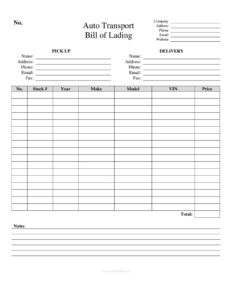
Auto Transport Bill of Lading
Download a free Auto Transport Bill of Lading template in PDF and DOCX to document vehicle condition, carrier details, and delivery on every car shipment.
PDF
DOC
10 downloads
0
likes
Download Files
- DOC
An Auto Transport Bill of Lading is the document that records the condition of a vehicle at pickup and delivery and serves as the official receipt for a car shipment between a shipper and a carrier. People most often use it to prove the vehicle’s condition before and after transport so any new damage can be identified and resolved. You can download it free in PDF and DOCX with no signup required.
What Is an Auto Transport Bill of Lading?
An Auto Transport Bill of Lading is a combined contract and receipt issued by the carrier or transport company that documents the handover of a vehicle for shipment. It identifies the shipper (or owner), the carrier, the origin and destination, and the vehicle being moved, and it includes an inspection report noting existing scratches, dents, and other cosmetic or mechanical issues. Both parties sign it at pickup and again at delivery to confirm the vehicle’s condition at each point. It functions as proof of the agreement, evidence for insurance or damage claims, and a record that the vehicle was received and delivered. Auto dealers, individual sellers, relocating drivers, and snowbirds rely on it on every move.
When Do You Need an Auto Transport Bill of Lading?
- Shipping a car you sold online to a buyer in another state and need proof of its pre-shipment condition.
- Hiring an auto transport broker or carrier to move a vehicle on an open or enclosed trailer.
- A dealership transferring inventory between lots or delivering a purchased vehicle to a customer.
- Relocating for a job or moving a household and sending one or more cars by carrier.
- Moving a classic, exotic, or high-value vehicle where documenting every existing mark matters.
- Filing or defending a damage claim when a car arrives with marks that weren’t there at pickup.
Types of Auto Transport Situations
The same bill of lading covers several scenarios, and the details you emphasize shift with each. Open-carrier transport is the most common and lowest cost, so the inspection section becomes important because vehicles are exposed to road debris and weather. Enclosed transport is used for luxury, antique, and low-clearance cars and often carries higher declared values. Door-to-door service lists specific street addresses for pickup and drop-off, while terminal-to-terminal service references depot locations. Whether the move is a single car or part of a multi-vehicle load, each vehicle should have its own clearly documented condition report on the bill of lading.
What an Auto Transport Bill of Lading Should Have
A complete bill of lading should clearly identify all parties and the vehicle, and it should leave no ambiguity about condition. Key elements include the shipper’s and carrier’s names and contact details, pickup and delivery addresses, scheduled and actual dates, and the vehicle’s year, make, model, color, VIN, and license plate. It must include an odometer reading, a condition inspection (ideally with a diagram marking existing damage), notes on personal items left in the car, the agreed price or quoted charges, and signature lines for both pickup and delivery with dates. Insurance and declared value information rounds out a thorough form.
How to Fill Out an Auto Transport Bill of Lading
- Enter the date and a unique bill of lading or order number at the top for tracking.
- Fill in the shipper’s name, phone, and pickup address, then the consignee or receiver’s name and delivery address.
- Record the carrier or transport company name, driver name, and contact information.
- Describe the vehicle: year, make, model, color, VIN, and license plate number.
- Note the odometer reading and whether the vehicle is operable.
- Complete the condition inspection at pickup, marking every scratch, dent, chip, or mechanical issue on the diagram or checklist, and photograph the car.
- List any personal items left inside and the declared value or insurance details.
- Enter the agreed charges, payment terms, and any balance due on delivery.
- Have both the shipper and driver sign and date the pickup section, then repeat the inspection and signatures at delivery.
Inspection and Documentation Tips
The inspection is the heart of this document, so do it carefully in good light and never in the rain or at night if you can avoid it. Walk around the entire vehicle and note pre-existing damage on the diagram using the standard codes for scratches, dents, and cracks. Take clear, time-stamped photos of every panel, the roof, the wheels, and the interior before the car is loaded. Keep your signed copy of the bill of lading and the photos together. At delivery, repeat the same inspection before signing the delivery section — once you sign without noting new damage, it becomes much harder to file a successful claim.
How It Differs From Other Shipping Documents
An Auto Transport Bill of Lading is specific to moving a vehicle and combines a condition report with the receipt and contract, whereas a general freight bill of lading covers cargo without a detailed vehicle inspection. It is not a title transfer or a bill of sale — it documents transport, not ownership. It also differs from a simple delivery receipt because it captures the vehicle’s condition at two points in time and creates the paper trail needed for damage and insurance claims.
Common Mistakes to Avoid
- Skipping or rushing the inspection so existing damage goes unrecorded and new damage can’t be proven.
- Leaving the VIN, plate, or odometer blank, which makes the document hard to tie to the exact vehicle.
- Signing the delivery section before inspecting the car in daylight.
- Not taking photographs at both pickup and delivery to support the written condition notes.
- Failing to keep a signed copy or note declared value and insurance coverage.
- Leaving valuables or excessive personal items in the vehicle that aren’t covered by transport insurance.
Frequently Asked Questions
What is an Auto Transport Bill of Lading used for? It is used to document the condition of a vehicle at pickup and delivery and to serve as the receipt and contract for a car shipment. It protects both the shipper and the carrier by creating a clear record of the vehicle’s state before and after transport, which is essential if a damage claim arises.
How do I fill out an Auto Transport Bill of Lading? Enter the shipper, carrier, and delivery details, describe the vehicle with its VIN and odometer reading, then complete a thorough condition inspection noting all existing damage. Both parties sign at pickup, and the inspection and signatures are repeated at delivery to confirm condition on arrival.
Does an Auto Transport Bill of Lading need to be notarized? No, notarization is not typically required for this document. What matters most is that both the shipper and the carrier sign and date it at pickup and delivery, ideally with supporting photographs of the vehicle’s condition.
Is an Auto Transport Bill of Lading legally binding? Yes, once both parties sign it, it functions as a binding contract and an official receipt for the shipment. It becomes key evidence in resolving disputes or filing insurance claims, so accuracy and complete signatures are important.
What happens if my car is damaged during transport? Inspect the vehicle carefully at delivery, note any new damage on the delivery section of the bill of lading before signing, and document it with photos. Compare the pickup and delivery condition reports and file a claim with the carrier or your insurer using the bill of lading as supporting proof.
How much does this template cost? The template is completely free to download from Business Forms Pro in both PDF and DOCX formats, with no signup required. You can fill it in digitally or print it for an on-site inspection at pickup and delivery.
This template is a general example provided for informational purposes only and is not legal, financial, or insurance advice. Auto transport rules, carrier liability, and documentation requirements vary by jurisdiction and by company — consult a qualified professional or your chosen carrier to confirm what applies to your shipment.
Official resource: for the rules that apply to your situation, see your state DMV.
Related Forms
- Motor Vehicle Bill of Sale
- Auto Estimate Form
- Miles Per Gallon Comparison
- Vehicle Invoice
- Salesperson Commission Voucher
- Tune-Up Schedule
Browse more in Auto Sales.