
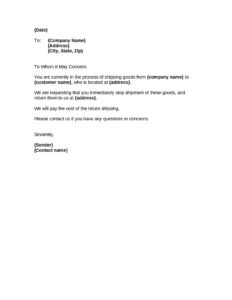
Stop Delivery
Download a free Stop Delivery letter template to formally request a carrier or shipper to halt and return goods in transit — free PDF & DOCX download.
DOCX
2 downloads
0
likes
Download Files
- DOCX
A Stop Delivery letter is a written request asking a carrier, freight company, or shipper to immediately halt the delivery of goods that are already in transit and return them to the sender. People most often use it when an order needs to be canceled, a buyer fails to pay, or a shipping error is discovered after the goods have left the warehouse. You can download this Stop Delivery letter free in PDF and DOCX formats, with no signup required.
What Is a Stop Delivery Letter?
A Stop Delivery letter is a formal business communication issued by a seller, shipper, or consignor to the party physically transporting goods — typically a carrier, freight forwarder, or fulfillment partner. It documents a clear, dated instruction to stop the shipment before it reaches the intended recipient and to reroute or return the goods to the sender. The letter usually identifies the shipping company, the customer the goods are headed to, and the address where the items should be returned. Because it creates a written record of when and how the stop request was made, it protects the sender if a dispute later arises over whether delivery should have proceeded. It is concise by design, focusing on a single, unambiguous action.
When Do You Need a Stop Delivery Letter?
This letter is useful whenever goods are in motion and circumstances change. Common situations include:
- Non-payment by the buyer. A customer’s check bounces, credit is declined, or an invoice goes unpaid, and you want to recover the goods before they arrive.
- Order cancellation. The buyer cancels after the shipment has already left your facility or the carrier’s terminal.
- Wrong items or address. You discover the shipment contains incorrect products or is routed to the wrong location.
- Insolvency concerns. You learn the buyer has become insolvent or is unable to pay, and you wish to exercise a seller’s right to reclaim goods in transit.
- Contract breach. The recipient has violated terms of the sale, prompting you to recall the shipment.
- Internal error. A warehouse or logistics mistake ships goods that should have been held, and you need to intercept them.
What a Stop Delivery Letter Should Have
To be effective and acted upon quickly, the letter should clearly identify several elements. It must name the shipping or carrier company being instructed, including their address, so there is no ambiguity about who is responsible. It should reference the shipper of record (your company name) and the customer the goods are headed to, along with that customer’s address, so the carrier can locate the exact shipment. The letter must state the explicit request to stop the shipment and return the goods, give the return address where the items should be sent, and confirm who will bear the cost of return shipping. Finally, it should include a contact for follow-up questions and a signature from the sender or an authorized representative.
How to Fill Out a Stop Delivery Letter
- Address the carrier. In the To block, enter the shipping company’s name, then their street address, and their city, state, and ZIP code. This ensures the letter reaches the party that physically controls the goods.
- Open with the salutation. The template uses “To Whom It May Concern,” which works when you do not have a named contact at the carrier.
- Identify the shipment. Fill in the company name shipping the goods (usually your own business) and the customer name the goods are headed to.
- State the destination. Enter the customer’s address where the goods were being delivered so the carrier can match it to the correct shipment.
- Request the stop and return. The letter asks the carrier to immediately stop shipment and return the goods; provide your return address in the designated field.
- Confirm the cost terms. The template states you will pay the return shipping cost — keep or adjust this line to match your arrangement.
- Sign off. Add your name in the Sender field and the Contact name for any follow-up questions, then sign before sending.
How to Send and Follow Up
Speed matters with a Stop Delivery request because goods may arrive within hours. Whenever possible, call the carrier first to flag the urgent stop, then immediately follow up with this written letter so there is a documented record. Send it by email and, for high-value shipments, by a method that confirms receipt. Reference any tracking number, bill of lading, purchase order, or invoice number you have so the carrier can locate the freight instantly. Keep a copy of the letter and any confirmation you receive — a timestamped acknowledgment from the carrier can be valuable evidence if there is later disagreement about whether delivery should have continued.
Stop Delivery vs. Order Cancellation
It helps to understand how this letter differs from a routine cancellation. An order cancellation is directed at the seller or supplier and asks them not to fulfill an order, ideally before goods ship. A Stop Delivery letter is directed at the party transporting goods that are already in transit, instructing them to interrupt the journey and return the items. The two can work together: a buyer might send a cancellation to the seller while the seller sends a Stop Delivery letter to the carrier. Knowing the right audience for each prevents wasted time during an urgent situation.
Common Mistakes to Avoid
- Sending it to the wrong party. Address the carrier or shipper controlling the goods, not the customer.
- Acting too slowly. Once goods reach the recipient, a stop request may no longer be possible — send it the moment you decide.
- Leaving out shipment identifiers. Omitting the customer name, destination address, or tracking reference forces the carrier to guess.
- Forgetting the return address. The carrier needs to know exactly where to send the goods.
- Being vague about cost. Clarify who pays return shipping to avoid delays while the carrier seeks authorization.
- Keeping no record. Always save a copy and any confirmation of receipt.
Frequently Asked Questions
What is a Stop Delivery letter used for? It is used to formally instruct a carrier or shipper to halt goods that are already in transit and return them to the sender. Common triggers include non-payment, order cancellation, shipping errors, or concern about a buyer’s ability to pay. The letter creates a clear, dated record of the request.
How do I fill out a Stop Delivery letter? Enter the carrier’s name and address at the top, identify the shipping company and the customer the goods are headed to, state the destination address, and provide your return address. Confirm who pays return shipping, add your name and a contact for questions, and sign before sending.
Who should receive this letter? Send it to the carrier, freight company, or fulfillment partner that is physically transporting the goods — not the customer expecting delivery. They are the party with the ability to interrupt the shipment and reroute it.
Is a Stop Delivery letter legally binding? The letter itself is a formal request and documents your instruction, but a carrier’s obligation to comply depends on your shipping contract, the terms of sale, and applicable commercial law. Whether you can legally stop goods in transit varies by jurisdiction and circumstances, so review your agreements.
How quickly should I send it? As soon as possible. Goods may be delivered within hours, and once the recipient takes possession, stopping the shipment becomes far harder or impossible. Call the carrier first, then send the written letter immediately.
Is this template free to download? Yes. You can download this Stop Delivery letter free in both PDF and DOCX formats with no signup required, then edit it to match your specific shipment and carrier details.
This template is provided as a general example for informational purposes only and does not constitute legal, financial, or business advice. Rules governing the right to stop goods in transit and carrier obligations vary by jurisdiction and by contract. Consult a qualified professional before relying on this document.
Related Forms
- Recommendation for a Raise
- Employee Termination For Poor Performance
- Prospective Lead
- Notice of Product Defect
- 30 Days Past Due Letter
- Offer to a Potential Client
Browse more in Business Letters.