
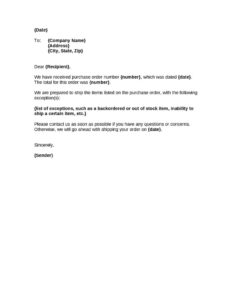
Order Exceptions
Download a free Order Exceptions letter template to notify customers of backordered or unavailable items before you ship — free download in PDF and DOCX.
DOCX
1 downloads
0
likes
Download Files
- DOCX
An Order Exceptions letter is a brief business letter a supplier sends to inform a buyer that their purchase order will be fulfilled with one or more exceptions — most commonly a backordered, out-of-stock, or unavailable item. People use it to keep the customer informed and avoid surprises before goods leave the warehouse. You can download this template free in PDF and DOCX, with no signup required.
What Is an Order Exceptions Letter?
An Order Exceptions letter is a written notice from a seller or vendor to a customer confirming receipt of a purchase order while flagging items that cannot be shipped as ordered. It is typically issued by a sales, fulfillment, or accounts team and references a specific purchase order number and date. The letter documents that the company is ready to ship the remaining items, lists the exact exceptions, and gives the buyer a chance to respond before the shipment goes out. Because it creates a clear paper trail, it protects both parties: the customer knows precisely what to expect, and the supplier has a record of having disclosed the issue. It sits between an order acknowledgment and a shipping confirmation in the typical order workflow.
When Do You Need an Order Exceptions Letter?
This letter is useful any time an order cannot be filled exactly as written. Common situations include:
- An item on the purchase order is backordered and will ship separately at a later date.
- A product is out of stock or discontinued and cannot be supplied at all.
- You can ship only a partial quantity of one of the line items.
- A requested item has been replaced by a newer version or substitute that the buyer should approve first.
- There is a pricing or availability discrepancy between the purchase order and your current catalog.
- A specialty or custom item requires extra lead time that affects the agreed delivery window.
In each case, sending the letter before you ship gives the customer the opportunity to adjust, cancel, or confirm the order, which reduces returns, disputes, and chargebacks.
What an Order Exceptions Letter Should Have
A complete and effective Order Exceptions letter includes a few essential elements that make it clear and verifiable:
- The recipient’s company name and full mailing address.
- A clear reference to the purchase order number and date so the customer can match it to their records.
- The order total, confirming the amount on file.
- A confirmation that you are prepared to ship the order.
- A specific, itemized list of the exceptions — what cannot be shipped and why.
- A call to action and a deadline, telling the buyer to contact you with concerns and stating when the order will otherwise ship.
- A professional closing with the sender’s name.
How to Fill Out an Order Exceptions Letter
- In the address block, enter the buyer’s Company Name, Address, and City, State, Zip exactly as they appear on the purchase order.
- Replace {Recipient} in the salutation with the contact person’s name — for example, “Dear Ms. Carter” or a buying department contact.
- Enter the purchase order number in the first sentence so there is no ambiguity about which order you mean.
- Add the date the purchase order was issued, matching the buyer’s paperwork.
- Fill in the total for the order — the dollar amount on the original PO.
- In the exceptions section, list each exception clearly: name the item, the issue (backordered, out of stock, unable to ship), and any expected timing or substitute if known.
- Enter the shipping date on which you will proceed if you do not hear back from the customer.
- Sign off with the sender’s name and, ideally, a title and direct phone or email so the buyer can respond quickly.
Tips for a Clear, Professional Exception Notice
Keep the tone factual and helpful rather than apologetic or defensive — the letter is a routine part of doing business. Be specific in the exceptions list: instead of “some items are delayed,” write the exact SKU or product name and the reason. Where possible, offer a remedy, such as an estimated backorder ship date or an equivalent substitute, so the customer can make a decision without a back-and-forth. Set a reasonable response deadline that gives the buyer time to reply while keeping the rest of the order moving. Send the letter promptly after receiving the purchase order, ideally before any items are picked or packed.
How It Differs From a Backorder or Order Acknowledgment
An order acknowledgment confirms receipt of a complete order with no problems, while a backorder notice typically focuses on one item that will arrive later. The Order Exceptions letter is broader: it confirms the order, states that most of it is ready to ship, and flags any and all deviations — backorders, out-of-stock items, or items you simply cannot supply. Because it bundles confirmation and exception handling into a single message with a clear shipping deadline, it is efficient for both routine and complex orders.
Common Mistakes to Avoid
- Leaving the purchase order number or date blank, making it hard for the buyer to match the letter to their records.
- Listing exceptions vaguely instead of naming the exact items and reasons.
- Forgetting to state the shipping date, so the customer does not know your timeline.
- Omitting contact details, which forces the buyer to hunt for a way to respond.
- Sending the letter after the order has already shipped, defeating its purpose.
- Using an apologetic or unclear tone that creates more questions than it answers.
Frequently Asked Questions
What is an Order Exceptions letter used for? It is used by a supplier to tell a customer that their purchase order will be filled with one or more exceptions, such as a backordered or out-of-stock item. The letter confirms what will ship, what will not, and when, giving the buyer a chance to respond before goods leave the warehouse.
How do I fill out the Order Exceptions template? Enter the buyer’s company name and address, reference the purchase order number and date, state the order total, and then list each exception clearly. Finish by adding the date you will ship the rest of the order and signing with your name and contact information.
Is an Order Exceptions letter legally binding? The letter itself is a business communication rather than a contract, but it can become part of the record documenting the order and any agreed changes. Once the buyer responds or the stated deadline passes, it helps establish what both parties understood about the shipment.
When should I send this letter? Send it as soon as you identify an issue with the order and before you ship, so the customer has time to confirm, adjust, or cancel. Sending it promptly reduces disputes, returns, and unexpected backorder problems.
Do I need to include a shipping date? Yes — stating the date you will proceed with shipping if you do not hear back sets clear expectations and prevents the order from stalling. It also gives the customer a concrete window in which to raise concerns.
How much does this template cost? This Order Exceptions letter template is completely free to download from Business Forms Pro in both PDF and DOCX formats, with no signup or payment required. You can edit it to fit your company’s branding, order details, and exception language.
This template is a general example provided for informational purposes only and is not legal, financial, or tax advice. Business practices and contractual requirements vary by jurisdiction and by industry; consult a qualified professional before relying on this document for any specific transaction.
Related Forms
- Prospective Lead
- Late Payment Reminder
- Notice of Sale Ending
- Cease and Desist Trademark
- Notice of a Bulk Sale
- Confirming a Speaker
Browse more in Business Letters.