
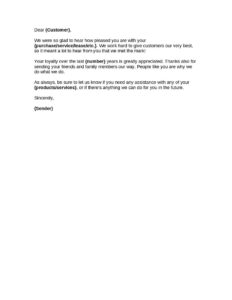
Customer Appreciation Letter
Download a free Customer Appreciation Letter template in PDF and DOCX to thank loyal clients, strengthen relationships, and boost retention — free download.
DOCX
2 downloads
1
likes
Download Files
- DOCX
A Customer Appreciation Letter is a short, sincere note a business sends to thank a customer for their loyalty, a recent purchase, or an ongoing relationship. Most companies use it to make clients feel valued and to encourage repeat business, and you can download this template for free in PDF and DOCX with no signup required.
What Is a Customer Appreciation Letter?
A Customer Appreciation Letter is a piece of business correspondence written by a company owner, account manager, or customer-service team to express genuine thanks to a customer. It is not a sales pitch or an invoice — its purpose is purely to acknowledge the customer’s continued support, celebrate a milestone, or recognize a specific transaction. The letter documents the relationship in a warm, personal tone and often reinforces the brand’s commitment to service. While it carries no legal weight, a well-written appreciation letter strengthens loyalty, improves retention, and turns satisfied buyers into advocates who refer others. It can be sent by post, email, or included with a shipment or invoice.
When Do You Need a Customer Appreciation Letter?
There are many natural moments when a thank-you note makes a real impact. Common situations include:
- After a first purchase — welcoming a new customer and thanking them for choosing your business.
- On a loyalty milestone — recognizing a one-year, five-year, or tenth-order anniversary.
- Following a large or repeat order — acknowledging a significant transaction and the trust behind it.
- During a holiday or year-end — sending seasonal goodwill to your client base.
- After resolving an issue — thanking a customer for their patience while your team fixed a problem.
- When launching a referral or VIP program — rewarding your most valued customers with recognition.
Each of these moments gives you a low-cost, high-impact way to remind customers that they are more than a transaction.
Types of Customer Appreciation Letters
Although the structure stays similar, the message can be tailored to fit different goals. A general thank-you letter simply expresses gratitude for ongoing business. A milestone or anniversary letter celebrates a specific length of relationship. A post-purchase letter follows a single sale and may confirm details or invite feedback. A seasonal or holiday letter spreads goodwill at year’s end. Finally, a loyalty-reward letter pairs appreciation with a perk such as a discount, early access, or a small gift. Choosing the right type keeps your message relevant and sincere rather than generic.
What a Customer Appreciation Letter Should Have
A complete appreciation letter is brief but contains a few essential elements. It should open with a clear, warm statement of thanks and name the customer personally. It should reference something specific — a purchase, a milestone, or the duration of the relationship — so the message feels authentic rather than mass-produced. It should reaffirm your commitment to service, optionally include a token of appreciation or invitation to stay in touch, and close with a courteous sign-off and the name and title of a real person. Adding your company name and contact details makes the letter look professional and gives the customer an easy way to respond.
How to Fill Out a Customer Appreciation Letter
Follow these steps to personalize the template:
- Add the date at the top so the correspondence is properly recorded.
- Enter the customer’s name and address exactly as it appears in your records, and use a personal greeting such as “Dear [Name].”
- Write the opening thank-you in the first line — state clearly why you are reaching out and what you are grateful for.
- Add a specific detail in the body: reference the product, service, order number, or number of years they have been a customer.
- Reaffirm your value by mentioning your continued commitment to quality and service.
- Include any offer — an optional discount code, gift, or invitation to a loyalty program.
- Close warmly with a phrase like “With sincere thanks,” then add your name, title, company name, and contact information.
- Proofread and sign the letter — a handwritten signature adds a personal touch.
Tips for Writing a Letter That Feels Genuine
The difference between a memorable note and a forgettable one is sincerity. Keep the letter short — three or four sentences is often plenty. Write in your natural voice rather than corporate jargon, and avoid turning the thank-you into a hard sell. Personalize at least one line so the customer knows it was written for them. Whenever possible, sign by hand and use real company letterhead. Sending the letter promptly after the triggering event — a purchase, an anniversary, or a resolved issue — makes the gesture feel timely and thoughtful rather than routine.
Sending and Following Up
You can deliver a Customer Appreciation Letter by mail, email, or by tucking a printed note into a package or alongside an invoice. A mailed letter tends to stand out more than email because physical mail is increasingly rare. Track which customers you have thanked so you do not duplicate efforts or miss key accounts, and consider scheduling appreciation outreach around predictable moments such as renewal dates or annual reviews. If you included an offer, monitor whether it is redeemed so you can gauge the letter’s effectiveness and refine future messages.
Common Mistakes to Avoid
- Being generic — a letter with no specific detail reads like spam and undermines the gesture.
- Turning it into a sales pitch — keep the focus on gratitude, not on pushing a new product.
- Misspelling the customer’s name or using the wrong company details, which signals carelessness.
- Sending it too late — appreciation tied to an event loses impact if it arrives weeks later.
- Using an obviously automated tone — robotic language defeats the purpose of a personal note.
- Forgetting a signature or contact information, leaving the letter feeling impersonal and incomplete.
Frequently Asked Questions
What is a Customer Appreciation Letter? It is a brief note from a business thanking a customer for their loyalty, purchase, or ongoing relationship. Its goal is to make the customer feel valued and to strengthen the connection, not to sell anything directly. It is one of the simplest and most effective tools for improving retention.
How do I write a Customer Appreciation Letter? Start with a warm, personal greeting, state your thanks clearly, and include a specific detail about the customer’s purchase or relationship. Keep it short and sincere, reaffirm your commitment to service, and close with your name, title, and contact information. Our free template gives you a ready-made structure to fill in.
Should the letter include a discount or gift? An offer is optional and entirely up to you. A small token such as a discount code, free shipping, or early access can deepen goodwill, but a heartfelt thank-you on its own is meaningful. If you do include an offer, make sure it feels like a reward rather than a sales tactic.
Is a Customer Appreciation Letter legally binding? No. It is a goodwill communication and does not create a contract or legal obligation. If you mention an offer or promise, however, be sure your business can honor it, since customers may reasonably expect you to follow through.
Should I mail or email the letter? Both work. A mailed letter on company letterhead tends to feel more personal and memorable, while email is faster and cheaper for large customer lists. Choose the channel that fits your relationship with the customer and the importance of the occasion.
Is this template free to download? Yes. You can download the Customer Appreciation Letter template for free in both PDF and DOCX formats with no signup required. Edit it in your word processor to match your brand voice, then print or send it.
This template is a general example provided for informational purposes only and does not constitute legal, financial, or professional advice. Business practices and any obligations created by offers or promises may vary by jurisdiction and situation — consult a qualified professional before relying on this document for important matters.
Related Forms
- Construction Delay Letter
- Notice of Breach of Option
- Job Letter Confirm Verbal Offer
- Employee Termination For Job Abandonment
- 30 Days Past Due Letter
- Employee Termination For Theft
Browse more in Business Letters.