
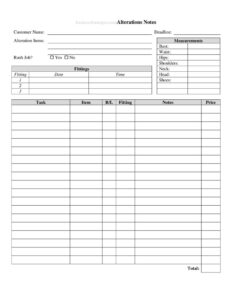
Tailor Alterations Form
Use our free Tailor Alterations Form template to record garment measurements, alteration details, prices, and pickup dates — free download in PDF and DOCX.
PDF
DOCX
6 downloads
0
likes
Download Files
- DOCX
A Tailor Alterations Form is a simple order document a tailoring shop or seamstress uses to record exactly what alterations a customer wants, what each adjustment costs, and when the finished garment will be ready. People reach for it most often when taking in a new alteration job and need a written record both the customer and the shop can rely on. You can download it free in PDF and DOCX, no signup required.
What Is a Tailor Alterations Form?
A Tailor Alterations Form is a written order ticket that documents a garment alteration request from intake to pickup. It is typically issued by a tailor, seamstress, dry cleaner, or bridal and menswear shop, and completed at the counter when a customer drops off clothing. The form captures the customer’s contact details, a description of each garment, the specific alterations requested, any measurements taken, the agreed price, and the promised completion date. It serves as both a work order for the people doing the sewing and a receipt for the customer. Because it spells out the scope in writing, it helps prevent disputes over what was supposed to be done, how much it costs, and when the item should be ready for collection.
When Do You Need a Tailor Alterations Form?
Any time a garment changes hands for adjustment, a written ticket protects both sides. Common situations include:
- Hemming and lengthening — shortening trousers, skirts, dresses, or sleeves to the right length.
- Taking in or letting out — adjusting the waist, sides, or seat of pants, jackets, or shirts for a better fit.
- Bridal and formalwear fittings — wedding gowns, bridesmaid dresses, and suits that need multiple fittings before a fixed event date.
- Repairs and replacements — fixing zippers, replacing buttons, mending seams, or patching tears.
- Resizing after weight change — reshaping a favorite suit or dress so it fits comfortably again.
- Bulk or business orders — uniform fitting for a company, costume alterations for a theater, or several items dropped off at once.
What a Tailor Alterations Form Should Have
A complete alterations ticket should clearly identify the customer and the garment, then describe the work in enough detail that anyone in the shop could pick up the order. Essential elements include the date received and a unique ticket or order number, the customer’s name and phone, a description of each garment (type, color, fabric), the specific alterations requested, relevant measurements, the price per item and a total, the deposit and balance due, and the promised ready-by date. A signature line and a note about the shop’s policies — such as fitting appointments, refunds, or how long unclaimed items are held — round out a professional form.
How to Fill Out a Tailor Alterations Form
- Date and order number: Enter the drop-off date and assign a sequential ticket number so the garment can be matched to its tag later.
- Customer details: Write the customer’s full name, phone number, and email so you can call when the item is ready.
- Garment description: List each item — for example “navy wool suit jacket” or “ivory satin gown” — including color and fabric to avoid mix-ups.
- Alterations requested: Describe each adjustment precisely: “hem trousers to 30″ inseam,” “take in waist 1.5 inches,” or “replace broken zipper.”
- Measurements: Record any measurements taken at the fitting, such as inseam, waist, sleeve, or bust, with the customer present.
- Pricing: Note the price for each alteration, add a subtotal, apply tax if applicable, and show the total.
- Deposit and balance: Record any deposit collected and the balance due at pickup.
- Ready-by date: Fill in the promised completion date and any fitting appointment.
- Signatures: Have the customer sign to confirm the work and terms, and sign as the shop representative.
Pricing and Deposits the Smart Way
Alteration pricing is usually quoted per service rather than as a single lump sum, so list each task on its own line. This makes the total transparent and helps the customer understand what they are paying for. Many shops collect a deposit on larger jobs — particularly bridal and formalwear — to cover materials and time, then take the balance at pickup. If a garment requires several fittings, note each appointment on the ticket so the schedule stays on track ahead of a wedding, graduation, or other fixed event. Keeping a copy for the shop and giving the original to the customer ensures both parties can reference the same agreed scope and price if any question comes up.
How It Differs From a Standard Invoice
A Tailor Alterations Form blends a work order with a receipt. Unlike a plain invoice, which simply bills for completed work, this form is filled out before the work begins and includes the measurements and item descriptions the tailor needs to actually do the job. It functions as instructions for the workroom, a quote for the customer, and proof of what was agreed. Once the garment is finished and paid for, the completed form doubles as the final receipt, recording the deposit, balance, and pickup.
Common Mistakes to Avoid
- Vague alteration notes: “Fix the pants” invites confusion — always specify exactly what and how much.
- Skipping measurements: Failing to record measurements at the fitting can lead to incorrect adjustments and rework.
- No garment tag: Forgetting to link a physical tag to the order number makes items hard to locate.
- Unclear pricing: Bundling everything into one figure leaves the customer unsure what they agreed to pay.
- Missing ready-by date: Customers with deadlines need a clear completion date in writing.
- No signature: Without the customer’s signature confirming the scope, disputes are harder to resolve.
Frequently Asked Questions
What is a Tailor Alterations Form used for? It is used to record a customer’s garment alteration request, including the items, the specific adjustments, measurements, price, and pickup date. It acts as both a work order for the tailor and a receipt for the customer. Having everything in writing prevents misunderstandings about scope and cost.
How do I fill out a Tailor Alterations Form? Start with the date, order number, and customer contact details, then describe each garment and the exact alterations requested. Record any measurements taken at the fitting, list the price for each service, note the deposit and balance, and add the ready-by date. Both the customer and the shop should sign before the garment is left.
Does a Tailor Alterations Form need to be signed? A signature is not legally required, but it is strongly recommended. Having the customer sign confirms they agreed to the listed work and price, which protects both parties if a question arises later. The shop representative should also sign to acknowledge receiving the garment.
Is this form legally binding? When both parties sign and agree to the listed terms, the form can function as a record of a service agreement. It documents what was promised and what was paid. For high-value items or significant orders, you may wish to add clear policies on liability, refunds, and unclaimed garments.
How much does the template cost? The template is completely free to download here in both PDF and DOCX formats, with no signup required. You can print it as-is for counter use or open the DOCX to add your shop name, logo, and pricing. Use it as often as you like for your business.
Can I customize the form for my shop? Yes. The DOCX version is fully editable, so you can adjust fields, add your branding, list your standard alteration prices, and include your own policies. This lets you create a consistent intake ticket that matches how your shop operates.
This template is a general example provided for informational purposes only and does not constitute legal, financial, or tax advice. Business practices and consumer regulations vary by jurisdiction, so consult a qualified professional to ensure your forms and policies meet local requirements.
Need to work out sales tax? Use our free Sales Tax Calculator to add or remove sales tax from any amount in seconds.
Official resource: for the rules that apply to your situation, see the U.S. Small Business Administration.
Related Forms
- Business Quote Form
- Tax Invoice Statement Book
- Receiving Record
- Purchase Order
- Letter to Confirm Verbal Order
- Bill of Materials
Browse more in Invoices and Order Forms.