
Aquarium Maintenance: Schedule & Free Log
Aquarium maintenance made simple: how often to clean a fish tank, a weekly/monthly schedule, common mistakes, and a free printable maintenance log to track it.
PDF
DOC
4 downloads
0
likes
Download Files
- DOC
Good aquarium maintenance keeps your water safe, your fish healthy, and your tank looking clear — and most of it takes only a few minutes a week once you have a routine. This guide covers how often to clean a fish tank, a simple maintenance schedule, and the mistakes to avoid, plus a free printable maintenance log to track every task. Download it in PDF or DOCX. No signup or email required.
Why Regular Aquarium Maintenance Matters
A fish tank is a small, closed ecosystem, and without regular upkeep the water quietly becomes dangerous to the fish living in it. As fish eat and produce waste, ammonia and nitrates build up, beneficial bacteria need stable conditions to do their job, and algae and debris accumulate on glass, gravel, and equipment. Consistent maintenance keeps those levels in check so your fish stay healthy and your tank stays clear. The good news is that little-and-often beats big occasional cleans: a short weekly routine prevents the water-quality crashes that stress or kill fish, and it’s far less work than rescuing a neglected tank.
How Often Should You Clean a Fish Tank?
There’s no single cleaning day — different tasks happen on different schedules. As a general routine for a typical home aquarium:
- Daily: feed the fish, check that the heater and filter are running, and do a quick head-count to spot any sick or missing fish.
- Weekly to every two weeks: perform a partial water change of about 10–25%, vacuum the gravel to remove waste, and wipe algae off the glass. Test the water (ammonia, nitrite, nitrate, pH) if you can.
- Monthly: rinse or replace filter media as needed, clean decorations, and inspect equipment like the heater, air stone, and impeller.
- As needed: replace worn parts and do a deeper equipment clean.
Exact timing depends on tank size, how many fish you keep, and how heavily the tank is stocked — smaller, busier tanks need more frequent attention.
Your Aquarium Maintenance Schedule
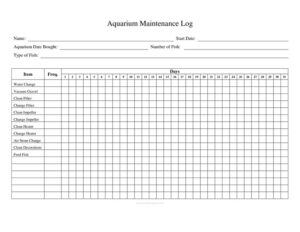
The free log is built around the tasks that keep a tank healthy, each with its own frequency. A water change (10–25%) is the single most important task and is usually done weekly or every other week. Vacuuming the gravel during the water change pulls out the waste that settles at the bottom. Cleaning the filter monthly keeps flow strong — but always rinse filter media in old tank water, never tap water, so you don’t kill the beneficial bacteria living in it. Periodically you’ll clean or change the impeller and heater, refresh the air stone, and clean decorations of algae. Tracking each of these with a date and frequency is what turns good intentions into a healthy tank.
How to Do a Water Change
A partial water change is the core of aquarium maintenance, and it’s simple once you’ve done it a few times:
- Unplug the heater and filter if the water level will drop below them.
- Use a gravel vacuum (siphon) to remove 10–25% of the water while cleaning waste from the gravel.
- Prepare replacement water at the same temperature as the tank, and treat tap water with a dechlorinator to remove chlorine and chloramine.
- Slowly add the new water back to the tank.
- Restart the equipment and check that everything is running.
Never replace all the water at once — a full change removes the beneficial bacteria your tank depends on and can shock the fish.
Using the Free Maintenance Log
The printable log gives you one place to record your tank and its routine. Fill in your name, the tank’s start date, when the aquarium was bought, and the number and type of fish. Then, for each task — water change, vacuum gravel, clean filter, change filter, clean impeller, clean heater, air stone change, clean decorations, feed fish — note the frequency and check it off as you go. A written log makes it obvious when a task is overdue, helps anyone else who feeds or cares for the tank, and builds a history you can look back on if a problem develops.
Freshwater vs. Saltwater Tanks
The basic routine — partial water changes, gravel cleaning, filter care, and testing — applies to both, but saltwater and reef tanks add a few steps. You’ll mix and match salinity for replacement water, top off evaporation with fresh (not salt) water, and often monitor extra parameters. Saltwater systems generally demand more precise, consistent maintenance, which makes a tracking log even more valuable.
Common Aquarium Maintenance Mistakes
- Cleaning filter media in tap water, which kills the beneficial bacteria the tank relies on
- Changing all the water at once instead of a partial change
- Overfeeding — uneaten food rots and spikes ammonia faster than anything else
- Forgetting to dechlorinate tap water before adding it
- Skipping water tests, so problems aren’t caught until fish are already stressed
- Overstocking the tank, which makes the water far harder to keep stable
Tips for a Lower-Maintenance Tank
Stock lightly, feed sparingly, and don’t rush a new tank — letting it “cycle” before adding many fish establishes the bacteria that do most of the cleaning for you. Live plants help absorb nutrients that would otherwise feed algae, and a filter rated for a larger tank than yours gives you a buffer. None of this removes the need for water changes, but it makes each one easier and your water more stable between them.
Frequently Asked Questions
How often should I clean my fish tank? Do a partial water change of 10–25% weekly or every two weeks, vacuum the gravel at the same time, and clean the filter monthly. Daily, just feed the fish and check the equipment.
How often should I do a water change? For most home tanks, a 10–25% change every one to two weeks keeps water quality stable. Heavily stocked tanks may need it more often.
Should I clean the whole tank at once? No. Replacing all the water and deep-cleaning everything at the same time removes the beneficial bacteria your tank depends on and can shock the fish. Stick to partial changes.
How do I clean the filter without harming my tank? Rinse the filter media in water you’ve removed from the tank, never under the tap. Tap water’s chlorine kills the bacteria that keep your water safe.
Why is my fish tank getting dirty so fast? Usually overfeeding, overstocking, or a filter that’s too small. Feed less, add fewer fish, and make sure your filter is rated for your tank size.
Is the maintenance log really free? Yes — download and print the aquarium maintenance log in PDF or DOCX with no signup required.
Related Forms
Aquarium Date Tracker · Pet Care Daily Log · Animal Healthcare Record · Freezer Temperature Log · Maintenance Log
This guide is provided for general informational purposes only. Care requirements vary by species and setup — research the specific needs of your fish and equipment.
Related Forms
- Bill Reminder Tracker
- Customer Care Log
- Pest Sighting Log
- Vendor Price Analysis
- General Journal
- Wagering Tracker
Browse more in Log and Inventory.