
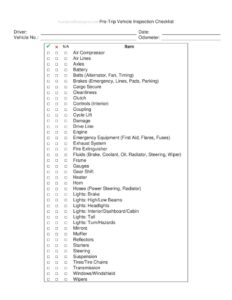
Pre-Trip Vehicle Inspection Checklist
Download a free Pre-Trip Vehicle Inspection Checklist template in PDF and DOCX to document safety checks before every trip and stay road-ready.
PDF
DOCX
3 downloads
0
likes
Download Files
- DOCX
A Pre-Trip Vehicle Inspection Checklist is a structured form drivers use to verify that a vehicle is safe and roadworthy before heading out. The most common reason people reach for one is to document a quick, repeatable walkaround that catches mechanical problems before they become breakdowns or safety hazards. You can download this template for free in both PDF and DOCX formats — no signup required.
What Is a Pre-Trip Vehicle Inspection Checklist?
A Pre-Trip Vehicle Inspection Checklist is a written record that a driver or fleet operator completes to confirm key vehicle systems are functioning properly before a trip begins. It is used by truck drivers, delivery couriers, rideshare operators, school bus drivers, company fleet teams, and everyday motorists planning a long drive. The checklist documents the condition of tires, brakes, lights, fluids, mirrors, and safety equipment at a specific point in time. For commercial operators, it also serves as proof of due diligence and supports compliance with internal safety policies. By turning an informal glance over the vehicle into a consistent, signed routine, the form helps prevent overlooked defects and creates an audit trail.
When Do You Need a Pre-Trip Vehicle Inspection Checklist?
This checklist is useful any time a vehicle is put into service or sent on the road. Common situations include:
- Commercial driving shifts — truck, van, and bus drivers inspecting before the first run of the day.
- Fleet handoffs — documenting a vehicle’s condition when one driver returns it and another takes over.
- Long road trips — families or individuals confirming tires, fluids, and lights before a multi-hour drive.
- Rental or pool vehicles — recording the state of a shared company car before each user signs it out.
- Delivery and rideshare work — verifying safety equipment and visibility before carrying cargo or passengers.
- Post-maintenance verification — checking that repairs were completed and nothing was left loose after service.
What a Pre-Trip Inspection Checklist Should Have
A complete checklist captures both the vehicle’s identity and the condition of each system inspected. Essential elements include identifying details (vehicle or unit number, license plate, make and model), the driver’s name, the date and time, and the odometer or mileage reading. The body of the form should list inspection items grouped logically — exterior, under the hood, interior, and safety equipment — each with a way to mark pass, fail, or needs attention. There should be a comments or defects section to describe any problem found, a place to note whether the vehicle is safe to operate, and signature lines for the driver and, if applicable, a supervisor or mechanic who reviewed the report.
How to Fill Out a Pre-Trip Vehicle Inspection Checklist
- Header details: Enter the date, time, driver name, and vehicle identification — unit number, plate, make, and model — so the report is tied to a specific vehicle and shift.
- Mileage: Record the current odometer reading to track usage between inspections.
- Exterior walkaround: Check tires for pressure and tread, look for body damage, and confirm lights, turn signals, and the license plate are intact. Mark each item.
- Under the hood: Verify engine oil, coolant, brake fluid, washer fluid, and belt condition. Note any leaks or low levels.
- Interior and controls: Test the brakes, horn, steering, wipers, mirrors, seatbelts, and dashboard warning lights.
- Safety equipment: Confirm the presence of a fire extinguisher, reflective triangles, first-aid kit, and spare tire as required.
- Defects and comments: Describe any failed or questionable item in the notes section, being specific about location and severity.
- Final determination and signatures: Indicate whether the vehicle is safe to operate, then sign and date. Have a supervisor or mechanic sign off if defects were found.
Inspection Categories Explained
Organizing the walkaround by zone makes it faster and harder to skip steps. The exterior covers everything you can see and reach from outside: tires, wheels, lug nuts, lights, mirrors, glass, wipers, and visible leaks under the vehicle. The engine compartment focuses on fluid levels, hoses, belts, and the battery. The cab or interior check confirms the controls that keep you in command — brakes, steering play, horn, gauges, defroster, and seatbelts. Finally, safety and emergency equipment ensures you are prepared if something goes wrong on the road. Following the same order every time builds muscle memory so nothing is forgotten, even on a rushed morning.
Why Documentation Matters
A signed checklist is more than a formality. For businesses, it shows that drivers and managers took reasonable steps to keep vehicles safe, which can matter for insurance, liability, and compliance reviews. It also creates a maintenance history: recurring notes about the same brake squeal or low coolant level help spot patterns before they cause a failure. Keep completed forms on file — many fleets retain them for a set period and use them to schedule preventive maintenance. Even for personal use, a quick record before a long trip can be reassuring and useful if you need to recall the vehicle’s condition later.
Common Mistakes to Avoid
- Rushing the walkaround — checking boxes without actually inspecting defeats the purpose and can miss a flat tire or burned-out light.
- Leaving the defects section blank — a vague “all good” hides problems; describe anything questionable in detail.
- Skipping the mileage or date — without these, the report can’t be tied to a maintenance timeline.
- Not reporting a failed item — driving a vehicle marked unsafe exposes the driver and company to serious risk.
- Forgetting signatures — an unsigned form lacks accountability and may not satisfy a safety audit.
- Reusing yesterday’s form — each trip or shift needs its own dated inspection.
Frequently Asked Questions
What is a pre-trip vehicle inspection checklist used for? It is used to verify a vehicle is safe to operate before a trip or shift begins. The form documents the condition of tires, brakes, lights, fluids, and safety equipment, helping catch defects early and providing a written record of the inspection.
How do I fill out the checklist? Start with the header details, mileage, and vehicle identification, then work through each inspection zone — exterior, engine, interior, and safety equipment — marking each item as pass or fail. Note any defects in the comments section and sign at the bottom to confirm the vehicle’s status.
Is a pre-trip inspection legally required? Requirements vary by jurisdiction and vehicle type. Commercial and regulated vehicles often must complete daily inspections under transportation safety rules, while personal vehicles usually have no formal requirement. Check the regulations that apply to your operation.
How often should I complete a pre-trip inspection? Commercial drivers typically complete one before each shift or first use of the day, and again if the vehicle changes drivers. For personal use, completing one before any long trip is a good practice.
Does the form need to be signed by a mechanic? Not always. The driver signs every inspection, but a supervisor or mechanic signature is generally needed only when defects are found and repairs or sign-off are required before the vehicle returns to service.
Is this template really free to download? Yes. You can download the Pre-Trip Vehicle Inspection Checklist for free in both PDF and DOCX formats with no signup required, and customize it to match your vehicles and policies.
This template is a general example provided for informational purposes only and is not legal, safety-compliance, or professional advice. Inspection requirements and recordkeeping rules vary by jurisdiction and vehicle type — consult the applicable regulations and a qualified professional to ensure your process meets all obligations.
Related Forms
- Garment Inventory Form
- Customer Care Log
- Phone Tree
- Cigar Tasting Log
- Sleepover Checklist
- Visitor Log
Browse more in Log and Inventory.