
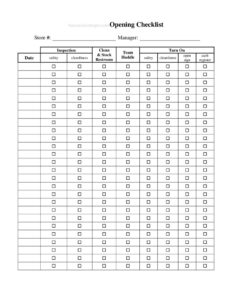
Store Opening Procedure Checklist
Download a free Store Opening Procedure Checklist template in PDF and DOCX to standardize daily opening tasks, security, and cash handling—free download.
PDF
DOCX
0
likes
Download Files
- DOCX
A Store Opening Procedure Checklist is a structured list of tasks that staff complete each morning to prepare a retail location for business. The most common reason people use one is to make sure nothing critical—unlocking, alarm disarming, cash float setup, and safety checks—gets skipped before the doors open. It’s free to download here in both PDF and DOCX formats, with no signup required.
What Is a Store Opening Procedure Checklist?
A Store Opening Procedure Checklist is an operational document used by retail managers, shift leads, and opening associates to standardize the sequence of tasks that must happen before a store begins serving customers. It documents who opened the store, at what time, and which steps were completed and verified. The purpose is consistency: whether the regular manager is in or a backup employee is covering, the store opens the same safe, clean, and stocked way every day. It also creates a simple accountability trail, so if a register float is short or an alarm wasn’t set the night before, there’s a record of who handled the morning routine.
When Do You Need a Store Opening Procedure Checklist?
This checklist is useful any time a retail or service location opens on a recurring schedule and relies on more than one person to do it. Common scenarios include:
- Daily retail operations—a clothing boutique, hardware store, or pharmacy that opens at a fixed time each day and needs a repeatable routine.
- Multi-location chains—franchise owners who want every branch to follow the same opening standard for brand consistency.
- New employee training—giving a new opener a clear, step-by-step reference reduces mistakes during their first solo shifts.
- Covering absences—when the usual opener is sick or on vacation, a substitute can follow the checklist without guessing.
- Cash-handling control—businesses that count register floats each morning need a documented procedure to reduce shortages and disputes.
- Food service and cafes—where opening involves equipment warm-up, temperature logs, and stock checks before the first customer.
What a Store Opening Procedure Checklist Should Have
A complete opening checklist captures both the tasks and the proof they were done. At minimum it should include a header identifying the store and date, a list of opening tasks grouped logically (security, cash, cleaning, stock, technology), a place to check off each completed item, the time the store was opened, and the name and signature of the employee responsible. Strong checklists also leave room for a notes section to flag anything unusual—a broken light, a delivery that didn’t arrive, or a security concern. Grouping tasks in the order they should be performed helps openers move efficiently from the front door to the sales floor without backtracking.
How to Fill Out a Store Opening Procedure Checklist
Because templates vary, adapt these steps to the exact layout of the version you download:
- Enter the store name and location at the top, especially if your company uses one master form across multiple branches.
- Record the date for the shift you’re opening, so each completed sheet stands as a daily record.
- Write your name as the opening employee or shift lead responsible for the routine.
- Disarm the alarm and unlock entrances, then check off the security items as you complete them.
- Set up the cash registers—count the starting float, verify the amount matches the assigned total, and initial the cash section.
- Power on equipment and systems—lights, POS terminals, computers, and any food or display equipment.
- Complete cleaning and presentation tasks—straighten displays, check restrooms, and confirm the entrance is tidy.
- Verify stock and signage, noting any low items or missing price tags.
- Record the opening time and add any issues to the notes section.
- Sign or initial to confirm the opening procedure is complete.
Organizing Tasks for a Smooth Open
The best checklists are sequenced to match how an employee physically moves through the building. A practical order starts with security and access (disarming the alarm, unlocking doors, turning on lights), moves to back-of-house preparation (counting cash, booting up systems, checking deliveries), and finishes with front-of-house presentation (cleaning, restocking displays, confirming signage and pricing). Ending with a final walkthrough lets the opener confirm everything looks customer-ready before unlocking the front entrance. If your store has time-sensitive steps—such as turning on ovens that need to preheat or refrigeration temperature checks—place those early so they’re warming up or being verified while other tasks continue.
Keeping Completed Checklists on File
Completed opening checklists are more valuable than they look. Keeping them in a binder or scanned to a shared drive gives managers a way to spot patterns—repeated cash shortages, recurring equipment failures, or tasks that consistently get skipped. They also support training reviews and can help resolve disputes about who was responsible on a given morning. Decide how long to retain them based on your own record-keeping needs; many small businesses keep a rolling few months, while larger operations may archive longer for audit purposes.
Common Mistakes to Avoid
- Skipping the cash count—rushing the float setup is the leading cause of register discrepancies later in the day.
- Not dating or signing the form, which destroys its value as an accountability record.
- Listing tasks out of order, forcing openers to crisscross the store and waste time.
- Leaving the notes section blank when something is broken or missing—issues then go unreported.
- Treating it as optional—a checklist only works if every opener uses it every day.
- Never updating the template when procedures, equipment, or store hours change.
Frequently Asked Questions
What is a store opening procedure checklist used for? It standardizes the tasks employees complete before a store opens, covering security, cash setup, cleaning, and stock. The goal is to make sure every opening is consistent and nothing important is missed, regardless of who is on shift.
How do I fill out the checklist? Start with the store name, date, and your name, then work through each task in order—disarming the alarm, counting the cash float, powering on systems, and tidying the sales floor—checking off items as you go. Finish by recording the opening time, noting any issues, and signing the form.
Can I customize the checklist for my store? Yes. Download the DOCX version and add, remove, or reorder tasks to match your store’s layout, equipment, and procedures. A coffee shop, for example, will add equipment preheating steps that a clothing boutique doesn’t need.
Who should complete the opening checklist? Typically the opening shift lead or the first employee to arrive completes and signs it. In smaller stores the owner or manager may handle it, while larger operations assign it to a designated opener whose name is recorded on the sheet.
Is this checklist legally required? No, it is an internal operational tool rather than a legal document. However, it supports good cash-handling and safety practices, and keeping completed copies can help with internal audits and accountability.
How much does this template cost? Nothing—it’s a free download here in both PDF and DOCX formats with no signup required. You can print it for daily use or edit the editable version to fit your own opening routine.
This template is a general example provided for informational purposes only and does not constitute legal, financial, or operational advice. Business requirements and best practices vary by location and industry—consult a qualified professional to ensure your procedures meet your specific needs.
Related Forms
- Pest Sighting
- Conference Room Schedule
- Maintenance Log
- Interruptions Log
- Short Term Disability Claims Tracker
- Key Assignment Inventory
Browse more in Log and Inventory.