
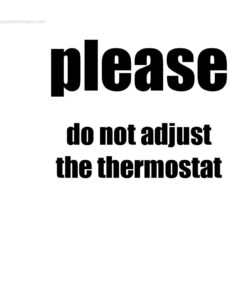
Do Not Adjust Thermostat Sign
Download a free Do Not Adjust Thermostat sign template in PDF and DOCX to keep your office or rental temperature settings consistent and protected.
PDF
DOCX
3 downloads
0
likes
Download Files
- DOCX
A Do Not Adjust Thermostat sign is a simple printable notice that tells everyone in a shared space to leave the temperature controls alone. People most often use it to stop coworkers, tenants, guests, or visitors from constantly raising or lowering the heat. You can download it free in PDF and DOCX, with no signup required.
What Is a Do Not Adjust Thermostat Sign?
A Do Not Adjust Thermostat sign is a posted notice placed near or on a thermostat to instruct people not to change the temperature setting. It is typically issued by an office manager, facilities team, landlord, business owner, or homeowner who wants a single, controlled temperature for a room or building. The sign documents a clear rule in a place where it cannot be missed, reducing confusion and disputes over who touched the controls. While it carries no legal weight on its own, it serves as a visible, consistent reminder that the thermostat is managed centrally and should not be adjusted by individuals without permission.
When Do You Need a Do Not Adjust Thermostat Sign?
This sign solves a surprisingly common workplace and household headache. Consider posting one in these situations:
- Shared offices and open-plan workspaces where employees constantly fight over whether the room is too hot or too cold.
- Rental properties and apartments where landlords set a fixed temperature for energy efficiency or to protect plumbing during cold months.
- Server rooms, labs, or storage areas that require a precise, stable temperature to protect equipment or inventory.
- Retail stores, salons, and restaurants where staff and customers should not interfere with the climate settings.
- Conference rooms and reception areas used by many different people throughout the day.
- Vacation rentals and Airbnb units where guests are asked to leave the heating or cooling as set to control energy costs.
What a Do Not Adjust Thermostat Sign Should Have
An effective sign communicates the rule instantly from a distance. The strongest versions include a bold, unambiguous headline such as “Do Not Adjust Thermostat,” a short explanation of why, and clear contact information for anyone who has a legitimate concern. Including a reason — energy savings, equipment protection, or temperature complaints being handled centrally — makes people far more likely to comply. A spot to name the responsible person or department, along with a phone number or email, gives readers a proper channel instead of simply overriding the setting. Optional touches include a preferred temperature range, the date posted, and a polite closing line that thanks people for their cooperation.
How to Fill Out a Do Not Adjust Thermostat Sign
This template is intentionally simple, so customizing it takes only a minute:
- Headline: Keep or adjust the main “Do Not Adjust Thermostat” message so it is the largest, most visible text on the page.
- Reason line: Add a brief explanation, such as “Temperature is set for energy efficiency” or “This setting protects sensitive equipment.”
- Set temperature (optional): If you want the room held at a specific number, write the target temperature or acceptable range.
- Responsible party: Enter the name of the manager, landlord, or department who controls the thermostat.
- Contact details: Add a phone number or email so anyone uncomfortable can request a change properly.
- Date posted (optional): Note when the notice went up so it can be reviewed seasonally.
- Print and post: Print the finished sign, then mount it directly beside or above the thermostat where it is impossible to overlook.
Tips for Making the Sign Effective
A sign only works if people respect it. Print it on bright paper or laminate it so it looks official and lasts, and mount it at eye level next to the thermostat rather than tucked off to the side. Keep the wording firm but polite — a courteous “Please do not adjust” followed by a reason earns more cooperation than a harsh command. Whenever possible, pair the sign with a real solution: invite people to report being too hot or too cold to the named contact, so they feel heard instead of ignored. In offices, consider also installing a thermostat lock box if adjustment is a persistent problem, using the sign to explain the policy behind it.
Sign vs. Thermostat Lock
A printed sign and a physical thermostat lock serve different purposes and often work best together. The sign communicates intent and the reason behind the rule, helping people understand and respect the setting voluntarily. A lock box or passcode-protected thermostat physically prevents changes when persuasion is not enough. For most shared offices and rentals, the sign alone is sufficient to set expectations; for sensitive environments like server rooms or properties with chronic disputes, combining a clear sign with a lock gives you both communication and enforcement. The sign also explains why a lock exists, which reduces frustration and complaints from people who would otherwise wonder why the controls do not respond.
Common Mistakes to Avoid
- No reason given. People are far more likely to ignore a rule they do not understand — always explain why.
- No contact channel. Leaving out a name or number forces uncomfortable people to override the setting instead of asking.
- Hard-to-read text. Small or decorative fonts defeat the purpose; use large, bold, high-contrast lettering.
- Poor placement. A sign posted far from the thermostat is easy to miss — put it right at the controls.
- Flimsy printing. Plain paper curls and tears; laminate or use cardstock in high-traffic areas.
- Never updating it. A summer setting note left up all winter loses credibility — review the sign seasonally.
Frequently Asked Questions
What is a Do Not Adjust Thermostat sign used for? It is a printed notice posted near a thermostat to instruct people not to change the temperature setting. It is commonly used in shared offices, rentals, server rooms, and stores to keep the climate consistent and avoid disputes over the controls.
How do I fill out the template? Add or keep the main headline, write a short reason for the rule, optionally list the set temperature, and enter the name and contact details of the person responsible. Then print it and mount it directly beside the thermostat.
Is a Do Not Adjust Thermostat sign legally binding? The sign itself is not a legal document and carries no penalty on its own. In a workplace or rental, however, it can support a documented policy, and tenants or employees may be expected to follow posted rules under their lease or employee handbook.
Can a landlord stop tenants from changing the thermostat? A landlord’s ability to control the thermostat depends on the lease terms and local landlord-tenant laws, which vary by jurisdiction. A sign can reinforce a lease provision, but it does not override a tenant’s legal rights regarding habitable heating and cooling.
Where should I place the sign? Post it directly on or immediately beside the thermostat at eye level so it is the first thing anyone sees when they reach for the controls. High-contrast text and laminated cardstock help it stay visible and durable in busy areas.
Is this template really free? Yes. You can download the Do Not Adjust Thermostat sign for free in both PDF and DOCX formats with no signup required, then edit and print as many copies as you need.
This template is provided as a general example for informational purposes only and is not legal advice. Rules regarding workplace policies, rental agreements, and required heating or cooling vary by jurisdiction. Consult a qualified professional for guidance specific to your situation.
Related Forms
- Backstage Pass
- Correct Credit Report
- Customizable Now Hiring Sign
- VIP Pass
- US Time Zone Mini Reference
- Funeral Planning Form
Browse more in Miscellaneous.