
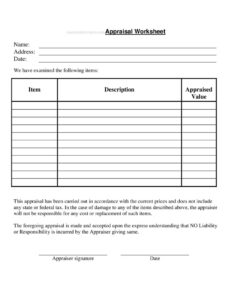
Appraisal Worksheet
Use our free Appraisal Worksheet template to document item descriptions and appraised values, with a free PDF and DOCX download — no signup required.
PDF
DOCX
2 downloads
0
likes
Download Files
- DOCX
An Appraisal Worksheet is a simple document used to record the items examined by an appraiser, their descriptions, and their assessed values. People most often use it to create a written record of what something is worth — for insurance, estate planning, donations, or a sale. This template is free to download in PDF and DOCX formats, with no signup required.
What Is an Appraisal Worksheet?
An Appraisal Worksheet is a one-page form on which an appraiser lists the property they have inspected and assigns each item a value. It typically identifies who performed the appraisal, itemizes each piece with a description and an appraised value, and includes the appraiser’s signature and date. The worksheet also commonly carries language clarifying that the figures reflect current market prices, exclude state or federal tax, and that the appraiser assumes no liability for damage or replacement of the items described. It serves as a snapshot of value at a specific point in time, used by individuals, collectors, and businesses to support claims, transactions, or recordkeeping.
When Do You Need an Appraisal Worksheet?
An Appraisal Worksheet is useful any time the value of personal property needs to be documented in writing. Common situations include:
- Insurance coverage — establishing the value of jewelry, art, antiques, or collectibles so they can be scheduled on a policy.
- Estate settlement — recording the worth of household goods, heirlooms, or valuables when dividing or distributing an estate.
- Charitable donations — supporting a record of value when donating items to a nonprofit or charity.
- Buying or selling — providing a buyer or seller with an independent assessment of fair market value before a transaction.
- Loss or claim documentation — proving what items were worth after theft, fire, or other loss.
- Personal recordkeeping — maintaining an organized inventory of valuable possessions with current values for future reference.
What an Appraisal Worksheet Should Have
A complete worksheet leaves no ambiguity about what was appraised and what it is worth. The essential elements are the name of the person or entity whose property is being appraised, a clear itemized list, a description of each item detailed enough to identify it, and an appraised value for every entry. It should also state the basis of valuation — current market prices — and clarify what is excluded, such as taxes. Finally, it needs the appraiser’s signature and the date the appraisal was performed, along with any disclaimer limiting the appraiser’s responsibility for damage or replacement.
How to Fill Out an Appraisal Worksheet
- Enter the appraisal name. At the top, write the name of the individual, family, business, or estate whose items are being appraised so the document is clearly associated with the right owner.
- Complete the item chart. Working row by row, list each item in the item column. Keep entries specific — for example, “14k gold ring” rather than just “ring.”
- Add a description. In the description column, note distinguishing details such as material, dimensions, condition, brand, age, serial numbers, or maker’s marks. The richer the description, the easier it is to identify the item later.
- Record the appraised value. In the appraised value column, enter the value based on current market prices, excluding any state or federal tax as the form notes.
- Review the disclaimer language. Confirm the statement about current pricing, tax exclusion, and the limitation of the appraiser’s liability for damage or replacement.
- Sign and date. The appraiser signs on the signature line and enters the date the appraisal was carried out, finalizing the record.
Understanding the Liability Language
This worksheet includes a clear limitation of liability: the appraiser is not responsible for the cost or replacement of any item described, and the appraisal is accepted on the express understanding that no liability is incurred by the appraiser. This is standard protective language in appraisal documents. It means the worksheet is an opinion of value at the time of inspection, not a guarantee, warranty, or insurance against future loss or damage. Both the owner and the appraiser should understand that the figures reflect a professional estimate based on current conditions and market prices, and that values can change over time as markets shift or items age.
Keeping Appraisals Current
Values are not static. Precious metals, gemstones, art, and collectibles can rise or fall significantly, and condition changes as items are used or stored. Because the worksheet captures value at a single moment, it is wise to update it periodically — many people refresh appraisals every few years or when scheduling items on an insurance policy. Store the signed worksheet with photographs of the items, original receipts, certificates of authenticity, and any prior appraisals. Keeping a copy in a separate, secure location ensures the record survives even if the items themselves are lost or damaged.
Common Mistakes to Avoid
- Vague descriptions — writing “watch” or “painting” without details makes it hard to prove which specific item was appraised.
- Leaving values blank — every listed item needs an appraised value, or the worksheet is incomplete.
- Forgetting to sign and date — an unsigned, undated worksheet has little credibility for insurers or other parties.
- Including tax in the figures — the form states values exclude state and federal tax, so don’t blend tax into the appraised value.
- Treating it as a guarantee — the worksheet is an opinion of value, not a promise of resale price or a substitute for insurance.
- Failing to keep supporting documents — photos, receipts, and certificates strengthen the appraisal and should be stored alongside it.
Frequently Asked Questions
What is an Appraisal Worksheet used for? It is used to document the items an appraiser examined, their descriptions, and their assessed values in one written record. People rely on it for insurance, estate matters, donations, sales, or simply to keep an organized inventory of valuable possessions.
How do I fill out an Appraisal Worksheet? Enter the owner’s name at the top, list each item with a detailed description and an appraised value in the chart, and confirm the pricing and liability statements. The appraiser then signs and dates the form to finalize it.
Does an Appraisal Worksheet need to be notarized? Notarization is generally not required for a basic appraisal worksheet, and the appraiser’s signature is usually sufficient. Some institutions or legal proceedings may request a notarized or more formal appraisal, so check the specific requirements of whoever will receive it.
Is an Appraisal Worksheet legally binding? The worksheet records a professional opinion of value rather than creating a binding contract. It can support insurance claims, transactions, or estate filings, but it does not guarantee resale price and, per its own language, limits the appraiser’s liability.
Who should complete the appraised value column? The person performing the appraisal — ideally someone knowledgeable about the type of property being valued — should assign the values based on current market prices. For high-value or specialized items, a qualified or certified appraiser adds credibility.
How much does this Appraisal Worksheet template cost? The template is completely free to download here in both PDF and DOCX formats, with no signup required. You can fill it out by hand after printing or edit the DOCX version directly on your computer.
This Appraisal Worksheet template is provided as a general example for informational purposes only and is not legal, financial, tax, or professional appraisal advice. Valuation standards and documentation requirements vary by jurisdiction and intended use — consult a qualified appraiser or relevant professional for guidance on your specific situation.
Official resource: for the rules that apply to your situation, see the Consumer Financial Protection Bureau.
Related Forms
- Saving Cash Envelope
- Dependent Care Claim Form
- Profit And Loss Worksheet
- Fixed Expenses Worksheet
- Blank Cash Envelope
- Brokerage Accounts Ledger
Browse more in Money.