
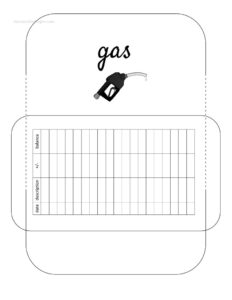
Gas Cash Envelope
Use this free Gas cash envelope template to budget fuel spending with the cash envelope method—free download in PDF and DOCX, no signup needed.
PDF
DOCX
0
likes
Download Files
- DOCX
A Gas cash envelope is a simple budgeting tool that holds the physical cash you’ve set aside for fuel each pay period, so you never overspend at the pump. People reach for it most often when they’re learning the cash envelope system and want one dedicated envelope just for filling up the tank. You can download this template free in both PDF and DOCX, with no signup required.
What Is a Gas Cash Envelope?
A Gas cash envelope is a labeled paper or printed envelope used in the cash-stuffing budgeting method, where you allocate a fixed amount of cash to a single spending category—in this case, gasoline and fuel. Instead of swiping a card and tracking the damage later, you withdraw your monthly or biweekly gas budget, place it inside the envelope, and pay for fuel only from that cash. When the envelope is empty, your gas spending stops until the next funding cycle. It’s used by individuals, couples, and families who prefer a tactile, visual way to control discretionary spending and avoid blowing their budget on a volatile, recurring expense like fuel.
When Do You Need a Gas Cash Envelope?
The Gas cash envelope shines anytime fuel is a meaningful, recurring line in your budget. Common situations include:
- Starting a cash-stuffing budget and wanting a separate envelope for each category instead of one big pile of cash.
- Curbing overspending at the pump, where it’s easy to top off, grab snacks, and lose track of the total.
- Managing a long commute with a predictable weekly fuel cost you want to cap.
- Paying down debt and trimming every flexible expense, including how often you drive.
- Teaching teens or new drivers to budget their own gas money responsibly.
- Riding out fluctuating fuel prices, so a spike at the pump comes out of a set amount rather than your whole account.
What a Gas Cash Envelope Should Have
A useful gas envelope balances simplicity with just enough tracking to keep you honest. At minimum it should clearly show the category label (“Gas” or “Fuel”), the budgeted amount for the period, and a running ledger of withdrawals. The best versions also include a starting balance line, space to log each fill-up by date and amount, and a remaining-balance column so a quick glance tells you how much fuel money is left. Some templates add the budget period (weekly, biweekly, or monthly) and a notes area for the gas station or vehicle. The goal is a self-contained record: open the envelope and instantly see what you started with, what you’ve spent, and what remains.
How to Fill Out a Gas Cash Envelope
Because this is a flexible budgeting envelope rather than a fixed legal document, fill it out in a way that matches how you drive. Follow these steps:
- Label the category. Write “Gas” or “Fuel” on the front so it doesn’t get mixed up with other envelopes like groceries or dining.
- Set the budget period. Note whether this envelope covers a week, two weeks, or a month, and the date it begins.
- Record the starting amount. Enter the cash you placed inside—this is your fuel ceiling for the period.
- Log each transaction. After every fill-up, write the date, the station or location, and the dollar amount spent.
- Update the remaining balance. Subtract each purchase from the prior balance so you always know what’s left.
- Reconcile at period end. Compare the cash still inside to your written balance; any leftover can roll forward or move to savings.
How to Decide Your Gas Budget Amount
Before you stuff the envelope, set a realistic number. Look back at the last two or three months of fuel purchases and average them—your bank or card statements make this easy. Factor in your typical mileage, your vehicle’s fuel efficiency, and seasonal changes like holiday road trips or a longer winter commute. If prices in your area swing a lot, pad the budget slightly so a price jump doesn’t leave you stranded. It’s better to fund the envelope a touch high and roll surplus forward than to run dry mid-week and dip into another category. Revisit the amount every couple of months and adjust as gas prices and your driving habits change.
Tips for Making the Cash Envelope System Work
The gas envelope is most effective as part of a complete system. Keep all your category envelopes in one wallet or accordion folder so cash stays organized and secure. Withdraw your envelope cash right after payday so the money is committed before it can be spent elsewhere. If the envelope empties early, treat it as a signal to combine errands, carpool, or drive less rather than borrowing from another envelope. When prices fall and you have leftover cash, sweep it into savings or a sinking fund for car maintenance. Finally, store envelopes somewhere safe—unlike a card, lost cash is gone, so don’t keep more inside than you need for the period.
Common Mistakes to Avoid
- Mixing fuel with convenience-store purchases—log only gasoline so snacks and drinks don’t quietly drain the envelope.
- Forgetting to record a fill-up, which makes your written balance disagree with the actual cash.
- Setting the budget too low and constantly raiding other envelopes to cover gas.
- Topping off the tank impulsively when the envelope is nearly empty instead of waiting for the next funding cycle.
- Carrying all your cash everywhere, increasing the risk of loss or theft.
- Not adjusting for seasons or trips, so a vacation or price spike throws the whole month off.
Frequently Asked Questions
What is a Gas cash envelope used for? It’s used to budget and track money set aside specifically for fuel using the cash envelope method. You place a fixed amount of cash inside, spend only from it at the pump, and stop fueling discretionary trips once it’s empty for the period.
How do I fill out a Gas cash envelope? Label it “Gas,” note your budget period and starting cash, then log each fill-up with the date, station, and amount. Subtract every purchase from the running balance so you always know how much fuel money remains.
How much should I put in my gas envelope? Base it on your recent fuel spending—average the last two or three months and adjust for mileage, vehicle efficiency, and seasonal trips. Padding it slightly helps absorb price spikes without forcing you to borrow from other categories.
Is a gas cash envelope legally binding? No. It is a personal budgeting and tracking tool, not a contract or legal document, so it carries no legal obligations. Its only purpose is to help you manage and record your own fuel spending.
Can I use this template digitally instead of with physical cash? Yes. While the envelope is designed for the cash-stuffing method, the DOCX version can be edited to track a digital gas budget, and many people use it as a simple log even when paying by card.
How much does this Gas cash envelope template cost? It’s completely free to download here in both PDF and DOCX formats, with no signup or account required. Print as many copies as you need for each budget period.
This template is a general example provided for informational purposes only and is not financial, tax, or budgeting advice. Personal financial situations vary, and budgeting practices differ from household to household—consult a qualified financial professional for guidance tailored to your circumstances.
Official resource: for the rules that apply to your situation, see the Consumer Financial Protection Bureau.
Related Forms
- Household Cash Envelope
- Lump Sum Payment Planning Form
- Accounts Receivable Form
- Account Statement
- Credit Freeze Request
- Theme Park Cash Envelope
Browse more in Money.