
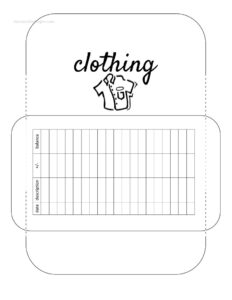
Clothing Cash Envelope
Download a free Clothing Cash Envelope template to track your clothing budget with the cash envelope method — free PDF and DOCX download, no signup.
PDF
DOCX
1 downloads
0
likes
Download Files
- DOCX
A Clothing Cash Envelope is a simple budgeting tool that holds the physical cash you’ve set aside for clothes and lets you record every dollar that goes in and comes out. People most often use it to keep clothing spending inside a set monthly limit instead of reaching for a card on impulse. It’s free to download here in both PDF and DOCX formats, with no signup required.
What Is a Clothing Cash Envelope?
A Clothing Cash Envelope is a labeled paper envelope (or printable envelope template) used in the cash envelope budgeting method. You decide how much money your clothing category gets each month, withdraw that amount in cash, and place it inside the envelope. The envelope’s front typically has a tracking grid where you log each deposit and purchase along with a running balance. When the cash is gone, your clothing spending for that period stops. This visual, hands-on approach makes a clothing budget tangible — you can literally see how much is left before you head to the store, which helps curb overspending on shoes, seasonal wardrobe updates, and everyday apparel.
When Do You Need a Clothing Cash Envelope?
The clothing category is one of the most common places budgets break down because purchases feel small and spontaneous. A dedicated envelope helps in situations like these:
- Curbing impulse buys — when you tend to grab clothing items on a whim and want a hard limit to slow you down.
- Sticking to a monthly clothing allowance — when you’ve assigned a fixed dollar amount to apparel and want to honor it.
- Back-to-school or seasonal shopping — when you’re buying wardrobe items for a specific season and need to spread the cash across several trips.
- Paying down debt — when you’re following a cash-only system to avoid adding new charges while you clear balances.
- Teaching kids or teens about money — when you give a child a set clothing budget and want them to manage trade-offs themselves.
- Splitting a shared household clothing fund — when a couple or family pools clothing money and needs one clear record of what’s been spent.
What a Clothing Cash Envelope Should Have
A useful clothing envelope does more than hold money — it tells the story of the category at a glance. The essentials include a clear category label (“Clothing”), the budget period (month and year), and the starting amount you funded it with. The tracking area should let you record each date, a short description of the deposit or purchase, the amount in or amount out, and a running balance so you always know what’s left. A line for your budgeted target versus actual spending is a helpful bonus for reviewing the month afterward.
How to Fill Out a Clothing Cash Envelope
- Label the category: Write “Clothing” clearly on the front so it’s never confused with another envelope like groceries or entertainment.
- Enter the budget period: Add the month and year this envelope covers — for example, “March 2025.”
- Record the starting amount: Write the total cash you’re funding the envelope with, then place that exact amount inside.
- Log each transaction: Every time you spend, fill in the date, a short description (store or item), and the amount removed.
- Note any deposits: If you add cash mid-month — a refund or a top-up — record the date and amount in.
- Update the running balance: After each entry, subtract spending or add deposits so the balance always matches the cash inside.
- Reconcile at month-end: Count the remaining cash, confirm it matches your written balance, and decide whether to roll the leftover into next month.
Tips for Making the Cash Envelope Method Work
The envelope only works if the recorded balance matches the physical cash, so build a habit of logging a purchase before you leave the store — receipts in the envelope help if you forget. Decide in advance what happens to leftover cash: “sinking fund” users roll it forward to save for a bigger seasonal purchase, while strict zero-based budgeters reset each month. Keep the envelope somewhere consistent so it doesn’t go missing, and avoid borrowing from other category envelopes. If a purchase truly belongs in a different category — say, athletic shoes you’d classify as fitness gear — note it honestly rather than blurring your numbers. Reviewing the completed envelope at month-end reveals patterns, like overspending at the start of the month, that help you set a smarter target next time.
Clothing Envelope vs. a Budgeting App
A cash envelope and a budgeting app aim at the same goal but feel very different. The envelope creates physical friction — you can’t spend money you don’t have in hand, which is powerful for impulse-prone categories like clothing. An app is more convenient and automatically syncs transactions, but swiping a card rarely triggers the same pause. Many people use both: cash envelopes for discretionary categories such as clothing, dining, and fun money, and an app for fixed bills. This printable template fits neatly into a hybrid system because you can transfer the month-end totals into whatever digital tracker you already use.
Common Mistakes to Avoid
- Forgetting to log purchases — leaving the store without recording the amount makes the running balance meaningless.
- Borrowing from other envelopes — pulling cash from your grocery envelope defeats the purpose of category limits.
- Not funding it with real cash — the method depends on physical money; an empty labeled envelope won’t change behavior.
- Skipping the running balance — without an updated balance you can’t tell how much is safe to spend.
- Ignoring month-end reconciliation — failing to count the cash against your record lets small errors snowball.
- Setting an unrealistic target — a clothing budget that’s too tight gets abandoned; base the amount on honest past spending.
Frequently Asked Questions
What is a Clothing Cash Envelope used for? It’s used to hold and track the cash you’ve budgeted for clothing during a set period, usually a month. By keeping spending limited to the cash inside, it helps you avoid overspending on apparel and impulse purchases. The tracking grid records every deposit, purchase, and the remaining balance.
How do I fill out a Clothing Cash Envelope? Label it “Clothing,” write the month and year, and record the starting cash amount you place inside. Each time you shop, log the date, a brief description, and the amount spent, then update the running balance. At month-end, count the cash and confirm it matches your written total.
How much should I put in my clothing envelope? There’s no universal figure — it depends on your income, your overall budget, and how often you buy clothes. Many people review three to six months of past clothing spending and set a realistic monthly amount from that average. Start conservatively and adjust after a month or two of tracking.
What happens to leftover cash at the end of the month? That’s up to your system. Some people roll unused clothing cash forward as a “sinking fund” to save for bigger seasonal purchases, while strict budgeters reset the envelope each month and move the leftover to savings.
Is the cash envelope method better than using a card? For categories prone to impulse spending, many people find cash creates a helpful pause that cards don’t. However, cash carries some risk if lost and earns no rewards, so it isn’t automatically better — it simply suits certain spending habits and goals.
Is this Clothing Cash Envelope template free? Yes. You can download it free in both PDF and DOCX formats with no signup required. Print as many copies as you need each month, and edit the DOCX version if you want to adjust the labels or layout.
This Clothing Cash Envelope template is provided as a general example for informational purposes only and is not financial, tax, or budgeting advice. Personal budgeting needs vary by individual circumstances — consult a qualified financial professional for guidance tailored to your situation.
Official resource: for the rules that apply to your situation, see the Consumer Financial Protection Bureau.
Related Forms
- Emergency Cash Envelope
- Weekly Bookkeeping Record
- Loan Deferral Request
- Savings Passbook
- Furniture Cash Envelope
- Car Insurance Exchange Form
Browse more in Money.