
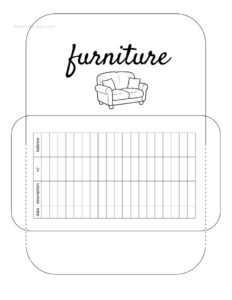
Furniture Cash Envelope
Use a free Furniture Cash Envelope template to label, save, and track cash set aside for furniture purchases — free download in PDF and DOCX.
PDF
DOCX
0
likes
Download Files
- DOCX
A Furniture Cash Envelope is a simple, labeled envelope used to physically set aside and track cash earmarked for buying furniture. People most often use it to save up for a specific purchase — a sofa, bed frame, dining set, or a full room of furnishings — without dipping into money meant for other expenses. It’s completely free to download here in PDF and DOCX, with no signup required.
What Is a Furniture Cash Envelope?
A Furniture Cash Envelope is part of the cash-envelope budgeting method, where you divide your money into category-specific envelopes and spend only what’s inside each one. This particular envelope is dedicated to furniture: the cash, deposits, or layaway payments you’re saving for new or replacement furnishings. It’s used by individuals and households who prefer tangible, hands-on budgeting over digital tracking. The envelope documents how much you’ve allocated, how much you’ve spent, and how much remains, all written directly on the front. It turns an abstract savings goal into a physical, visible target, helping you avoid overspending and reach a specific furniture purchase faster.
When Do You Need a Furniture Cash Envelope?
This envelope is useful any time furniture spending needs its own dedicated pool of cash. Common scenarios include:
- Saving for a big-ticket item like a sectional sofa, mattress, or dining table that requires several pay periods to afford.
- Furnishing a new home or apartment when you want to budget room by room without overspending.
- Replacing worn furniture gradually, setting aside a fixed amount each paycheck until you have enough.
- Layaway or installment plans where you hold cash for upcoming payments to a furniture store.
- Sticking to a strict monthly budget by capping furniture spending at a set amount and stopping when the envelope is empty.
- Sharing a savings goal with a partner or roommate, where everyone contributes visible cash toward a common furniture fund.
What a Furniture Cash Envelope Should Have
To work as a budgeting tool, the envelope should capture a few key elements clearly on the front. A title or category label identifies it as the furniture fund. A target or budget amount states your goal. A running log records deposits and withdrawals so you always know the balance. Space for dates lets you track timing across pay periods. A current balance line shows the bottom-line total at a glance. Optional notes can record what specific item you’re saving for or where the money is going. Together these elements make the envelope self-documenting, so anyone who picks it up understands its purpose and status.
How to Fill Out a Furniture Cash Envelope
- Label the category. Write “Furniture” clearly at the top so the envelope can’t be confused with other budget categories like groceries or utilities.
- Set your target amount. Note the total you’re saving for — for example, the price of a sofa plus tax and delivery.
- Add a description or goal. Jot down the specific item or room, such as “living room sectional” or “master bedroom set.”
- Record each deposit. Every time you add cash, write the date and amount in the log.
- Record each withdrawal. When you spend or pay toward furniture, note the date, amount, and what it was for.
- Update the running balance. After each entry, recalculate and write the current total inside the envelope.
- Compare to your target. Check how close you are to your goal and adjust contributions as needed.
Tips for Making the Cash Envelope Method Work
The cash-envelope system succeeds when it’s consistent and honest. Decide on a fixed contribution each pay period and treat it like any other bill — automatic and non-negotiable. Keep the envelope in a safe but visible spot so the growing total motivates you. Avoid borrowing from the furniture envelope to cover other categories; the whole point is to protect this money for its intended purpose. If you do need to borrow, write it down and set a date to repay. When you finally make the purchase, log the spend, attach the receipt inside the envelope, and reset it if you have a new furniture goal coming up.
How It Differs From a Digital Sinking Fund
A Furniture Cash Envelope and a digital sinking fund serve the same goal — saving for a planned expense — but work differently. A sinking fund typically lives in a savings account or budgeting app, earning small interest and tracked on a screen. The cash envelope is physical: you hold actual bills, write entries by hand, and feel the money leave when you spend it. Many people find the tactile method curbs impulse spending more effectively because cash is harder to part with than a card swipe. Some households use both — a digital fund for safety and a cash envelope for discipline and everyday visibility.
Common Mistakes to Avoid
- Not labeling the envelope, which makes it easy to grab the wrong category’s cash by accident.
- Skipping the log and relying on memory, so you lose track of the true balance.
- Borrowing without recording it, which quietly drains the fund and hides your real progress.
- Setting an unrealistic target that’s so high you give up before reaching it — break large goals into smaller milestones.
- Leaving large amounts of cash unsecured instead of storing it somewhere safe at home or in a lockbox.
- Forgetting to keep receipts, making it hard to handle returns, warranties, or budget reviews later.
Frequently Asked Questions
What is a Furniture Cash Envelope used for? It’s used to set aside and track cash specifically for buying furniture, keeping that money separate from your other spending categories. By writing deposits, withdrawals, and a running balance on the envelope, you always know how close you are to affording your goal. It’s a core tool in the cash-envelope budgeting method.
How do I fill out the Furniture Cash Envelope? Label it “Furniture,” write your target savings amount, and note the item or room you’re saving for. Each time you add or spend cash, log the date and amount, then update the running balance. This keeps the envelope accurate and self-explanatory at a glance.
Is a cash envelope a legally binding document? No — a cash envelope is a personal budgeting aid, not a contract or legal record. It simply helps you organize and track your own money. There are no signatures, witnesses, or notarization involved.
How much does this template cost? Nothing — it’s a free download here in both PDF and DOCX formats, with no signup or email required. You can print the PDF as-is or open the DOCX to customize the labels and fields to fit your goal.
How much should I put in my furniture envelope? That depends on your target item and your budget; a common approach is to divide the total cost by the number of pay periods before you want to buy. For example, a $600 goal in three months at biweekly pay means about $100 per check. Adjust the amount as your finances change.
Can I use this envelope for other budget categories? While it’s labeled for furniture, you can adapt the DOCX version to any sinking-fund or savings category, such as appliances, home decor, or repairs. Just change the category title and target amount to match your new goal.
This template is a general example provided for informational purposes only and is not financial, budgeting, or tax advice. Budgeting needs and best practices vary by individual situation — consult a qualified financial professional for guidance specific to your circumstances.
Official resource: for the rules that apply to your situation, see the Consumer Financial Protection Bureau.
Related Forms
- Monthly Bank Reconciliation
- Pocket Discount Calculator
- Charity Tax Deduction Log
- Utilities Annual Use Tracker
- Business Checking Record
- Advertising Budget
Browse more in Money.