
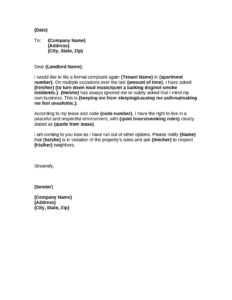
Complaint Letter Against Tenant
Download a free Complaint Letter Against Tenant template in PDF and DOCX to formally document tenant violations clearly and professionally — free download.
DOCX
1 downloads
0
likes
Download Files
- DOCX
A Complaint Letter Against Tenant is a formal written notice used by landlords, property managers, or neighbors to document and address problems caused by a tenant — most often noise, lease violations, unpaid rent, or property damage. It creates a paper trail before any further action is taken. You can download this template free in both PDF and DOCX formats, with no signup required.
What Is a Complaint Letter Against Tenant?
A Complaint Letter Against Tenant is a written communication that formally raises a concern or grievance about a tenant’s conduct or breach of their rental agreement. It is typically issued by a landlord or property manager directly to the tenant, though neighbors and homeowners’ associations may also send one to the responsible landlord. The letter identifies the specific problem, references the relevant lease terms or rules, and usually asks the tenant to correct the behavior by a stated date. Beyond simply expressing displeasure, the letter serves as documented evidence that the issue was raised in good faith — an important record if the situation escalates to a formal notice, mediation, or eviction proceedings down the line.
When Do You Need a Complaint Letter Against Tenant?
This letter is useful any time a tenant’s behavior crosses from a minor annoyance into a documented problem. Common situations include:
- Excessive noise — loud music, parties, or disturbances that affect neighbors or violate quiet-hours clauses.
- Late or unpaid rent — when payments are repeatedly missed and you want a written record before issuing a pay-or-quit notice.
- Lease violations — unauthorized pets, subletting, unapproved occupants, or smoking in a non-smoking unit.
- Property damage or neglect — broken fixtures, holes in walls, or failure to maintain the premises in reasonable condition.
- Cleanliness and waste issues — accumulating trash, pests, or improper disposal that creates a health or safety hazard.
- Disturbing other tenants — harassment, threats, or repeated conflicts that disrupt the peaceful enjoyment of other residents.
Types of Tenant Complaints
Not every complaint carries the same weight, and the tone and urgency of your letter should match the issue. A first-time noise complaint may warrant a polite reminder, while a serious health-and-safety breach or repeated violation calls for a firmer, more formal tone with a clear deadline. Lease-breach complaints — such as unauthorized occupants or pets — often reference a specific clause and may set the stage for a formal cure-or-quit notice. Payment complaints focus on amounts owed and due dates. Understanding which category your concern falls into helps you set the right expectations and choose appropriate next steps.
What a Complaint Letter Against Tenant Should Have
A complete, effective complaint letter generally includes the following elements:
- The date the letter is written.
- The sender’s name and contact information (landlord, property manager, or complainant).
- The tenant’s full name and the address of the rental unit.
- A clear subject line identifying the letter as a formal complaint.
- A factual description of the issue, including dates, times, and specific incidents.
- A reference to the relevant lease clause or community rule that was violated.
- A clear statement of what corrective action is requested.
- A reasonable deadline for the tenant to respond or remedy the issue.
- A statement of possible consequences if the problem continues.
- The sender’s signature.
How to Fill Out a Complaint Letter Against Tenant
- Add the date. Write the date you are sending the letter at the top — this anchors your timeline.
- Enter your details. Include your full name, role (landlord or property manager), mailing address, phone number, and email so the tenant knows who is writing and how to respond.
- Identify the tenant. Write the tenant’s full name and the complete address of the rental unit, including any apartment or unit number.
- Write the subject line. Clearly label it, for example: “Formal Complaint Regarding Noise Disturbances.”
- Describe the problem. State the specific issue factually. Include dates, times, and concrete examples rather than vague generalizations.
- Reference the lease. Cite the clause, rule, or policy the tenant has breached, if applicable.
- State your request. Explain exactly what the tenant must do to resolve the matter.
- Set a deadline. Give a reasonable date by which the issue should be corrected or a response received.
- Outline consequences. Briefly note what may follow if the behavior continues.
- Sign the letter. Add your signature and printed name to make it official.
Delivering and Keeping a Record
How you deliver the letter matters almost as much as what it says. Whenever possible, send the complaint by a method that produces proof of delivery — such as certified mail with a return receipt, or email with a read confirmation — and keep a copy for your files. Many landlords hand-deliver a copy as well, noting the date and any witness present. Retaining a dated copy, along with any supporting evidence like photos, repair invoices, or written statements from neighbors, strengthens your position should the matter progress to a formal notice or legal proceeding. A consistent, well-organized record demonstrates that you acted reasonably and gave the tenant fair notice.
Keeping the Tone Professional
Even when a tenant’s behavior is frustrating, a calm and factual tone is far more effective than an emotional or accusatory one. Stick to what happened, when it happened, and what you expect to change. Avoid threats, name-calling, or exaggeration, which can undermine your credibility and may be used against you later. A measured, professional letter is more likely to resolve the problem cooperatively and reflects well on you if a third party — such as a mediator or judge — ever reviews the correspondence.
Common Mistakes to Avoid
- Being vague. Phrases like “you’re always loud” are weak; specific dates and incidents carry far more weight.
- Using a hostile tone. Anger or insults can escalate the conflict and damage your case.
- Skipping the lease reference. Failing to cite the rule that was broken makes the complaint feel arbitrary.
- Omitting a deadline. Without a clear date for correction, the tenant has no defined timeframe to act.
- Not keeping a copy. Sending the letter without retaining proof leaves you without documentation.
- Ignoring legal procedures. A complaint letter is not a substitute for a formal eviction notice where one is legally required.
Frequently Asked Questions
What is a complaint letter against a tenant? It is a formal written notice in which a landlord, property manager, or neighbor documents a specific problem caused by a tenant and asks for it to be corrected. It records the issue in writing and often references the lease term that was violated. The letter helps establish a clear timeline before any further action.
How do I write a complaint letter to a tenant? Start with the date and your contact details, identify the tenant and rental address, then describe the problem factually with dates and specifics. Reference any lease clause that applies, state what you want corrected, set a reasonable deadline, and sign the letter. Using the free template here makes it easy to include each of these elements.
Is a complaint letter the same as an eviction notice? No. A complaint letter raises a concern and requests correction, while an eviction notice is a formal legal document with specific statutory requirements. Many landlords send a complaint letter first to give the tenant a chance to fix the issue before pursuing eviction.
Does the letter need to be signed or notarized? A complaint letter should be signed by the sender, but it generally does not need to be notarized. Notarization is rarely required for routine tenant correspondence, though keeping proof of delivery is wise. Requirements can vary, so check your local rules if you are unsure.
How much does this template cost? Nothing — this Complaint Letter Against Tenant template is completely free to download in both PDF and DOCX formats, with no account or signup required. You can edit the DOCX version to fit your specific situation.
What should I do if the tenant ignores the letter? If the tenant does not respond or correct the issue by your deadline, you may need to send a formal notice, attempt mediation, or consult an attorney about next steps. Keep your complaint letter and any evidence on file, as documentation of prior notice can be important. The appropriate next step depends on your jurisdiction and the nature of the violation.
This template is a general example provided for informational purposes only and does not constitute legal advice. Landlord-tenant laws and notice requirements vary by jurisdiction. Consult a qualified attorney or local housing authority before taking formal action.
Official resource: for the rules that apply to your situation, see HUD.
Related Forms
- Open House Sign In Sheet
- Lease Extension Rejection
- Lawn Care Form
- Apartment Hunting Checklist
- Real Estate Listing Tracker
- Closed Sales Tracker
Browse more in Rental and Real Estate.