
Dog Bill of Sale
Download a free Dog Bill of Sale template to document the sale of a dog, record breed and health details, and protect buyer and seller — free download.
PDF
DOCX
4 downloads
0
likes
Download Files
- DOCX
A Dog Bill of Sale is a simple written record that documents the transfer of a dog from a seller to a buyer, capturing the animal’s details, health condition, and the signatures of both parties. People most often use it to create a clear, dated proof of ownership when buying or selling a dog. You can download this template for free in PDF and DOCX formats, with no signup required.
What Is a Dog Bill of Sale?
A Dog Bill of Sale is a short document issued by the seller and signed by both the seller and the buyer to confirm that a specific dog has changed hands. It records the dog’s identifying details — such as name, sex, breed, and birthdate — along with whether the animal is purebred or registered and a description of its health at the time of sale. Private individuals, hobby breeders, and rescue sellers all use it to memorialize the transaction. The form serves as proof of ownership, a reference for the dog’s background, and a written acknowledgment that the buyer accepted the animal as described on the date of sale.
When Do You Need a Dog Bill of Sale?
This form is useful any time a dog is sold or transferred and both parties want a written record. Common situations include:
- Buying a puppy or adult dog from a private seller or hobby breeder and wanting documented proof of purchase.
- Selling a litter where you need a consistent record for each buyer, including breed and registration status.
- Transferring a purebred or registered dog where pedigree and registration details matter for future paperwork.
- Documenting the dog’s health condition at the time of sale to set clear expectations and reduce disputes.
- Providing proof of ownership for licensing, insurance, boarding, or travel requirements later on.
- Re-homing a dog and wanting a clean handoff that confirms the new owner has accepted responsibility.
What a Dog Bill of Sale Should Have
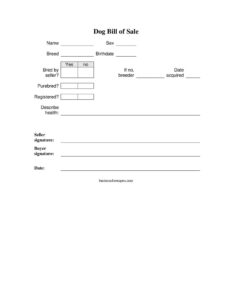
To be complete and useful, the document should clearly identify the dog and both parties. The essential elements are the dog’s name, sex, breed, and birthdate; whether the seller bred the dog and, if not, the breeder’s name; the date the dog was acquired; purebred and registration status; and a description of the dog’s health. Just as important are the seller signature, the buyer signature, and the date of the transaction. Together, these turn an informal handoff into a documented agreement that both sides can rely on if questions arise later about identity, lineage, or condition.
How to Fill Out a Dog Bill of Sale
- Name: Enter the dog’s call name or registered name so the animal is clearly identified.
- Sex: Note whether the dog is male or female, and you may add spayed or neutered status if relevant.
- Breed: Write the breed or mix (for example, “Labrador Retriever” or “Labrador mix”).
- Birthdate: Record the dog’s date of birth, or your best estimate if exact records are unavailable.
- Bred by seller? Check Yes or No. If No, fill in the breeder’s name in the If no, breeder field.
- Date acquired: Enter the date the seller originally obtained the dog.
- Purebred? Check Yes or No to indicate breed status.
- Registered? Check Yes or No; if registered, keep the registration paperwork handy for transfer.
- Describe health: Summarize the dog’s condition, known issues, and any vaccinations or vet care.
- Signatures and date: Both the seller and buyer sign, and you enter the date the sale is completed.
Health Description and Registration Notes
The health description field is one of the most valuable parts of this form, because it documents what both parties agreed the dog’s condition was at handoff. Be specific: note current vaccinations, recent deworming, any known allergies or medical conditions, and whether veterinary records are being provided. If the dog has been examined by a vet, mention the date. Honest, detailed health notes protect the seller from later claims that an issue was hidden, and they give the buyer a clear baseline for future care.
If you checked that the dog is registered, the bill of sale is only part of the picture. Registration with a kennel club typically involves a separate transfer process and its own paperwork. Use the bill of sale alongside — not instead of — those registration documents, and pass along any pedigree, microchip, or vaccination records so the new owner has a complete file.
Keeping Copies and Next Steps
After both parties sign, give the buyer the original or a clear copy and keep one for the seller’s records. The buyer should store the document with the dog’s vaccination records, microchip information, and any registration certificates. These papers are often requested when licensing a pet with a local authority, arranging boarding or grooming, traveling, or buying pet insurance. Keeping everything together makes future ownership questions easy to answer.
Common Mistakes to Avoid
- Leaving the health description blank — vague or missing health notes are a frequent source of disputes.
- Skipping the date, which makes it harder to establish when ownership actually transferred.
- Forgetting one party’s signature; both seller and buyer should sign for the record to hold weight.
- Claiming “purebred” or “registered” without supporting paperwork to back it up.
- Not recording the breeder’s name when the seller did not breed the dog.
- Failing to hand over related documents such as registration papers, vet records, and microchip details.
Frequently Asked Questions
What is a Dog Bill of Sale used for? It documents the sale or transfer of a dog and serves as proof of ownership. It records the dog’s identifying details, health condition, and the signatures of both buyer and seller. People keep it for licensing, insurance, boarding, and to settle any future questions about the dog’s background.
How do I fill out a Dog Bill of Sale? Enter the dog’s name, sex, breed, and birthdate, then indicate whether the seller bred the dog and, if not, name the breeder. Add the date acquired, mark purebred and registration status, and describe the dog’s health. Finally, both parties sign and date the form.
Does a Dog Bill of Sale need to be notarized? Notarization is generally not required for a dog sale, and most transactions are completed with both signatures alone. Some buyers and sellers choose to notarize or use a witness for added confidence, especially for high-value or registered dogs. Local rules vary, so check your area if you want extra assurance.
Is a Dog Bill of Sale legally binding? When both parties sign voluntarily and the information is accurate, it generally functions as a binding record of the transaction. Its strength depends on accurate, honest details — particularly the health description. For specific legal questions, consult a qualified professional in your jurisdiction.
Does this form prove the dog is purebred or registered? No. The form records whether the dog is claimed to be purebred or registered, but actual proof comes from separate pedigree certificates and kennel club registration documents. Always provide those papers alongside the bill of sale when applicable.
How much does this template cost? Nothing — this Dog Bill of Sale template is completely free to download in both PDF and DOCX formats with no signup required. You can print it, fill it in by hand, or edit it on your computer before signing.
This template is a general example provided for informational purposes only and is not legal, financial, or veterinary advice. Requirements for documenting pet sales and ownership vary by jurisdiction. Consult a qualified professional for guidance specific to your situation.
Official resource: for the rules that apply to your situation, see your state DMV.
Related Forms
- As-Is Bill Of Sale
- Absolute Bill Of Sale
- Bill of Sale for Parts Only
- Business Bill of Sale
- Musical Instrument Bill of Sale
- Bill of Sale Vehicle Parts
Browse more in Bills of Sale.