
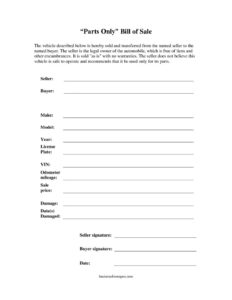
Bill of Sale for Parts Only
Download a free Bill of Sale for Parts Only template in PDF or DOCX to document the as-is sale of a vehicle sold strictly for its parts.
PDF
DOCX
20 downloads
0
likes
Download Files
- DOCX
A Bill of Sale for Parts Only is a written record that documents the transfer of a vehicle sold strictly for its parts rather than for road use. People most often use it when selling a damaged, salvaged, or non-running car to a buyer who intends to part it out or scrap it. You can download this template free in both PDF and DOCX formats — no signup required.
What Is a Bill of Sale for Parts Only?
A Bill of Sale for Parts Only is a legal document in which a seller transfers ownership of an automobile to a buyer with the clear understanding that the vehicle is not safe to operate and is intended to be used only for its components. It is issued by the seller and signed by both parties. The document records the vehicle’s identifying details, the sale price, and the nature of the damage, while stating the car is sold “as is” with no warranties. Unlike a standard vehicle bill of sale, this version explicitly notes that the seller does not believe the vehicle is roadworthy, protecting the seller from later claims and setting accurate expectations for the buyer.
When Do You Need a Bill of Sale for Parts Only?
This form fits a range of situations where a vehicle changes hands for its parts rather than its function:
- Selling a wrecked or totaled car that an insurer declared a loss but you still own.
- Offloading a non-running vehicle with a blown engine, failed transmission, or major mechanical failure that isn’t worth repairing.
- Selling to a salvage yard, dismantler, or scrap buyer who will strip the usable components and recycle the rest.
- Disposing of a flood- or fire-damaged vehicle that should never return to the road.
- Selling a project car to a hobbyist or mechanic who wants it solely for donor parts.
- Clearing an abandoned or inherited vehicle from a property when restoring it is impractical.
In each case, the parts-only language makes it clear that neither party expects the car to be driven, which helps both sides avoid misunderstandings about safety and condition.
What a Parts Only Bill of Sale Should Have
A complete parts-only bill of sale identifies everyone and everything involved in the transaction and states the terms plainly. It should include the full names of the seller and buyer, a precise description of the vehicle (make, model, year, license plate, and VIN), the odometer reading, and the agreed sale price. Crucially, it should describe the damage and when it occurred, include the “as is” and no-warranty language, and confirm the seller holds clear title free of liens. The signatures of both parties and the date of sale finalize the agreement and make it a usable record for both buyer and seller.
How to Fill Out a Bill of Sale for Parts Only
- Seller: Enter the full legal name (and address, if you choose to add one) of the person or business selling the vehicle.
- Buyer: Write the full legal name of the person or business purchasing it for parts.
- Make, Model, and Year: Record the manufacturer, model designation, and model year exactly as they appear on the title.
- License Plate: Enter the current plate number, if the vehicle still has one attached.
- VIN: Copy the 17-character Vehicle Identification Number carefully from the dashboard, door jamb, or title.
- Odometer Mileage: Note the mileage shown, even if the vehicle is inoperable, for an accurate record.
- Sale Price: Write the total agreed amount paid for the vehicle in its parts-only condition.
- Damage: Describe the damage in detail — for example, “front-end collision damage,” “seized engine,” or “flood damage to interior and wiring.”
- Date(s) Damaged: Enter when the damage occurred, if known.
- Signatures and Date: Both the seller and buyer sign, and the date of the sale is entered to complete the document.
Title, Plates, and Next Steps
Even when a car is sold for parts, the title usually still needs to be handled correctly. Many states require the seller to sign over the title or surrender it, and some have specific rules for salvage, junk, or non-repairable titles. The buyer may need to apply for a junk or salvage certificate, and the seller should remove the license plates and cancel registration and insurance promptly. Keep your own signed copy of the bill of sale, because it documents the date you no longer owned or controlled the vehicle — useful if the car later turns up in a tow, impound, or parking situation under your old plates.
How This Differs From a Standard Vehicle Bill of Sale
A regular vehicle bill of sale assumes the car is a functioning means of transportation and may carry an implied expectation of basic usability. A parts-only version intentionally removes that expectation. By stating that the seller does not believe the vehicle is safe to operate and recommends it be used only for parts, the document signals that the buyer is accepting a damaged asset with no representation about roadworthiness. This protects the seller from being blamed if the buyer ignores the warning and drives the vehicle anyway.
Common Mistakes to Avoid
- Leaving the damage field blank — vague or missing damage details undercut the parts-only purpose of the form.
- Copying the VIN incorrectly — a single wrong character can cause registration and title problems for the buyer.
- Forgetting to remove plates or cancel registration, which can leave the seller liable for tolls or tickets.
- Failing to confirm the title is lien-free before signing — outstanding liens can block the transfer.
- Not keeping a signed copy for each party as proof of the transaction date and terms.
- Omitting the “as is” language or implying the car is drivable, which weakens the seller’s protection.
Frequently Asked Questions
What is a Bill of Sale for Parts Only? It is a document that records the sale of a vehicle intended to be used solely for its parts, not driven. It transfers ownership “as is” and states that the seller considers the vehicle unsafe to operate, protecting both parties by setting clear expectations.
Is a parts-only bill of sale legally binding? When both the seller and buyer sign and date it, it generally serves as a binding record of the transaction in most jurisdictions. Requirements vary by state, so check your local DMV or motor vehicle agency for any additional title or salvage rules.
Does this form need to be notarized? Many states do not require notarization for a vehicle bill of sale, but some do. Notarizing adds an extra layer of verification, so it can be worth doing even when optional — confirm your state’s specific requirements.
Can the buyer register and drive the vehicle? The form is written for parts use and states the vehicle is not believed safe to operate. Depending on the title status, the buyer may only be able to obtain a salvage or junk certificate, which often does not allow normal registration without further inspection.
Do I still need to transfer the title? Usually yes. Even for parts vehicles, most states require the title to be signed over or surrendered, and special salvage or non-repairable titles may apply. The bill of sale supports the title transfer but typically does not replace it.
How much does this template cost? Nothing — you can download the Bill of Sale for Parts Only free in PDF or DOCX with no signup. Fill it out, sign it, and give each party a copy for their records.
This template is a general example provided for informational purposes only and is not legal, financial, or tax advice. Vehicle sale, title, and salvage requirements vary by jurisdiction. Consult your local motor vehicle agency or a qualified professional before completing a transaction.
Official resource: for the rules that apply to your situation, see your state DMV.
Related Forms
- Salon Receipt
- Salvage Bill Of Sale
- Snowmobile Bill Of Sale
- Recreational Vehicle Bill Of Sale
- Dry Cleaning Ticket
- Personal Watercraft Bill Of Sale
Browse more in Bills of Sale.