
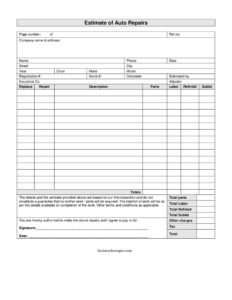
Estimate Of Auto Repairs
Download a free Estimate of Auto Repairs template in PDF or DOCX to itemize parts, labor, and totals and get customer authorization fast.
PDF
DOCX
2 downloads
0
likes
Download Files
- DOCX
An Estimate of Auto Repairs is a written quote a repair shop or body shop gives a customer that itemizes the parts, labor, and other charges expected to fix a vehicle before any work begins. People most often use it to get a customer’s signed authorization and to communicate clearly with an insurance company before turning a wrench. You can download this Estimate of Auto Repairs template free in both PDF and DOCX formats, with no signup required.
What Is an Estimate of Auto Repairs?
An Estimate of Auto Repairs is a document issued by an automotive repair facility, collision center, or independent mechanic that lays out the projected cost of repairing a specific vehicle. It identifies the customer, the vehicle, and the shop, then breaks the proposed work into line items covering parts, labor, refinishing, and sublet work. The form documents what the shop believes will be required after an initial inspection, the estimated dollar figures, and any applicable taxes or other charges. Crucially, it usually ends with an authorization clause and signature line, transforming a simple price quote into a record that the customer reviewed the costs and approved the work to proceed.
When Do You Need an Estimate of Auto Repairs?
This form fits a wide range of everyday situations in the repair and collision business:
- A customer brings in a damaged car and wants to know the cost before committing to repairs.
- An insurance claim requires a documented estimate that an adjuster can review and approve.
- A body shop needs written authorization before ordering parts or starting refinish work.
- A mechanic wants to set clear expectations that further work may be discovered once disassembly begins.
- A fleet manager requests itemized quotes from several shops to compare costs.
- A customer wants a paper trail showing exactly what they agreed to pay and for what.
Estimate vs. Final Invoice
An estimate is a projection based on a first inspection, not a binding final bill. The template’s own language makes this clear: hidden damage, additional parts, or extra labor uncovered during the job can change the total. The final invoice reflects the actual work completed, while the estimate sets the starting point and secures the customer’s go-ahead.
What an Estimate of Auto Repairs Should Have
A complete estimate ties together three things: who is involved, what vehicle is being repaired, and what the work will cost. Strong estimates include full shop identification, accurate customer contact details, and precise vehicle information so there is no confusion about which car the quote covers. The cost portion should itemize each repair with separate columns for parts, labor, refinishing, and sublet charges, then roll those into clear subtotals, tax, and a grand total. Finally, a disclaimer about the preliminary nature of the inspection and a signed authorization line protect both the shop and the customer by documenting consent before work starts.
How to Fill Out an Estimate of Auto Repairs
- Enter the page number and ref no to track the document, then add your company name & address at the top.
- Record the customer’s name, phone, street, and city, along with the date of the estimate.
- Describe the vehicle: year, color, make, model, registration #, serial # (VIN), and current odometer reading.
- Add the name of the person who prepared it under estimated by, and if a claim is involved, the insurance co and adjustor.
- For each line, mark whether you will replace or repair, write a clear description, and enter the costs for parts, labor, refinish, and sublet.
- Tally each column into total parts, total labor, total refinish, and total sublet, then add other charges and tax to reach the grand total.
- Have the customer review the authorization clause and sign and date the bottom.
Understanding the Cost Columns
The four cost categories on this estimate exist because auto repair work is rarely a single charge. Parts covers physical components such as panels, lights, or filters. Labor is the shop’s time, usually calculated from a flat-rate hours figure multiplied by an hourly rate. Refinish separates out painting and finishing work, which is common on collision jobs and often priced differently from mechanical labor. Sublet captures work the shop sends out to a third party — like glass replacement, alignment, or upholstery — that the shop pays for and passes along. Keeping these separate gives the customer and any adjuster a transparent breakdown and makes it easy to revise a single line if the scope changes.
The Authorization Clause
The signature block is more than a formality. By signing, the customer states that they authorize the listed repairs and agree to pay in full. Just as important, the template spells out that the estimate is based on a first inspection and does not guarantee that no further work or parts will be needed — the final bill reflects what is actually required on completion. This honest framing helps prevent disputes when hidden damage surfaces. Many shops follow up with a phone call and a revised estimate before exceeding the original figure, and some jurisdictions require re-authorization above a set threshold.
Common Mistakes to Avoid
- Leaving the serial # (VIN) or registration # blank, which makes it hard to match the estimate to the right vehicle and claim.
- Lumping all costs into one figure instead of separating parts, labor, refinish, and sublet.
- Forgetting to record the odometer reading, which insurers and customers often want documented.
- Omitting tax or other charges so the customer is surprised by a higher final total.
- Starting work before the customer signs the authorization line.
- Failing to note the insurance co and adjustor on a claim job, which slows down approval and payment.
Frequently Asked Questions
What is an Estimate of Auto Repairs used for? It is used to give a customer a written, itemized projection of repair costs before any work begins. It also serves as documentation for insurance adjusters and as a record of the customer’s authorization to proceed. The form bridges the gap between an initial inspection and the final invoice.
How do I fill out an Estimate of Auto Repairs? Start with your shop details and the customer’s contact information, then record the full vehicle description including VIN, registration, and odometer. List each repair with a description and split the cost across parts, labor, refinish, and sublet columns, total each, add tax and other charges, and have the customer sign the authorization. The field-by-field walkthrough above covers each entry in order.
Is an estimate the same as the final bill? No. An estimate is a preliminary figure based on a first inspection and does not guarantee that additional work or parts won’t be required. As the template states, the final bill reflects the actual work completed, which may differ once disassembly reveals hidden damage.
Does the customer have to sign the estimate? The authorization clause and signature line let the customer formally approve the repairs and agree to pay. Many shops will not begin work — or order parts — without that signature, and some areas require written authorization by law. Always obtain the signature before starting.
Is this Estimate of Auto Repairs template free? Yes. You can download it free in both PDF and DOCX formats with no signup required. The DOCX version is fully editable so you can add your shop’s logo, adjust the line items, or change the terms to match your business.
Can I use this estimate for an insurance claim? Yes. The form includes dedicated fields for the insurance company and adjuster, along with itemized costs that make it easy for an adjuster to review and approve. Be sure to keep the vehicle details and cost breakdown accurate, since insurers often verify them.
This Estimate of Auto Repairs template is a general example provided for informational purposes only and is not legal, financial, or tax advice. Auto repair authorization and disclosure requirements vary by jurisdiction. Consult a qualified professional or your local regulations to ensure your estimate meets applicable rules.
Related Forms
- Personal Request Rejection
- Drug and Alcohol Testing Individual
- Request For Divorce Records
- Request For Bank Credit Reference
- Product Replacement Request
- Requisition Form
Browse more in Request and Authorization.