
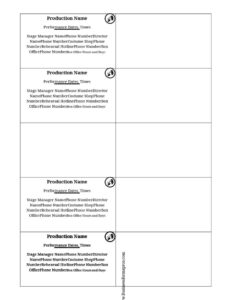
Theater Wallet Cards
Free Theater Wallet Cards template gives cast and crew key production contacts at a glance — download free in PDF and DOCX, no signup required.
DOC
5 downloads
0
likes
Download Files
- DOC
A Theater Wallet Card is a pocket-sized reference card that lists the most important production details and contacts so cast and crew can carry them everywhere during a show’s run. The most common reason people use one is to put critical information — rehearsal hotlines, stage manager contacts, box office hours, and performance dates — into everyone’s hands in a format that fits a wallet or lanyard. This template is free to download in both PDF and DOCX, with no signup required.
What Is a Theater Wallet Card?
A Theater Wallet Card is a compact, printable reference issued by a stage management team or production office to every member of a show. It documents the essential who, what, when, and where of a production: the production name, performance dates and times, key personnel like the stage manager and director, and contact lines such as the rehearsal hotline and box office. Designed to be cut to wallet size, laminated, or slipped into an ID holder, it gives everyone a single, consistent source for the details they need most. Theaters, schools, community groups, and touring companies all use them to keep a busy ensemble organized and reachable throughout rehearsals and the run.
When Do You Need a Theater Wallet Card?
Wallet cards earn their place anytime a production has more than a handful of people who need the same information quickly. Common situations include:
- Opening of a new production — hand a card to every cast and crew member at the first rehearsal or read-through so contacts are set from day one.
- Large casts or ensembles — musicals, operas, and school plays with dozens of performers benefit from a shared, portable reference.
- Touring or multi-venue shows — performers on the road need box office and stage manager details that travel with them.
- Volunteer or community theater — part-time participants who aren’t at the theater daily appreciate having the rehearsal hotline in their pocket.
- Tech and dress rehearsal weeks — when schedules shift rapidly, a card with performance dates and times reduces confusion.
- Front-of-house and box office staff — ushers and volunteers can carry accurate box office hours and phone numbers to answer patron questions.
What a Theater Wallet Card Should Have
A good wallet card is dense but readable. It should clearly identify the production by name and list the run’s performance dates and times so no one shows up on the wrong night. It must include the key leadership contacts — stage manager and director — plus the working lines a company relies on: the rehearsal hotline for last-minute changes, the costume shop for fittings, and the box office for ticketing and patron matters. Box office hours and days, along with a general phone number, round out the public-facing information. Keep the layout clean, use a legible font size, and group related details together so the card is genuinely useful at a glance.
How to Fill Out a Theater Wallet Card
- Production Name: Enter the official title of the show exactly as it appears on programs and posters so there’s no ambiguity.
- Performance Dates: List every public performance date for the run, including matinees, in chronological order.
- Times: Add the curtain or start time for each performance; note any that differ from the standard evening slot.
- Stage Manager Name: Write the stage manager’s full name as the primary point of contact for the company.
- Director Name: Enter the director’s name so cast and crew know who is steering the artistic vision.
- Costume Shop: Provide the costume shop name or contact for scheduling fittings and reporting wardrobe issues.
- Rehearsal Hotline: Add the dedicated hotline number where schedule updates and cancellations are posted.
- Box Office: Note the box office name or department handling ticket sales and patron inquiries.
- Phone Number: Include the main contact number for the theater or production office.
- Box Office Hours and Days: List the days and hours the box office is open so everyone can direct patrons accurately.
Printing and Distribution Tips
The format matters as much as the content. Print cards on heavier cardstock so they survive a wallet, and consider laminating them for runs that stretch over several weeks. Many companies print multiple cards per sheet and trim them down — the DOCX version makes it easy to duplicate a single card across a page before printing. Hand them out at the first full company meeting, and keep a small stack at the stage door for replacements. If your production information changes often, print a fresh batch rather than asking people to scribble corrections, since an outdated card can cause missed calls or a wrong curtain time.
Keeping the Information Current
A wallet card is only as good as its accuracy. Before printing, confirm every detail with the stage management team: double-check the spelling of names, verify each performance date against the official calendar, and call the listed phone numbers to make sure they ring through. If the rehearsal hotline or box office hours change mid-run, distribute updated cards promptly and let everyone know the previous version is retired. Treat the card as a living document for the duration of the production, and assign one person — usually the stage manager or production assistant — to own updates.
Common Mistakes to Avoid
- Tiny, unreadable text — cramming too much in shrinks the font below a usable size; trim non-essentials instead.
- Outdated dates or times — failing to reprint after a schedule change defeats the card’s whole purpose.
- Wrong or disconnected numbers — always test the rehearsal hotline and box office line before printing.
- Missing matinees — listing only evening times causes confusion on two-show days.
- Inconsistent production name — make sure the title matches programs, posters, and the website.
- No backup copies — keep extras on hand, since cards get lost, washed, or left at home.
Frequently Asked Questions
What is a Theater Wallet Card used for? It is a pocket-sized reference that gives cast and crew quick access to key production information, including performance dates and times, the stage manager and director names, and contact lines like the rehearsal hotline and box office. It keeps everyone reachable and on schedule throughout rehearsals and the run.
How do I fill out the Theater Wallet Card template? Enter your production name at the top, then fill in the performance dates and times, the stage manager and director names, and your contact details for the costume shop, rehearsal hotline, box office, phone number, and box office hours. Verify every entry against your official production schedule before printing.
Is the Theater Wallet Card free to download? Yes. You can download it free here in both PDF and DOCX formats, with no signup or account required. The DOCX version is fully editable so you can customize it for your specific show.
What size should I print the card? Aim for a standard wallet or business-card footprint — roughly 3.5 by 2 inches — so it fits in a wallet, badge holder, or lanyard. Printing several copies per sheet of cardstock and trimming them is the most efficient approach.
Can I customize the fields for my production? Absolutely. Open the DOCX file and adjust the labels to add details your company relies on, such as a green room phone, fight-call notes, or a wardrobe call time. Keep the layout uncluttered so the card stays readable at a glance.
How often should I update and reprint the cards? Reprint whenever core information changes — a moved performance date, a new hotline number, or revised box office hours. Distributing fresh cards is more reliable than asking everyone to correct old ones by hand, and it prevents missed calls or wrong curtain times.
This template is provided as a general example for informational purposes only and is not legal, business, or professional advice. Production needs and contact details vary by company and venue — confirm all information with your stage management team and adapt the card to your specific show before distributing it.
Related Forms
- Scene Breakdown Actors
- Set Design
- Blocking Key
- Contact Sheet Individual
- Callback Sheet
- Costume Measurement Form
Browse more in Theater.