
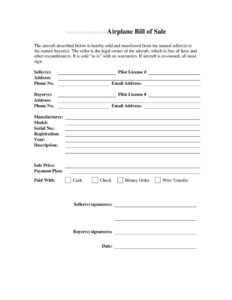
Airplane Bill Of Sale
Download a free Airplane Bill of Sale template to document the sale and transfer of an aircraft between buyer and seller — free PDF and DOCX download.
PDF
DOCX
1 downloads
0
likes
Download Files
- DOCX
An Airplane Bill of Sale is a written record that documents the sale and transfer of ownership of an aircraft from a seller to a buyer. People most often use it to prove a legal change of ownership when registering the aircraft and to protect both parties with a clear paper trail. You can download this template free in PDF and DOCX — no signup required.
What Is an Airplane Bill of Sale?
An Airplane Bill of Sale is a legal document that records the details of an aircraft transaction, including who sold it, who bought it, the agreed price, and a description of the aircraft itself. It is typically issued by the seller and signed by both parties at the time of sale. The form serves as proof that ownership has passed from one person or company to another, and it is commonly required when registering the aircraft with the relevant national aviation authority. Whether the aircraft is a small single-engine plane, an experimental kit build, or a larger turboprop, the bill of sale creates an official record of the deal and helps prevent future disputes about ownership or sale terms.
When Do You Need an Airplane Bill of Sale?
Almost any change of aircraft ownership calls for a written bill of sale. Common situations include:
- Selling a privately owned aircraft to another individual or to a flying club.
- Buying a used plane and needing documentation to register it with the aviation authority.
- Transferring an aircraft between a business and its owner, or between partners.
- Donating an aircraft to a school, museum, or nonprofit and recording the transfer for tax and title purposes.
- Settling an estate where an aircraft must be transferred to an heir or sold to a third party.
- Selling an experimental, homebuilt, or partially completed aircraft where a clear ownership record is essential.
In each case, the bill of sale answers the basic questions of who, what, when, and for how much — the foundation any registration office or future buyer will want to see.
What an Airplane Bill of Sale Should Have
A complete aircraft bill of sale should clearly identify the parties and the aircraft, leaving no room for ambiguity. Key elements include the full legal names and addresses of the buyer and seller, the date of sale, and the agreed purchase price. The aircraft must be described in detail: make, model, year, registration or tail number, serial number, and engine details. The document should also state any conditions of sale, confirm the seller’s right to sell, note whether the aircraft is sold “as-is,” and include signature lines for both parties. A complete description tied to verifiable numbers is what makes the document trustworthy and usable for registration.
How to Fill Out an Airplane Bill of Sale
- Enter the date. Write the calendar date the sale takes place at the top of the form.
- Identify the seller. Provide the seller’s full legal name and current mailing address.
- Identify the buyer. Provide the buyer’s full legal name and mailing address exactly as it should appear on the title and registration.
- Describe the aircraft. Record the make, model, year of manufacture, registration (tail/N-number), and the aircraft serial number. Add engine make, model, and serial numbers if listed.
- State the purchase price. Enter the agreed amount in both numerals and words to prevent confusion, and note the form of payment.
- Add sale terms. Indicate whether the aircraft is sold “as-is” or with warranties, and list any included logbooks, avionics, or equipment.
- Confirm ownership. The seller affirms they are the rightful owner with authority to sell free of undisclosed liens.
- Sign and date. Both buyer and seller sign and print their names; add witness or notary lines if required.
Registration and Title Considerations
A bill of sale alone usually does not complete the legal transfer of an aircraft — most aviation authorities also require an official registration application and may require their own standardized bill of sale form. In the United States, for example, aircraft are registered through a federal authority and a specific transfer form is commonly used in addition to a private bill of sale. After the sale, the buyer should promptly submit the required paperwork so the registration reflects the new owner. Keep copies of the bill of sale, logbooks, airworthiness documents, and any lien releases together, since these records support both the registration process and any future resale. Because procedures and required forms differ by country and by aircraft type, confirm the exact requirements with the appropriate aviation authority before relying on this document alone.
Tips for a Smooth Aircraft Sale
Verify the registration and serial numbers against the aircraft’s data plate and existing paperwork before signing — a mismatch can stall registration. Review the aircraft logbooks together so both parties agree on the recorded hours and maintenance history. If money is changing hands by wire or financing, make sure payment clears before handing over keys and documents. Consider completing the transaction in the presence of a notary or witness for an added layer of authenticity, especially for higher-value aircraft. Finally, give the buyer copies of all maintenance and inspection records at signing rather than promising to send them later.
Common Mistakes to Avoid
- Leaving out the serial number or registration number, which makes the aircraft hard to identify.
- Writing the purchase price only in numerals, increasing the risk of disputes or alteration.
- Failing to specify “as-is” terms, leaving the seller exposed to later warranty claims.
- Not confirming the seller actually owns the aircraft free of undisclosed liens.
- Forgetting to have both parties sign and date the document.
- Skipping the official registration transfer with the aviation authority after signing.
Frequently Asked Questions
What is an Airplane Bill of Sale used for? It is used to document the transfer of ownership of an aircraft from a seller to a buyer. The form records the parties, the aircraft details, the price, and the sale date, and it serves as proof of the transaction for registration and personal records.
Does an Airplane Bill of Sale need to be notarized? Notarization is not always required, but it adds credibility and may be requested for higher-value aircraft or by certain authorities. Requirements vary by jurisdiction and aircraft type, so check the rules of your local aviation authority before finalizing the sale.
Is this Airplane Bill of Sale legally binding? Once both the buyer and seller sign it voluntarily and the terms are accurate, it functions as a binding record of the transaction. Keep in mind that completing the legal transfer of title usually also requires submitting registration paperwork to the appropriate aviation authority.
What information do I need before filling it out? Gather the full legal names and addresses of both parties, the agreed price, and the aircraft’s make, model, year, registration number, and serial number. Having the logbooks and existing registration on hand helps you confirm these details are accurate.
Do I still have to register the aircraft after signing? Yes. The bill of sale records the deal, but the buyer typically must register the change of ownership with the relevant aviation authority and may need to submit an official transfer form as well. Do this promptly so the registration reflects the new owner.
How much does this template cost? Nothing — this Airplane Bill of Sale template is completely free to download in both PDF and DOCX formats, with no signup or account required. You can edit it to match your specific transaction and print as many copies as you need.
This Airplane Bill of Sale template is provided as a general example for informational purposes only and is not legal, financial, or tax advice. Aircraft sale and registration requirements vary by jurisdiction and aircraft type — consult a qualified aviation attorney or the appropriate aviation authority for your specific situation.
Official resource: for the rules that apply to your situation, see your state DMV.
Related Forms
- Bill of Sale for Parts Only
- Trailer Bill Of Sale
- Mobile Home Bill Of Sale
- Dock Receipt
- Business Bill of Sale
- Dry Cleaning Ticket
Browse more in Bills of Sale.