
Credit Information Shared
Download a free Credit Information Shared letter template to respond to credit reference requests with account aging details — free PDF and DOCX download.
DOCX
0
likes
Download Files
- DOCX
A Credit Information Shared letter is a written response a business sends when another company requests credit history on a shared customer, summarizing the account balance and how it ages across payment periods. It is the standard, professional way to answer a credit reference inquiry, and you can download it free in PDF and DOCX with no signup required.
What Is a Credit Information Shared Letter?
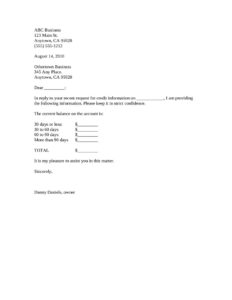
A Credit Information Shared letter is a confidential business-to-business communication used to disclose a customer’s payment record at the request of another creditor. It is typically issued by a vendor, supplier, or account manager who has firsthand knowledge of how a particular customer pays its invoices. The letter documents the current account balance and breaks it down by aging buckets — amounts owed for 30 days or less, 30 to 60 days, 60 to 90 days, and more than 90 days — giving the requesting party a clear snapshot of payment behavior. Because the information is sensitive, the letter also reminds the recipient to keep the details in strict confidence.
When Do You Need a Credit Information Shared Letter?
Businesses extend credit to one another all the time, and before doing so they often verify whether a prospective customer pays on schedule. This letter is the tool that answers those inquiries. Common situations include:
- A new supplier asks you to serve as a trade reference for a customer applying for net-30 or net-60 terms.
- A bank or lender requests a payment history to support a customer’s loan or line-of-credit application.
- A wholesaler wants confirmation that a shared client clears invoices on time before increasing their credit limit.
- A credit bureau or business credit agency solicits trade-line data to build a company’s credit profile.
- A competing or partnering vendor sends a formal credit inquiry as part of their onboarding process.
- You need to document, in writing, the exact balances and aging owed by a customer for the requesting party’s records.
What a Credit Information Shared Letter Should Have
For the response to be useful and professional, it should clearly identify all the parties and present the financial data in an organized way. A complete letter includes your company’s name and contact information at the top, the date, the recipient’s company name and address, and a proper salutation to the specific person who made the request. The body must name the customer the inquiry concerns, state that the information is being shared in confidence, and then lay out the current balance segmented by aging period with a clear total. It closes with a courteous sign-off and the name and title of the person authorized to release the information.
How to Fill Out a Credit Information Shared Letter
- Replace the sample header (ABC Business, 123 Main St., Anytown, CA) with your own company name, street address, city, state, ZIP, and phone number.
- Enter the current date in place of the example date.
- Fill in the recipient block — the requesting company’s name and address (the template shows Othertown Business, 345 Any Place).
- Complete the salutation: after “Dear,” write the name of the person who requested the information.
- In the body, enter the name of the customer whose credit you are reporting on in the blank provided.
- Fill in the aging amounts: the balance owed at 30 days or less, then 30 to 60 days, 60 to 90 days, and more than 90 days.
- Add the figures together and enter the TOTAL outstanding balance.
- Sign the letter and type your name and title, replacing “Danny Daniels, owner.”
Keeping the Information Accurate and Confidential
Because this letter shares another party’s financial data, accuracy matters as much as discretion. Pull the figures directly from your accounts-receivable system or aging report on the day you write the letter, since balances change as payments post and new invoices are issued. The aging buckets should reflect how long each portion of the balance has been outstanding, not when the account was opened. If a customer has no overdue amounts, it is perfectly acceptable to enter zero in the later columns — that clean record is itself valuable information for the requester. The confidentiality reminder is not boilerplate; treat it as a genuine instruction so the recipient knows the data is not meant for redistribution.
How This Differs From a Full Credit Report
A Credit Information Shared letter is a single trade reference, not a comprehensive credit report. It reflects only the payment relationship between you and one customer, based on your own records. A formal credit report from a bureau aggregates data from many creditors, public records, and scoring models. Requesters often gather several trade references like this one to form a broader picture, so your letter is one piece of a larger evaluation. Keep your response factual and limited to what you can personally verify; avoid speculation about the customer’s overall financial health or their dealings with other vendors.
Common Mistakes to Avoid
- Leaving the sample names and addresses (ABC Business, Danny Daniels) in the finished letter instead of your own details.
- Reporting outdated balances — always use a current aging report rather than figures from last quarter.
- Forgetting to name the specific customer the inquiry is about, which makes the letter ambiguous.
- Math errors where the four aging amounts do not add up to the stated total.
- Omitting the confidentiality reminder, which protects both you and the customer.
- Sharing more than was asked, such as opinions or unrelated account history beyond the requested balances.
Frequently Asked Questions
What is a Credit Information Shared letter used for? It is used to respond to a credit reference request from another business, bank, or credit agency. The letter discloses a customer’s current account balance and how it ages across 30, 60, and 90-plus day periods. This helps the requesting party decide whether to extend credit to that customer.
How do I fill out the aging balance section? Pull your customer’s current accounts-receivable aging report and enter the amount outstanding in each bucket — 30 days or less, 30 to 60 days, 60 to 90 days, and more than 90 days. Add those four figures and write the sum on the TOTAL line. If a bucket has nothing owed, simply enter zero.
Is it legal to share another company’s credit information? Sharing your own payment experience with a customer as a trade reference is a common and generally accepted business practice, especially when the customer has authorized it through their credit application. Requirements and privacy rules vary by jurisdiction, so confirm what you are permitted to disclose. Always keep the information factual and limited to your direct experience.
Do I need to keep the information confidential? Yes — the template specifically asks the recipient to keep the details in strict confidence, and you should treat the data the same way. The balances belong to your customer and are intended only for the party evaluating their creditworthiness. Avoid forwarding the letter or discussing its contents beyond the original request.
Does this letter need to be signed or notarized? The letter should be signed by you with your name and title to confirm you are authorized to release the information. Notarization is not typically required for a routine trade reference. A signature on company letterhead is generally sufficient to make it credible.
Is this template really free to download? Yes. You can download the Credit Information Shared letter free in both PDF and DOCX formats, with no signup or payment required. Edit it in your word processor, fill in your figures, and send it.
This template is provided as a general example for informational purposes only and is not legal, financial, or tax advice. Rules governing the disclosure of credit and financial information vary by jurisdiction. Consult a qualified professional before sharing or relying on credit information.
Related Forms
Browse more in Miscellaneous.