
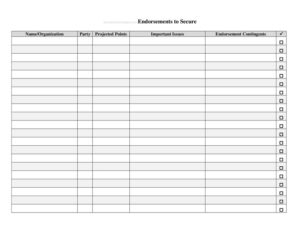
Endorsements Tracker
Track every campaign endorsement in one place with our free Endorsements Tracker template, available as a free download in PDF and DOCX formats.
PDF
DOCX
4 downloads
0
likes
Download Files
- DOCX
An Endorsements Tracker is a simple, organized document that campaigns, advocacy groups, and ballot measure committees use to record and monitor every endorsement they pursue and secure. The most common reason people use it is to keep an accurate, real-time picture of who has publicly backed a candidate or cause, who is still pending, and what follow-up each contact needs. It is free to download in both PDF and DOCX formats, with no signup required.
What Is an Endorsements Tracker?
An Endorsements Tracker is a working log that captures the status of each endorsement request a campaign makes. It is typically maintained by a campaign manager, political director, volunteer coordinator, or communications staffer. The document records the name of each potential endorser, the type of endorsement, contact details, the current stage of the conversation, and notes on next steps. Rather than relying on memory or scattered emails, the tracker centralizes everything in one place so the whole team can see progress at a glance. It is an internal organizational tool, not a public statement, and it helps ensure no promising relationship slips through the cracks during a fast-moving campaign cycle.
When Do You Need an Endorsements Tracker?
Endorsements are a core form of political currency, and tracking them carefully matters in many situations. You may need an Endorsements Tracker when:
- You are running a candidate campaign and want to line up support from local officials, community leaders, and respected figures before key deadlines.
- You are managing a ballot initiative or referendum and need to document organizational endorsements from unions, associations, or advocacy groups.
- Your volunteer team is dividing outreach work and everyone needs a shared view of who has already been contacted.
- You are preparing campaign mailers, websites, or press releases and need a verified, current list of confirmed endorsers.
- You want to follow up systematically with contacts who said “maybe” or asked for more information before committing.
- You are reporting progress to a campaign committee, candidate, or finance team and need a clean summary of momentum.
What an Endorsements Tracker Should Have
A useful tracker balances completeness with simplicity. The essential elements include the endorser’s full name and the organization or office they represent, their role or title, and reliable contact information such as phone and email. It should record the type of endorsement being sought, the date of first contact, and the current status. Strong trackers also include a column for the staff or volunteer responsible for the relationship, a follow-up date, and a free-text notes field for context. For confirmed endorsements, capture the date secured and whether the endorser approved use of their name and likeness in campaign materials. Together these fields turn a loose list of names into an actionable outreach plan.
How to Fill Out an Endorsements Tracker
Because this is a flexible template, fill it out row by row as you build your outreach list:
- Endorser name: Enter the full name of the individual or organization you are seeking support from.
- Title or affiliation: Note their office, role, or the group they lead so the team understands their influence.
- Contact information: Record phone, email, and any preferred method of contact.
- Endorsement type: Specify whether it is a personal, organizational, or official endorsement, and whether it is public or private.
- Date contacted: Log when you first reached out to track timing and response speed.
- Status: Mark each entry as pending, confirmed, declined, or follow-up needed.
- Assigned to: Identify the staffer or volunteer responsible for that relationship.
- Follow-up date: Set a clear next-action date so leads do not go cold.
- Notes: Capture conversation details, conditions, or how they want to be credited.
Types of Endorsements to Track
Not all endorsements carry the same weight or require the same handling, so it helps to categorize them in your tracker. Individual endorsements come from people such as elected officials, former office holders, local business owners, or respected community members. Organizational endorsements come from groups like labor unions, professional associations, neighborhood coalitions, or issue-based advocacy organizations, and often involve a board vote or questionnaire. Some endorsements are formal and public, intended for use on signs and mailers, while others are quiet pledges of support or financial backing. Marking the type for each entry helps your communications team decide where and how to feature each name, and reminds you which endorsers require additional steps like completing a candidate survey or attending a screening interview.
Tips for Managing Endorsement Outreach
A tracker is only as good as the discipline behind it. Update it after every meaningful conversation rather than relying on memory at the end of the week. Always confirm in writing that an endorser approves how their name will be used before publishing it, to avoid embarrassing retractions. Sort or filter by status so your team can focus energy on warm leads and overdue follow-ups. Keep declined entries in the log with a brief note on why, since circumstances change and a “no” today can become a “yes” in a later cycle. Finally, designate one owner of the master tracker to prevent conflicting versions floating around the campaign.
Common Mistakes to Avoid
- Publishing an endorsement before getting clear, documented permission to use the person’s name.
- Letting the status column go stale so the team cannot tell which leads are still active.
- Failing to assign each entry to a specific person, which leads to duplicate or dropped outreach.
- Leaving the follow-up date blank, allowing promising conversations to fizzle out.
- Mixing confirmed and pending endorsements when building public-facing lists.
- Keeping multiple unsynced copies of the tracker across different volunteers and devices.
Frequently Asked Questions
What is an Endorsements Tracker used for? It is an internal organizing tool that lets a campaign or advocacy group record every endorsement it pursues and monitor its status. The tracker shows who has confirmed support, who is still pending, and what follow-up each contact needs. It keeps outreach coordinated across staff and volunteers so no opportunity is missed.
Who should maintain the tracker? Typically a campaign manager, political director, or volunteer coordinator owns the master copy. Other team members may add or update entries, but assigning a single owner prevents conflicting versions. For smaller campaigns, the candidate or a lead volunteer can manage it directly.
How do I fill it out? Add one row per potential endorser and complete the name, affiliation, contact details, endorsement type, date contacted, status, assigned staffer, follow-up date, and notes. Update the status and notes after each conversation. This keeps the document accurate and immediately useful for planning your next outreach steps.
Is an Endorsements Tracker a legal document? No, it is an internal organizational record rather than a binding contract or official filing. That said, you should still confirm written permission before publicly using anyone’s endorsement. Some jurisdictions have campaign disclosure rules, so check whether public endorsement materials trigger any local reporting requirements.
Should I track endorsements that declined? Yes. Keeping declined entries with a short note on the reason gives you valuable context for future cycles, since people and organizations may change their position over time. It also prevents accidentally contacting the same person twice with the same ask.
How much does this template cost? Nothing. The Endorsements Tracker is completely free to download here in both PDF and DOCX formats, with no signup or payment required. You can edit the DOCX version to add columns, rename fields, or adapt it to your specific campaign workflow.
This template is a general example provided for informational purposes only and does not constitute legal, financial, or campaign-compliance advice. Endorsement disclosure and campaign rules vary by jurisdiction, and requirements change over time. Consult a qualified election law professional or your relevant election authority before relying on this document.
Related Forms
- Voting Demographics By Education
- Campaign Volunteer Sign Up Sheet
- Candidate Information Form
- Campaign Funding Violation Complaint Letter
- Opinion Poll
- Election Contributions Form
Browse more in Political.