
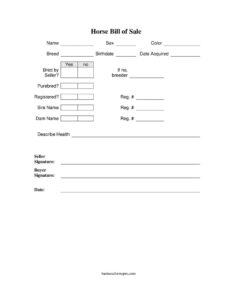
Horse Bill Of Sale
Download a free Horse Bill of Sale template to document the legal sale of a horse, including breed, registration, and health details — free download in PDF or DOCX.
PDF
DOCX
2 downloads
0
likes
Download Files
- DOCX
A Horse Bill of Sale is a written document that records the legal transfer of ownership of a horse from a seller to a buyer. People most commonly use one to create proof of purchase that protects both parties and confirms the animal’s identity, breeding, and condition at the time of sale. You can download this template free in PDF or DOCX with no signup required.
What Is a Horse Bill of Sale?
A Horse Bill of Sale is a record created and signed by the seller and buyer that documents the sale of a specific horse. It identifies the animal by name, breed, color, sex, and registration details, notes its known health, and states who is buying it and from whom. The seller issues it as evidence that ownership has lawfully changed hands, while the buyer keeps it as proof of purchase. It is widely used in private horse transactions, at barns and farms, and through equine brokers. Unlike a simple receipt, this form captures the breeding lineage and registration data that matter when establishing a horse’s pedigree and value.
When Do You Need a Horse Bill of Sale?
Any time a horse changes owners for money, trade, or gift, a written record protects everyone involved. Common situations include:
- Private sale between individuals — selling or buying a riding, show, or pleasure horse without an agent.
- Purchasing a registered or purebred horse where the registration number and pedigree must be documented for breed-association transfer.
- Selling a foal or young horse bred on your own property, where you can confirm you bred the animal and identify the sire and dam.
- Buying through an auction, broker, or trainer and needing clear proof of the transaction terms.
- Gifting or transferring a horse to a family member, club, or rescue while still creating a clean ownership trail.
- Establishing ownership for boarding, insurance, or registration transfer with a breed registry or association.
What a Horse Bill of Sale Should Have
A complete Horse Bill of Sale clearly identifies the horse, the parties, and the terms. It should include the horse’s name, breed, color, sex, and birthdate; registration status and registration number if applicable; whether the horse is purebred; sire and dam names to document lineage; the date the seller acquired the animal and whether the seller bred it (and the breeder’s name if not); a description of the horse’s health at the time of sale; and the date of the transaction. Finally, it must carry the dated signatures of both the buyer and seller to make the record valid and enforceable as proof of the agreement.
How to Fill Out a Horse Bill of Sale
- Enter the Name of the horse exactly as it is known or registered.
- Fill in the Breed, Color, and Sex to describe the animal’s basic identifying characteristics.
- Record the horse’s Birthdate so the age is clearly documented.
- Indicate whether the horse is Registered? and, if so, list the Reg. # from the breed association.
- Mark whether the horse is Purebred? and provide the Sire Name and Dam Name to establish lineage.
- State whether the horse was Bred by Seller? If no (If no, breeder), name the actual breeder.
- Enter the Date Acquired — when the seller originally took ownership.
- Complete the Describe Health section with the horse’s known condition, vaccinations, or issues at sale.
- Add the transaction Date, then have both parties provide the Buyer Signature and Seller Signature.
Documenting Health and Lineage Accurately
Two of the most valuable parts of an equine sale record are the health description and the breeding details. In the Describe Health field, be honest and specific: note recent vaccinations, any lameness or chronic conditions, dental work, and whether a pre-purchase veterinary exam was performed. Buyers often rely on this statement, so vagueness can lead to disputes later. For lineage, the Sire Name, Dam Name, and Reg. # tie directly to a breed registry’s records. If the horse is registered, the buyer will typically need these details to complete an official ownership transfer with the association, which is a separate process from the bill of sale itself.
Registration Transfer and Recordkeeping
A Horse Bill of Sale documents that a sale occurred, but registered horses usually require a formal transfer of papers through the relevant breed organization. Keep the original registration certificate, any health and Coggins test paperwork, and the signed bill of sale together. Both buyer and seller should retain a copy. The buyer may need these documents for insurance, competition eligibility, boarding contracts, and future resale. Storing them safely creates an unbroken ownership history that supports the horse’s value over time.
Common Mistakes to Avoid
- Leaving the health description blank or vague — undisclosed conditions are a frequent source of post-sale disputes.
- Omitting the registration number for a registered horse, which complicates the official transfer of papers.
- Confusing the sire and dam or misspelling registered names, breaking the link to registry records.
- Forgetting to mark whether the seller bred the horse and to name the actual breeder when they did not.
- Failing to date and sign — an unsigned or undated form is weak evidence of the transaction.
- Not keeping copies for both parties, leaving no proof if questions arise later.
Frequently Asked Questions
What is a Horse Bill of Sale used for? It is used to document the legal sale and transfer of ownership of a horse from a seller to a buyer. It records the animal’s identity, breeding, registration, and health, and serves as proof of purchase for insurance, boarding, registry transfer, and any future resale.
How do I fill out a Horse Bill of Sale? Enter the horse’s name, breed, color, sex, and birthdate, then add registration and purebred status, sire and dam names, who bred the animal, the date acquired, and a health description. Add the transaction date and have both the buyer and seller sign and date the form.
Does a Horse Bill of Sale need to be notarized? Notarization is generally not required for a horse sale, but it can add an extra layer of verification and may be requested for high-value transactions. Requirements vary by location, so check your local rules and consider notarization if either party wants added assurance.
Is a Horse Bill of Sale legally binding? Once both parties sign and date it, a Horse Bill of Sale is typically a binding record of the transaction and the terms agreed upon. To strengthen it, fill in every field accurately and keep the health and registration details truthful and complete.
Do I still need to transfer registration papers? Yes. For a registered horse, the bill of sale documents the sale, but the buyer usually must complete a separate ownership transfer through the breed registry using the registration number, sire, and dam information. Keep the registration certificate with your bill of sale.
How much does this Horse Bill of Sale template cost? Nothing — it is completely free to download from Business Forms Pro in PDF or DOCX with no signup required. You can complete it digitally or print it, and reuse it for any future equine sale you make or receive.
This Horse Bill of Sale template is a general example provided for informational purposes only and is not legal, financial, or tax advice. Requirements for documenting equine sales and transferring registration vary by jurisdiction and breed association — consult a qualified professional or your local authorities for guidance specific to your situation.
Official resource: for the rules that apply to your situation, see your state DMV.
Related Forms
- Bill of Sale for Parts Only
- Canoe Or Kayak Bill Of Sale
- Salvage Bill Of Sale
- Domain Name Bill Of Sale
- Snowmobile Bill Of Sale
- Appliance Bill Of Sale
Browse more in Bills of Sale.