
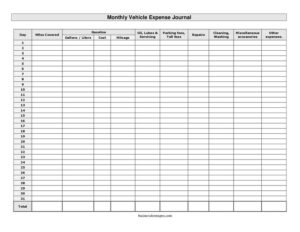
Vehicle Expense Journal Monthly
Track gas, mileage, repairs and tolls with our free Monthly Vehicle Expense Journal template—download in PDF and DOCX for free, no signup required.
PDF
DOC
3 downloads
0
likes
Download Files
- DOC
A Monthly Vehicle Expense Journal is a simple recordkeeping sheet for logging every cost and mile associated with a car, truck, or fleet vehicle over a single month. People most often use it to capture fuel, mileage, and maintenance costs for tax deductions, expense reimbursement, or personal budgeting. You can download it free here in both PDF and DOCX formats—no signup required.
What Is a Monthly Vehicle Expense Journal?
A Monthly Vehicle Expense Journal is a structured log that records the day-to-day operating costs of a vehicle across one calendar month. It’s typically used by employees who drive for work, self-employed contractors, small business owners, rideshare and delivery drivers, and families who want a clear picture of what their car actually costs. The journal documents fuel purchases, distance traveled, servicing, parking, tolls, repairs, and other incidental expenses in one place. By keeping these entries organized day by day, the journal becomes a reliable source document for reimbursement claims, mileage deductions, and end-of-year accounting—replacing a glove box full of crumpled receipts with a single, totaled record.
When Do You Need a Monthly Vehicle Expense Journal?
This journal is useful any time vehicle costs need to be tracked, separated, or justified. Common scenarios include:
- Claiming business mileage or expenses on taxes—the IRS and most tax authorities expect contemporaneous records of miles and costs.
- Submitting reimbursement requests to an employer who pays for fuel, tolls, or work-related driving.
- Running a rideshare, courier, or delivery side hustle where every gallon and mile affects net earnings.
- Managing a small fleet of company vehicles and comparing running costs across them.
- Budgeting a household to understand how much a commute or family car really costs each month.
- Tracking a leased or financed vehicle where mileage limits and upkeep matter for resale or lease return.
What a Vehicle Expense Journal Should Have
A complete journal captures both distance and dollars so the two can be reconciled. The essential elements are a dated row for each day of the month, an odometer or mileage reading, fuel details (gallons or liters purchased and their cost), and dedicated columns for the recurring categories of vehicle spending: oil and servicing, parking, tolls, repairs, cleaning, accessories, and a catch-all for miscellaneous items. The most useful versions also leave space for a monthly total at the bottom of each column so you can quickly see where the money went. Keeping the categories consistent month after month makes it easy to spot trends, flag unusual repair spikes, and produce clean year-end summaries.
How to Fill Out a Monthly Vehicle Expense Journal
- Day: Enter the calendar date for each trip or expense so entries stay in chronological order.
- Miles covered: Record the distance driven that day, separating business from personal miles if you need both totals.
- Mileage: Note the odometer reading; this anchors your trip log and verifies total distance over the month.
- Gasoline, gallons/liters, and cost: Log each fuel stop—the fuel type or station, the volume pumped, and the dollar amount paid.
- Oil, lubes & servicing: Enter the cost of oil changes, fluid top-offs, and routine maintenance.
- Parking fees: Record meters, garages, and lot charges incurred while driving.
- Toll fees: Note bridge, highway, and tunnel tolls, including electronic toll charges.
- Repairs: Document the cost of any mechanical work, tires, or parts replaced.
- Cleaning, washing: Add car washes and detailing expenses.
- Miscellaneous accessories and other expenses: Capture wipers, fluids, mounts, or anything that doesn’t fit a column, then total each column at month’s end.
Tips for Accurate, Audit-Ready Records
The value of a vehicle expense journal depends entirely on how consistently you keep it. Make entries the same day a cost occurs—memory fades fast, and a journal reconstructed weeks later is far weaker if a reimbursement or deduction is ever questioned. Staple or photograph receipts and reference them by date so each line in the journal can be backed up. Record your odometer reading at the start and end of the month to cross-check the total miles you logged. If you mix personal and business driving, keep the business portion clearly separated, since most tax rules only allow deductions for the business share. Finally, save each completed monthly sheet in a dated folder so twelve months stack neatly into a full-year picture.
Mileage Deduction vs. Actual Expenses
Many drivers track expenses without realizing there are usually two ways to claim vehicle costs at tax time. One method multiplies your business miles by a standard mileage rate; the other adds up actual expenses—fuel, oil, repairs, and a depreciation portion. This journal supports both approaches because it records mileage and itemized costs. Keeping both columns means you can calculate each method and use whichever your tax professional recommends, rather than discovering at filing time that you tracked the wrong data. Rules and rates differ by country and change year to year, so confirm the current method and rate that applies to you.
Common Mistakes to Avoid
- Logging miles without odometer readings, which makes the total impossible to verify if challenged.
- Lumping personal and business driving together, blurring the deductible portion.
- Forgetting to record fuel volume—gallons or liters—so you can’t track fuel efficiency.
- Skipping small costs like tolls, parking, and car washes that add up significantly over a year.
- Filling in the journal from memory days or weeks later instead of at the time of the expense.
- Failing to total each column monthly, leaving you to redo the math at year-end.
Frequently Asked Questions
What is a Monthly Vehicle Expense Journal used for? It’s a log for tracking all vehicle-related costs and mileage over one month, including fuel, servicing, parking, tolls, and repairs. People use it for tax deductions, employer reimbursement, fleet management, and personal budgeting. Keeping it monthly makes it easy to build a full-year record.
How do I fill out the journal each day? Enter the date, the miles covered, and your odometer (mileage) reading, then log any fuel purchased with its volume and cost. Add servicing, parking, tolls, repairs, cleaning, and miscellaneous expenses in their columns as they occur, and total each column at the end of the month.
Can I use this journal for tax deductions? Yes—because it records both mileage and itemized costs, it supports either the standard mileage method or the actual-expense method. Tax rules, rates, and eligibility vary by jurisdiction and change over time, so confirm what applies to your situation with a tax professional before filing.
Do I need to keep my receipts too? It’s strongly recommended. The journal summarizes your spending, but receipts are the supporting evidence that backs up each entry if a reimbursement or deduction is ever questioned. Reference each receipt by date so it ties directly to a line in your journal.
Is the Monthly Vehicle Expense Journal free to download? Yes. You can download it free from Business Forms Pro in both PDF and DOCX formats with no signup required. The DOCX version lets you customize columns or add formulas, while the PDF is ready to print and fill in by hand.
Can I track more than one vehicle on it? Use a separate journal for each vehicle so mileage and costs stay distinct and comparable. If you manage a fleet, label each sheet with the vehicle name or plate number and keep them in one folder for easy month-by-month and vehicle-by-vehicle comparison.
This template is provided as a general example for informational purposes only and does not constitute legal, financial, or tax advice. Recordkeeping and deduction requirements vary by jurisdiction and change over time—consult a qualified accountant or tax professional for guidance specific to your circumstances.
Related Forms
- Expense Report Weekly
- Travel Expense Report
- Expense Report
- Company Overdue Accounts
- Mileage Reimbursement Form
- Credit Card Minimum Payment
Browse more in Expense Reports.