
Request for Tenant Repairs
Download a free Request for Tenant Repairs template to formally notify tenants of repairs they must complete under the lease — free PDF and DOCX download.
DOCX
0
likes
Download Files
- DOCX
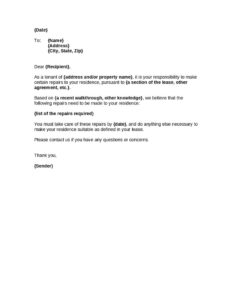
A Request for Tenant Repairs is a written notice a landlord or property manager sends to a tenant asking them to fix specific problems in their rental that are the tenant’s responsibility under the lease. Property owners most often use it after a walkthrough reveals damage or neglect the tenant must address. It’s free to download here in both PDF and DOCX formats, with no signup required.
What Is a Request for Tenant Repairs?
A Request for Tenant Repairs is a formal letter from a landlord, property manager, or owner to a tenant documenting repairs the tenant is obligated to complete. Unlike maintenance the landlord typically handles, this notice covers issues caused by the tenant or assigned to them under the lease — such as damage beyond normal wear and tear. The letter identifies the property, references the relevant lease provision, lists the specific repairs needed, and sets a deadline. It serves two purposes: it gives the tenant clear, actionable direction, and it creates a written record showing the landlord raised the matter in good faith before taking any further steps.
When Do You Need a Request for Tenant Repairs?
This notice fits a range of situations where a tenant’s obligations under the lease have not been met. Common scenarios include:
- A routine or move-out inspection reveals damage the tenant caused, such as broken fixtures, holes in walls, or a stained carpet.
- The lease assigns certain upkeep tasks to the tenant — like replacing air filters, maintaining a yard, or keeping appliances clean — and those tasks have been neglected.
- A neighbor or another tenant reports a problem traced to the tenant’s unit, such as a leak or pest issue caused by improper housekeeping.
- You want a documented paper trail before withholding any part of a security deposit for unaddressed damage.
- The tenant verbally agreed to fix something but hasn’t followed through, and you need a dated written reminder.
- A condition in the unit may violate the lease’s habitability or cleanliness standards and the tenant is contractually responsible for restoring it.
What a Request for Tenant Repairs Should Have
An effective notice is clear, specific, and easy to act on. At minimum it should identify the recipient by name and address, name the rental property, and reference the lease section or agreement that makes the repairs the tenant’s responsibility. It should describe each repair plainly so there’s no ambiguity about what’s expected, explain how the issue was discovered (for example, a recent walkthrough), and state a firm completion deadline. Finally, it should invite the tenant to reach out with questions and include the sender’s name. Keeping the tone professional and factual — rather than accusatory — helps preserve the landlord-tenant relationship and keeps the document useful if it’s ever reviewed later.
How to Fill Out a Request for Tenant Repairs
- In the To block, enter the tenant’s Name, Address, and City, State, Zip exactly as they appear on the lease.
- Open with the Dear {Recipient} greeting, addressing the tenant by name for a personal, professional tone.
- Fill in the address and/or property name to confirm which residence the notice concerns — useful if you manage multiple units.
- Reference the section of the lease, other agreement, etc. that assigns these repair duties to the tenant, so the obligation is clearly grounded.
- Note how you learned of the problem in the a recent walkthrough, other knowledge field — for example, an annual inspection or a maintenance visit.
- In the list of the repairs required section, itemize each repair separately and describe it specifically (e.g., “repair the broken closet door in the master bedroom”).
- Enter the completion date by which the tenant must finish the work.
- Sign as the Sender, adding your title and contact details so the tenant can respond.
Tenant Repairs vs. Landlord Repairs
Not every problem in a rental is the tenant’s to fix, so it’s worth distinguishing clearly before sending this notice. Landlords are generally responsible for keeping the unit habitable — structural issues, plumbing, heating, and damage from normal wear and tear. Tenants are typically responsible for damage they or their guests cause and for any specific maintenance the lease assigns to them. This letter should only request repairs that genuinely fall on the tenant’s side of that line. Referencing the exact lease clause in the notice helps make the distinction obvious and reduces the chance of a dispute over who owes what.
Delivery and Recordkeeping
How you deliver the notice can matter as much as what it says. Keep a copy of the signed letter for your records and note the date it was sent. Many landlords deliver these notices by a method that creates proof of delivery, such as certified mail, hand delivery with a witness, or a documented email, depending on what the lease and local rules allow. If you discovered the problems during a walkthrough, attach dated photos to support your description. A clear delivery record strengthens the document’s value if the matter later affects the security deposit or lease renewal.
Common Mistakes to Avoid
- Listing repairs vaguely — write “replace the cracked bathroom mirror” rather than “fix the bathroom.”
- Requesting repairs that are actually the landlord’s responsibility or normal wear and tear.
- Failing to cite the lease section that makes the tenant responsible, which weakens the request.
- Setting an unreasonable deadline that doesn’t give the tenant fair time to arrange the work.
- Using an angry or threatening tone instead of a professional, factual one.
- Forgetting to keep a dated copy and proof of how the notice was delivered.
Frequently Asked Questions
What is a Request for Tenant Repairs? It is a written notice from a landlord or property manager directing a tenant to complete specific repairs that are the tenant’s responsibility under the lease. It identifies the property, cites the relevant lease provision, lists each repair, and sets a deadline. It also creates a dated record that you raised the issue.
How do I fill out the form? Enter the tenant’s name and address, name the property, reference the lease section that assigns the repair duty, explain how you learned of the problem, list each repair specifically, and set a completion date. Sign as the sender and include your contact details. Being precise about each repair is the most important step.
Is this notice legally binding? The notice itself is a communication, not a contract — the underlying obligation comes from your lease. It documents your request and the deadline you set. Whether it triggers any further rights depends on your lease terms and local landlord-tenant law, so review those before relying on it.
How much time should I give the tenant? The deadline should be reasonable for the scope of the work and consistent with any timeframe in your lease or local rules. Minor fixes may warrant a short window, while larger repairs need more. Always set a specific date rather than a vague “as soon as possible.”
Can I deduct the cost from the security deposit if they don’t comply? Possibly, but rules on deposit deductions vary widely by jurisdiction and usually require itemized documentation. This notice helps build that record by showing you asked the tenant to act first. Check your local laws before making any deductions.
Is this template free to download? Yes. You can download the Request for Tenant Repairs template free in PDF and DOCX formats, with no signup or payment required. Edit it to fit your property and lease, then deliver it using a method that lets you keep proof.
This template is a general example provided for informational purposes only and is not legal advice. Landlord-tenant laws and repair obligations vary by state and locality, and lease terms differ. Consult a qualified attorney or local housing authority for guidance on your specific situation.
Official resource: for the rules that apply to your situation, see HUD.
Related Forms
- Tenant Complaint Log
- Landlord Change of Ownership
- Property Safety Upgrades Tenant Notification
- Landlord Lead Disclosure Form
- Agreement On Tenant Alterations To Rental Unit
- Notice Of Denial To Rent Apartment
Browse more in Landlord Documents.