
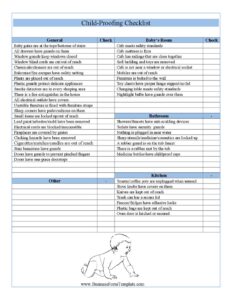
Childproofing Checklist
Use this free Childproofing Checklist template to safely babyproof every room of your home, room by room, with a free PDF and DOCX download.
PDF
4 downloads
0
likes
Download Files
A Childproofing Checklist is a room-by-room safety inventory that helps parents and caregivers find and fix household hazards before a curious baby or toddler reaches them. Most people use it when a child starts crawling or walking, so nothing dangerous gets overlooked. You can download it free in PDF and DOCX with no signup required.
What Is a Childproofing Checklist?
A Childproofing Checklist is a structured worksheet used to evaluate a home for safety risks to infants and young children. Parents, grandparents, nannies, daycare providers, and home-based babysitters use it to systematically walk through each space and confirm that hazards have been removed, secured, or made inaccessible. Rather than relying on memory, the checklist documents what has been inspected, what still needs attention, and who is responsible for fixing it. As a log and inventory tool, it doubles as a record you can revisit as the child grows and reaches new developmental stages. The goal is simple: turn an overwhelming safety project into a clear, trackable list so nothing critical slips through the cracks.
When Do You Need a Childproofing Checklist?
A childproofing review is most valuable at predictable moments in family life. Common situations include:
- Before a baby becomes mobile — typically around six to nine months, when crawling and pulling up begin and floor-level hazards suddenly matter.
- Moving into a new home — unfamiliar layouts, stairs, outlets, and cabinets all need a fresh safety pass.
- Preparing for a visiting grandchild — grandparents often childproof temporarily for holidays or weekend stays.
- Setting up an in-home daycare or babysitting space — caregivers may need a documented safety check for licensing or parent peace of mind.
- A second or third child reaching a new age — what was safe for one age group may not be for another, and older siblings introduce small toys and choking hazards.
- After a near-miss or minor accident — when an incident reveals a gap, a full re-inspection prevents the next one.
What a Childproofing Checklist Should Have
A thorough checklist is organized by room or hazard category so you can inspect methodically. The most useful versions include sections for the kitchen, bathrooms, nursery and bedrooms, living areas, stairways, and the garage or outdoor spaces. Within each section, list specific items to check — outlet covers, cabinet locks, furniture anchored to walls, blind cord safety, gates at stairs, water temperature settings, and secured cleaning supplies and medications. Each line should have a way to mark its status (done, needs attention, or not applicable), a space for notes, and ideally a date and the initials of the person who checked it. Including a follow-up or re-check column helps you track items waiting on a purchase or repair.
How to Fill Out a Childproofing Checklist
The template uses a simple, scannable format. Work through it like this:
- Add the date at the top so you have a record of when the inspection happened.
- Note who is completing the checklist — useful when more than one caregiver shares the task.
- Go room by room, starting with the highest-risk areas such as the kitchen and bathrooms.
- Read each line item and physically inspect that hazard rather than guessing from memory.
- Mark the status — check off completed items, flag those that still need work, and cross out anything that doesn’t apply to your home.
- Write specifics in the notes column, such as which cabinet needs a lock or which outlet still needs a cover.
- List any supplies to buy so you can shop in one trip instead of several.
- Set a re-check date for unfinished items and as a reminder to repeat the process as your child grows.
Room-by-Room Hazards Worth Prioritizing
Some risks deserve extra attention. In the kitchen, secure cleaning products and sharp objects, use stove knob covers, and turn pot handles inward. In bathrooms, lock medicine cabinets, set the water heater to a safe temperature to prevent scalding, and never leave standing water unattended. In living areas, anchor bookshelves, dressers, and televisions to the wall to prevent tip-overs, and pad sharp furniture corners. Stairways need gates at both top and bottom. Throughout the home, address window blind cords, electrical outlets, small choking-hazard objects, and any access to swimming pools or outdoor water features.
Keeping the Checklist Current
Childproofing is not a one-time event. As children learn to climb, open latches, and reach higher surfaces, new hazards appear. Treat your completed checklist as a living document: revisit it every few months, update the date and notes, and add items as your child develops new skills. Keeping past versions creates a useful history and reminds you which fixes are already in place.
Common Mistakes to Avoid
- Inspecting from an adult’s eye level — get down on the floor to see what a crawling child actually sees and reaches.
- Forgetting low-traffic rooms — guest rooms, laundry areas, and garages often hold the most dangerous chemicals and tools.
- Anchoring nothing — unsecured furniture and TVs are a leading tip-over hazard and are easy to overlook.
- Treating it as a single event — a home safe for a six-month-old may not be safe for an eighteen-month-old climber.
- Relying only on gadgets — locks and gates supplement supervision; they never replace it.
- Leaving items half-finished — flag and date incomplete tasks so they don’t get forgotten.
Frequently Asked Questions
What is a Childproofing Checklist used for? It is used to systematically inspect a home for hazards that could harm an infant or young child and to track which safety measures have been completed. Parents and caregivers use it to make sure no room or risk is overlooked. It also serves as a written record you can revisit as the child grows.
When should I childproof my home? Most families begin before a baby starts crawling, usually around six to nine months, and continue updating as the child reaches new milestones. It is also smart to childproof when moving to a new home or preparing for a visiting child. Because abilities change quickly, repeating the check every few months is wise.
Which room should I childproof first? Start with the highest-risk areas, typically the kitchen and bathrooms, where chemicals, medications, sharp objects, and hot or standing water are concentrated. Stairways and any rooms with heavy, unanchored furniture should follow closely. After those, work through living areas, bedrooms, and outdoor spaces.
Does using a checklist guarantee my home is safe? No checklist can guarantee safety, and active supervision remains the most important protection. The checklist helps you reduce common, preventable hazards and stay organized, but children can still find unexpected risks. Use it as a tool alongside attentive care, not as a replacement for it.
How often should I update the checklist? Revisit it every few months and whenever your child reaches a new developmental stage, such as walking, climbing, or learning to open latches. Each new skill can turn a previously safe area into a hazard. Updating the date and notes keeps the record useful over time.
How much does this template cost? This Childproofing Checklist template is completely free to download in both PDF and DOCX formats, with no signup or payment required. You can print it as-is or edit the DOCX version to add rooms and items specific to your home. Reuse it as many times as you need.
This Childproofing Checklist template is provided as a general example for informational purposes only and does not constitute safety, medical, or professional advice. Home safety needs and product standards vary, and no checklist can address every hazard. Always supervise children directly and consult current safety guidelines or a qualified professional for your specific situation.
Related Forms
- Contracts List
- Beneficiaries List
- Vehicle Repair Log
- Credit Card Rewards Tracker
- Maintenance Log
- Bill Reminder Tracker
Browse more in Log and Inventory.