
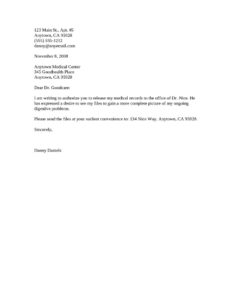
Medical Records Release Letter
Use our free Medical Records Release Letter template to authorize the transfer of your health records between providers — free download in PDF and DOCX.
DOCX
2 downloads
0
likes
Download Files
- DOCX
A Medical Records Release Letter is a written authorization that allows a healthcare provider to send your medical files to another doctor, facility, or third party of your choosing. People most often use it to transfer records when switching doctors or seeking a second opinion, and you can download this template free in PDF and DOCX with no signup required.
What Is a Medical Records Release Letter?
A Medical Records Release Letter is a signed request, written by a patient (or an authorized representative), that gives a current provider permission to disclose protected health information to a named recipient. It documents who you are, which provider holds the records, where the files should go, and your consent to the release. Because medical records are confidential and protected under privacy laws, providers generally cannot share them without this kind of written authorization. The letter creates a clear paper trail showing the request was made, the date it was sent, and exactly what you asked for — which helps both offices process the transfer correctly and protects your privacy in the process.
When Do You Need a Medical Records Release Letter?
This letter comes up any time your health information needs to move from one place to another. Common situations include:
- Changing doctors: You are leaving a primary care physician or specialist and want your new provider to have your full history.
- Getting a second opinion: A specialist — like the digestive-issue example in the template — needs your existing files to form a complete picture.
- Referrals between specialists: A cardiologist, gastroenterologist, or surgeon requests records before an appointment or procedure.
- Relocating: You are moving to a new city or state and establishing care with a new clinic.
- Continuity of care: You want a copy of your own records for personal files, insurance, or future reference.
- Coordinating treatment: Several providers are managing the same condition and need to share results, imaging, or lab work.
What a Medical Records Release Letter Should Have
To be acted on quickly, the letter should clearly identify three parties: you (the patient), the provider currently holding the records, and the person or office that should receive them. It should state plainly that you authorize the release, describe what records you want sent (or note “complete file”), and give a precise delivery address. Including the date and your signature confirms your consent and timing. The clearer and more specific the letter, the less likely the office will need to call you back for clarification, which speeds up the transfer.
How to Fill Out a Medical Records Release Letter
- Add your contact details: At the top, list your name, mailing address (such as 123 Main St., Apt. #5, Anytown, CA 95928), phone number, and email so the provider can verify your identity and reach you.
- Enter the date: Write the date you are sending the letter — this anchors the request and starts any processing clock.
- Address the current provider: Below the date, write the name and address of the office holding your records (for example, Anytown Medical Center, 345 Goodhealth Place) and open with a salutation to the physician, such as “Dear Dr. Goodcare.”
- State your authorization: In the body, clearly say you are authorizing the release of your medical records and name the recipient — for instance, the office of Dr. Nice.
- Explain the reason: Briefly note why, such as gaining a complete picture of ongoing digestive problems. This is optional but helpful context.
- Give the delivery address: Provide the exact address where the files should be sent (for example, 134 Nice Way, Anytown, CA 95928).
- Close and sign: End with “Sincerely,” and sign your name above your typed name.
Specifying Which Records to Release
You can authorize release of your entire file or limit the request to certain records. If you only need recent visits, lab results, imaging, or notes related to one condition, say so directly in the body of the letter. Limiting the scope protects information you would rather keep private and can speed processing. Be aware that some categories of records — such as mental health, substance use treatment, or HIV-related information — may require additional, specific authorization under privacy rules. If your file includes sensitive material and you want it released, mention it explicitly so the provider knows it is covered by your consent.
Delivery, Fees, and Timing
Many offices will mail, fax, or electronically transfer records once they receive a signed authorization. Providers are generally allowed to charge a reasonable fee for copying and postage, and the amount varies by state, so ask in advance if cost is a concern. Processing time also varies — some offices respond within days, while others take several weeks. If your appointment with the new provider is approaching, note the urgency in your letter and follow up by phone. Keeping a copy of the signed letter for your own records makes it easy to confirm what you requested and when.
Common Mistakes to Avoid
- Forgetting to sign and date: An unsigned or undated letter is usually not valid authorization and will be rejected.
- Leaving out the delivery address: Without a precise recipient address, the office cannot send your files.
- Being vague about the recipient: Name the specific doctor or facility rather than writing “my new doctor.”
- Mismatched personal details: Using a name or date of birth that differs from your file can stall the request.
- Not specifying which records: If you want only certain documents, say so; otherwise you may receive your full file or nothing.
- Skipping follow-up: Assuming the records were sent without confirming can leave a new provider waiting on the day of your visit.
Frequently Asked Questions
What is a Medical Records Release Letter used for? It is used to give your current healthcare provider written permission to send your medical records to another doctor, facility, or to you directly. The most common reason is transferring records when you change providers or seek a second opinion. It creates a documented consent that providers need before disclosing protected health information.
How do I fill out a Medical Records Release Letter? Add your contact details and the date, address the provider holding your records, and clearly state that you authorize them to release your files to a named recipient at a specific address. Include the reason if helpful, then sign and date the letter. Following the template field by field ensures nothing essential is missing.
Does the letter need to be notarized or witnessed? In most cases a Medical Records Release Letter does not require notarization or a witness — your signature is typically enough to authorize the release. Some providers, however, have their own authorization forms or extra requirements for sensitive records. It is best to call the office ahead of time and ask what they need.
Is a Medical Records Release Letter legally binding? A signed letter is a valid authorization that grants a provider permission to disclose your records to the person you name. It does not obligate you to anything beyond consenting to the release, and you can usually revoke your authorization in writing at any time. Requirements for what makes an authorization complete can vary by state.
How much does it cost to use this template? The template itself is completely free to download from Business Forms Pro in both PDF and DOCX formats, with no signup required. Keep in mind that the provider releasing your records may charge a reasonable copying or postage fee, which varies by state. Ask the office about any charges before you send your request.
How long does it take to get my records after sending the letter? Processing times vary widely — some offices complete transfers within a few days, while others may take several weeks. If you have an upcoming appointment, note the urgency in the letter and follow up by phone. Sending the letter as early as possible helps avoid delays at your next visit.
This template is provided as a general example for informational purposes only and is not legal, medical, or privacy-compliance advice. Rules governing the release of medical records and protected health information vary by jurisdiction and provider. Consult the relevant healthcare provider or a qualified professional to confirm requirements before relying on this document.
Related Forms
- Medical Release Letter
- Injury Report Record
- Medical Bills Tracker
- Accident Claim letter
- Medical Release Form For Minor
- Request Medical Payment Plan
Browse more in Medical.