
Reasonable Accommodation Request Deaf
Use our free Reasonable Accommodation Request for Deaf or hard-of-hearing tenants to ask for housing accommodations—free download in PDF and DOCX.
PDF
DOCX
5 downloads
0
likes
Download Files
- DOCX
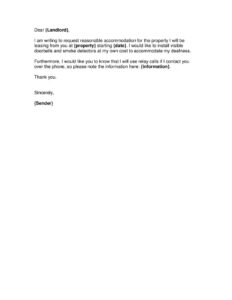
A Reasonable Accommodation Request (Deaf) is a written letter a tenant who is deaf or hard of hearing uses to ask a landlord, property manager, or housing provider for a change in rules, policies, or communication methods that allows them to fully use and enjoy their home. People most often use it to request accessible communication—such as written notices, text messaging, or a sign-language interpreter—or to keep a hearing assistance animal. It is free to download here in both PDF and DOCX formats.
What Is a Reasonable Accommodation Request (Deaf)?
A Reasonable Accommodation Request (Deaf) is a formal document submitted by, or on behalf of, a tenant with a hearing-related disability to a housing provider. It documents the specific accommodation being sought, explains how that accommodation connects to the tenant’s disability, and creates a paper trail of the request and any response. Under fair housing principles in many jurisdictions, housing providers are generally expected to consider reasonable changes that give people with disabilities an equal opportunity to use their housing. The letter is the tenant’s tool for starting that conversation clearly, respectfully, and in writing—so both parties have a shared record of what was asked and when.
When Do You Need a Reasonable Accommodation Request (Deaf)?
This request is useful any time standard rental policies or communication methods create a barrier for a deaf or hard-of-hearing resident. Common situations include:
- You need building notices, lease updates, and emergency information delivered in writing, by text, or by email instead of only by phone or intercom.
- You want to install a visual or vibrating doorbell, smoke detector, or alarm system in your unit.
- You require a sign-language interpreter for an in-person meeting, lease signing, or eviction proceeding.
- You have a hearing assistance or alert animal and live in a building with a no-pets policy.
- You request that maintenance or management staff communicate with you using written notes, a relay service, or video relay rather than verbal calls.
- You need accommodation during the application or move-in process so you can complete forms and interviews with accessible communication.
What a Reasonable Accommodation Request Should Have
A complete request is clear and specific without oversharing private medical detail. Effective requests typically include the tenant’s name and unit or property address, the date, and the name of the landlord or property manager. They identify that the tenant has a disability (you generally do not need to name a diagnosis), describe the exact accommodation requested, and explain the connection between the disability and the requested change. A strong letter also states who will pay for any modification where relevant, proposes a reasonable response deadline, and provides accessible contact information—such as an email address or text number—so the housing provider can reply in a way you can receive.
How to Fill Out a Reasonable Accommodation Request (Deaf)
- Enter the current date at the top of the letter.
- Address the letter to your landlord, property manager, or housing authority by name, and include the property or management company address.
- Fill in your full name and your rental unit number or property address so the request is tied to the correct tenancy.
- State that you are a person with a disability (being deaf or hard of hearing) and that you are requesting a reasonable accommodation under applicable fair housing rules.
- Describe the specific accommodation you need—for example, all notices in writing or by text, an interpreter for meetings, or permission for a hearing assistance animal.
- Briefly explain how the accommodation relates to your hearing disability and helps you use your home equally.
- Provide your preferred accessible contact method, such as email or text, and ask the provider to respond that way.
- Request a written response by a reasonable date, then sign and date the letter and keep a copy for your records.
Tips for a Smooth Request
Submit the request in a way you can prove later—email creates an automatic timestamp, while a mailed copy can be sent with delivery confirmation. Keep your language polite and factual; the goal is to open a cooperative dialogue, not to make demands. If your housing provider asks for documentation, you usually only need verification that you have a disability and that the accommodation is related to it, not your full medical history. Save every reply, and if a provider proposes an alternative, consider whether it meets your needs before agreeing. A short follow-up note documenting any verbal conversations helps keep the record complete.
How This Differs From a Modification Request
A reasonable accommodation generally refers to a change in rules, policies, services, or communication—like sending text alerts or allowing an assistance animal. A reasonable modification typically refers to a physical change to the unit or common areas, such as installing visual smoke alarms or a flashing doorbell. The same letter can cover both, but it helps to clearly label which you are asking for, because responsibility for cost and approval can differ. Knowing the distinction makes your request easier for the housing provider to evaluate and act on promptly.
Common Mistakes to Avoid
- Being vague about the accommodation—”better communication” is harder to grant than “send all notices by text to this number.”
- Failing to keep a dated copy of the letter and any responses.
- Oversharing medical records when only proof of a disability-related need is required.
- Listing a phone number as your only contact method when you need accessible communication.
- Not proposing a response deadline, which can leave the request open-ended.
- Forgetting to sign and date the letter, which weakens it as a record.
Frequently Asked Questions
What is a Reasonable Accommodation Request (Deaf)? It is a written letter a deaf or hard-of-hearing tenant uses to ask a landlord or housing provider for a change in policy, service, or communication method—such as written notices or a hearing assistance animal—that lets them use their housing equally. It documents the request and the provider’s response in writing.
How do I fill out the form? Add the date, address it to your landlord, and include your name and unit. State that you have a hearing disability, describe the exact accommodation you need, explain how it relates to your disability, give an accessible contact method, request a written reply, and sign and date it.
Do I have to disclose my diagnosis? Generally no. In most cases you only need to indicate that you have a disability and that the requested accommodation is connected to it. A housing provider may ask for limited verification, but you usually do not need to share detailed medical records.
Does this request need to be notarized or witnessed? No. A reasonable accommodation request does not typically require notarization or witnesses. What matters most is that it is clear, dated, signed, and delivered in a way you can prove, such as email or certified mail.
Is the landlord required to say yes? A housing provider is generally expected to consider reasonable requests that do not impose an undue burden or fundamentally alter their operations. They may propose an alternative that meets your needs. Specific obligations vary by jurisdiction, so check your local fair housing rules.
How much does this template cost? It is completely free to download from Business Forms Pro in both PDF and DOCX formats, with no signup required. You can edit the DOCX to fit your situation or print the PDF and fill it in by hand.
This template is a general example provided for informational purposes only and is not legal advice. Fair housing and accommodation requirements vary by jurisdiction and individual circumstances. Consult a qualified attorney, fair housing agency, or other professional for guidance specific to your situation.
Official resource: for the rules that apply to your situation, see HUD.
Related Forms
- Complain To Landlord
- Landlord Move-Out Letter
- Intent To Vacate Apartment
- Complaint Letter Against Landlord
- Reasonable Accommodation Request Wheelchair
- Real Estate Listing Tracker
Browse more in Rental and Real Estate.