
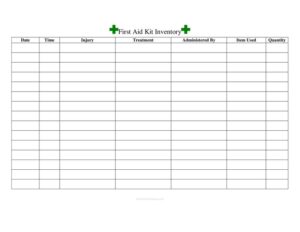
First Aid Inventory
Track and restock supplies with a free First Aid Inventory template — log items, quantities, and expiry dates. Download free in PDF or DOCX today.
PDF
DOC
23 downloads
0
likes
Download Files
- DOC
A First Aid Inventory is a simple checklist used to record every item inside a first aid kit or cabinet, along with quantities, condition, and expiry dates. People most often use it to make sure their kit is fully stocked and that nothing has expired before an emergency happens. It’s free to download in both PDF and DOCX formats, with no signup required.
What Is a First Aid Inventory?
A First Aid Inventory is a tracking document that lists the contents of a first aid kit, station, or medical cabinet. It is typically maintained by a workplace safety officer, an office manager, a school nurse, a facilities team, or even a household organizer. The form documents what supplies are present, how many of each remain, when each item expires, and when the kit was last checked. Its purpose is to turn an easily forgotten task into a repeatable routine — so bandages, antiseptics, gloves, and medications are replenished on schedule and the kit is genuinely ready when someone is injured. A complete inventory also supports compliance with workplace health and safety expectations.
When Do You Need a First Aid Inventory?
This form is useful any time supplies must stay current and accounted for. Common situations include:
- Monthly or quarterly kit checks — a scheduled audit of a workplace, vehicle, or facility first aid kit.
- After an incident — restocking items used to treat an injury and confirming the kit is whole again.
- Compliance and safety inspections — providing a documented record that kits are maintained for auditors or insurers.
- Multi-site management — tracking several kits across floors, buildings, or vehicles from one consistent log.
- Seasonal or event preparation — verifying supplies before a busy period, field trip, sports season, or large gathering.
- Expiry monitoring — catching antiseptics, ointments, or medications before they pass their use-by dates.
Types of First Aid Kits to Inventory
The same inventory format works across many kit types, even though their contents differ. A workplace kit may emphasize burn dressings, eyewash, and trauma supplies. A vehicle or fleet kit focuses on compact, durable items that survive temperature swings. A home kit tends to hold everyday bandages, pain relief, and antiseptics. A sports or event kit often carries extra cold packs, wraps, and tape. Whatever the setting, listing each item with a target quantity helps you spot shortfalls quickly and keep every kit consistent.
What a First Aid Inventory Should Have
A useful inventory captures more than just a list of names. Strong records include the item description, the quantity on hand versus the desired par level, the expiry or use-by date where applicable, the condition or status, and a space for notes. It should also identify the kit or location, the person completing the check, and the date. Including a target quantity column is what transforms the document from a snapshot into a restocking tool — you can see at a glance what to reorder.
How to Fill Out a First Aid Inventory
Because this is a flexible log, fill it in row by row as you physically inspect the kit:
- Identify the kit and location. Record the kit name or number and where it lives (e.g., “Warehouse Floor 2” or “Van 4”).
- Enter the date and inspector. Note the inventory date and the name of the person performing the check.
- List each item. Write the supply name — adhesive bandages, gauze pads, gloves, antiseptic wipes, scissors, tape, cold packs, and so on.
- Record the quantity on hand. Count what is actually present, not what should be there.
- Note the target or par level. Enter the desired stock amount so gaps are obvious.
- Add the expiry date. For items that expire, log the earliest use-by date in the kit.
- Mark condition or status. Indicate “OK,” “Low,” “Expired,” or “Reorder.”
- Use the notes column. Flag damaged packaging, items removed after use, or follow-up actions.
- Sign off. Confirm the check is complete and schedule the next review date.
Setting Par Levels and a Restock Routine
The most valuable habit this form supports is establishing par levels — the minimum quantity each item should never drop below. Once par levels are set, every inventory becomes a quick comparison: anything below par goes on the reorder list immediately. Pairing the inventory with a fixed schedule (for example, the first Monday of each month) keeps kits reliable. Many teams keep completed inventories on file so they can show a continuous maintenance history, which is helpful during safety reviews and demonstrates that supplies are managed proactively rather than only after something runs out.
Tracking Expiry Dates
Expiry tracking is one of the most overlooked parts of first aid maintenance. Antiseptic solutions, ointments, eyewash, and any medications lose effectiveness or become unsafe past their dates. Even sterile dressings carry expiry markings because their sterility is only guaranteed for a set period. By logging the earliest expiry date in each kit, you can plan replacements in advance instead of discovering an expired product mid-emergency. Sorting your inventory by expiry date once a quarter makes it easy to rotate stock and discard what’s no longer usable.
Common Mistakes to Avoid
- Counting from memory. Always open the kit and physically verify quantities rather than assuming what’s inside.
- Ignoring expiry dates. A full kit of expired antiseptic is not a ready kit — check dates every cycle.
- Skipping the target quantity. Without a par level, you can’t tell whether “three bandages” is plenty or nearly empty.
- Not restocking after use. Items used in an incident must be replaced promptly, not left for the next scheduled check.
- Failing to date and sign. An undated inventory provides no proof of when the kit was last verified.
- Using one log for many kits without labels. Always identify which kit and location each entry belongs to.
Frequently Asked Questions
What is a First Aid Inventory used for? It is used to record the contents of a first aid kit so supplies stay stocked, current, and ready. The form tracks each item’s quantity and expiry date and gives you a clear list of what to reorder. It also serves as documented proof that kits are being maintained on a regular schedule.
How often should I complete a first aid inventory? Many workplaces check kits monthly or quarterly, and always immediately after the kit is used to treat an injury. The right frequency depends on how often the kit is accessed and how many items expire. Setting a recurring schedule and recording the next review date helps ensure checks never get skipped.
What should I include in the inventory? List each item by name, the quantity on hand, a target or par quantity, the expiry date where relevant, the item’s condition, and any notes. Also record the kit location, the inspection date, and the name of the person performing the check. These details make the log both actionable and verifiable.
Do I need to track expiry dates? Yes — antiseptics, ointments, eyewash, medications, and even sterile dressings have use-by dates and should be replaced before they expire. Logging the earliest expiry date in each kit lets you plan replacements ahead of time. Reviewing expiry dates every cycle is one of the most important parts of kit maintenance.
Is this First Aid Inventory template free? Yes. You can download it free in both PDF and DOCX formats with no signup required. The DOCX version is fully editable, so you can add your own items, par levels, and columns to match your specific kit.
Can I customize the form for different kits? Absolutely. The editable template can be adapted for workplace, vehicle, home, school, or event kits by changing the listed items and target quantities. You can reuse the same format across multiple kits to keep your records consistent and easy to compare.
This template is a general example provided for informational purposes only and is not medical, legal, or safety compliance advice. First aid requirements and recommended kit contents vary by jurisdiction, industry, and workplace size — consult the relevant regulations or a qualified safety professional to confirm your obligations.
Related Forms
- Volunteer Hours Tracker
- Social Media Tracker
- Office Supplies Inventory
- Hospital Comparison
- Evidence Log
- Emergency Supplies List
Browse more in Log and Inventory.