
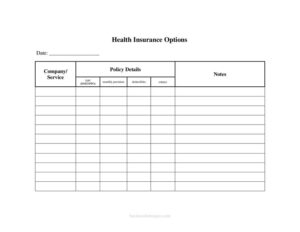
Health Insurance Comparison Chart
Compare health insurance plans side by side with our free Health Insurance Comparison Chart template — download instantly in PDF or DOCX, no signup.
PDF
DOC
4 downloads
0
likes
Download Files
- DOC
A Health Insurance Comparison Chart is a side-by-side worksheet that lets you line up two or more health plans and weigh their premiums, deductibles, networks, and benefits in one view. People most often use it during open enrollment or a job change to figure out which plan truly costs the least for their family’s expected care. It’s free to download here in both PDF and DOCX formats, with no signup required.
What Is a Health Insurance Comparison Chart?
A Health Insurance Comparison Chart is a structured document that organizes the key features of competing health insurance plans into rows and columns so they can be evaluated against each other. It’s typically created by individuals shopping the marketplace, employees reviewing benefits, HR teams presenting options to staff, or insurance brokers walking clients through choices. The chart documents each plan’s monthly premium, deductible, out-of-pocket maximum, copays, coinsurance, prescription coverage, and network details. Rather than flipping between multiple brochures or summary-of-benefits PDFs, you capture everything in a single reference. The goal is clarity: turning dense insurance jargon into an apples-to-apples layout that highlights real differences in cost and coverage so a confident decision is possible.
When Do You Need a Health Insurance Comparison Chart?
This chart earns its keep any time you face a coverage decision and want to avoid choosing on price alone. Common situations include:
- Open enrollment: You have a limited window to pick a plan for the coming year and several options to weigh.
- Starting a new job: Your employer offers two or three medical plans and you need to compare them against your current coverage.
- Marketplace shopping: You’re buying an individual or family plan and want to compare Bronze, Silver, and Gold tiers.
- A life change: Marriage, a new baby, or a move triggers a special enrollment period and a fresh look at coverage.
- Helping a family member: You’re assisting a parent or adult child in choosing a plan and need a clear summary to discuss.
- Broker or HR presentations: A professional wants a clean handout that lets clients or employees evaluate plans quickly.
What a Health Insurance Comparison Chart Should Have
A useful comparison chart goes beyond premium price. To make a fair comparison, include the following for each plan: the plan name and type (HMO, PPO, EPO, or HDHP), the monthly premium, the annual deductible (individual and family), the out-of-pocket maximum, and the coinsurance percentage. Add rows for common copays — primary care visit, specialist, urgent care, and emergency room — plus prescription drug tiers. Capture whether your preferred doctors and hospitals are in-network, and note any referral requirements. Finally, include HSA or FSA eligibility, telehealth coverage, and any extra perks. A bottom row estimating your total expected annual cost ties everything together and often reveals that the cheapest premium isn’t the cheapest plan.
How to Fill Out a Health Insurance Comparison Chart
Because this template is a flexible grid, work through it one plan at a time using each plan’s Summary of Benefits and Coverage (SBC):
- Label the columns: Enter each plan’s name and carrier across the top, plus the plan type (HMO, PPO, EPO, HDHP).
- Enter the premium: Record the monthly premium for the coverage level you need (self, self + spouse, or family).
- Add the deductible: Fill in the individual and family deductible amounts.
- Record the out-of-pocket maximum: Note the most you’d pay in a bad year.
- Fill in copays and coinsurance: List primary care, specialist, urgent care, ER, and the coinsurance percentage after the deductible.
- Detail prescriptions: Add generic, preferred, and specialty drug costs.
- Check the network: Mark whether your doctors and preferred hospital are in-network.
- Note extras: Capture HSA/FSA eligibility, telehealth, dental, vision, and wellness perks.
- Estimate total cost: Add 12 months of premiums to your expected medical spending and write the projected annual total in the bottom row.
How to Estimate Your True Annual Cost
The most valuable part of any comparison is the projected yearly cost, which combines what you pay whether or not you use care (premiums) with what you pay when you do (deductibles, copays, and coinsurance). Start by adding up twelve monthly premiums. Then estimate your typical care — routine checkups, expected prescriptions, any planned procedures — and apply each plan’s copays or coinsurance. A high-deductible plan with a low premium can be the smartest choice for a healthy person, while someone with chronic conditions or a growing family may save more with a higher-premium plan that has a low deductible. Running both a “healthy year” and a “high-needs year” scenario in your chart shows how each plan behaves under different circumstances.
Understanding Plan Types and Terms
Comparing plans is easier when the terminology is clear. An HMO usually requires you to stay in-network and get referrals, often at a lower cost. A PPO offers more flexibility and out-of-network options at a higher price. An EPO sits between the two, and an HDHP pairs a high deductible with a tax-advantaged Health Savings Account. The deductible is what you pay before coverage kicks in; coinsurance is your share afterward; and the out-of-pocket maximum caps your total annual exposure. Keeping these definitions handy on the chart helps everyone reading it interpret the numbers correctly.
Common Mistakes to Avoid
- Comparing premiums only: A low monthly premium often hides a high deductible and bigger out-of-pocket costs.
- Ignoring the network: Failing to verify that your doctors are in-network can lead to surprise bills.
- Overlooking prescription tiers: A maintenance medication can cost far more under one plan than another.
- Forgetting the out-of-pocket maximum: This number matters most in a high-cost year and is easy to skip.
- Mismatching coverage levels: Compare the same tier (self, family) across plans, not different ones.
- Skipping the total-cost row: Without a projected annual figure, the chart doesn’t actually point to a winner.
Frequently Asked Questions
What is a Health Insurance Comparison Chart used for? It’s used to evaluate two or more health plans side by side so you can compare premiums, deductibles, networks, and benefits in one place. This makes it far easier to choose the plan that fits your health needs and budget, especially during open enrollment or a job change.
How do I fill out the comparison chart? List each plan as a column, then fill in the rows using each plan’s Summary of Benefits and Coverage: premium, deductible, out-of-pocket maximum, copays, coinsurance, prescriptions, and network status. Finish by estimating each plan’s total expected annual cost so you can compare the bottom line, not just the premium.
Is this chart a legal or official insurance document? No. It’s a personal planning worksheet to help you organize and compare information. It does not create or change any coverage — your actual benefits are governed by the plan documents and policy provided by the insurer.
Which numbers matter most when comparing plans? The premium, deductible, out-of-pocket maximum, and your expected medical use together determine your true cost. A plan with a low premium isn’t always cheapest once you factor in how much care you’ll likely need during the year.
Can I use this for employer and marketplace plans? Yes. The chart works for any health plans you’re comparing, whether they come from an employer’s benefits package, the public marketplace, or a private insurer. Just be sure to compare the same coverage level across all options.
How much does this template cost? It is completely free to download in PDF and DOCX formats with no signup required. You can edit the DOCX version to add or remove rows so the chart fits the specific plans you’re considering.
This template is a general example provided for informational purposes only and is not insurance, legal, financial, or tax advice. Health plan terms, benefits, and regulations vary by insurer and jurisdiction. Always review the official plan documents and consult a licensed insurance professional or advisor before making coverage decisions.
Related Forms
- Medical Records Release Letter
- Insurance Claim
- Medical Bills Tracker
- Medical Release Form For Minor
- Medical Release Letter
- Injury Report Record
Browse more in Medical.